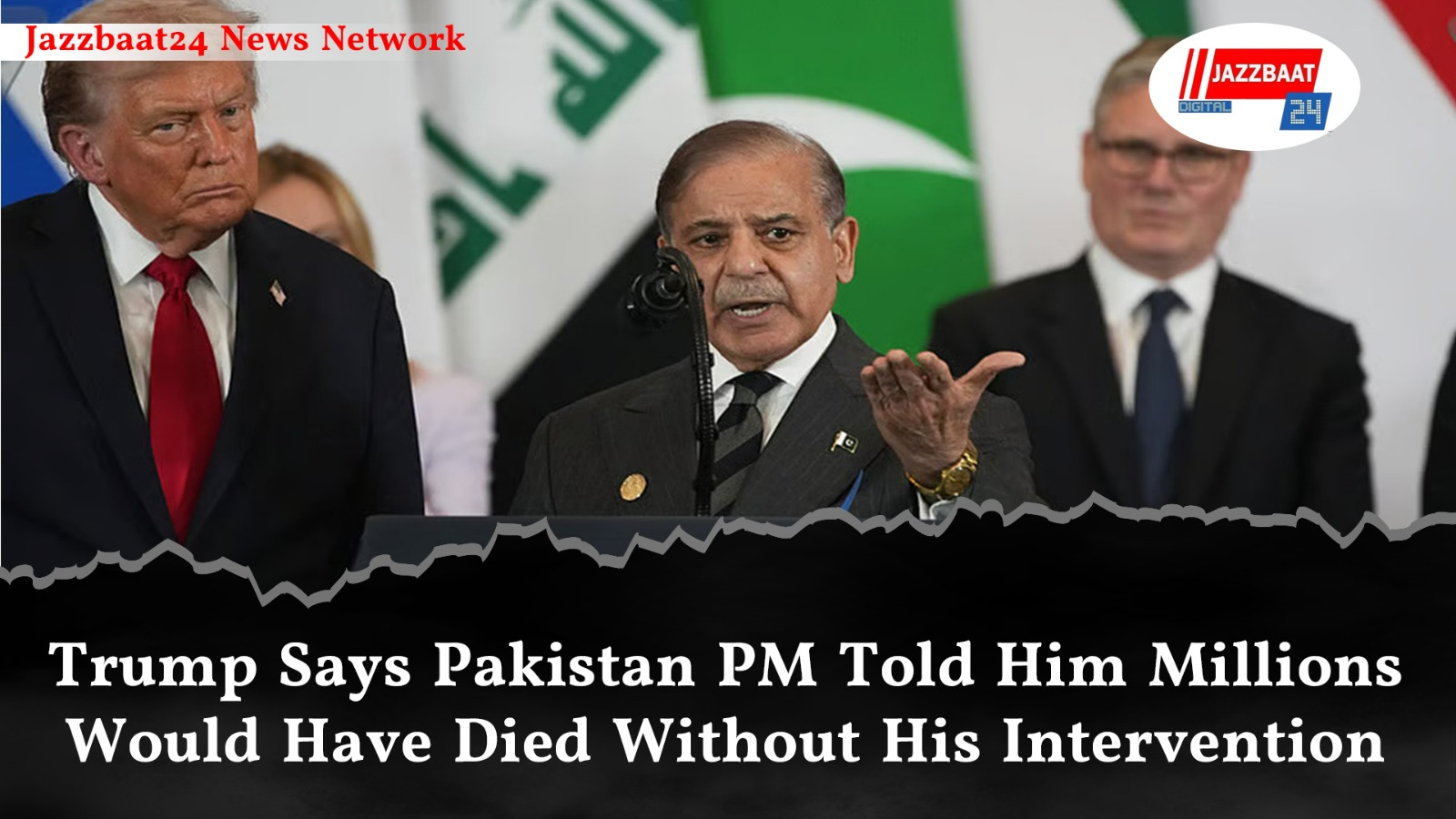
US President Donald Trump drew global attention during his 2026 State of the Union address by making a striking claim about tensions between India and Pakistan. In a long‑winded speech outlining his administration’s domestic and foreign policy achievements, Trump said that the Prime Minister of Pakistan told him that around 35 million people would have died if he had not intervened to ease a major military confrontation last year.
Addressing a joint session of the US Congress on Tuesday, the president reiterated that in his first ten months of his second term he had “ended eight wars,” including what he described as a looming nuclear conflict between India and Pakistan. Trump said that without his involvement, a wider war could have erupted following the Operation Sindoor clashes in May 2025 a four‑day military exchange sparked by a deadly terror attack in Indian‑administered Kashmir that drew sharp responses from both sides.
“Pakistan and India would have had a nuclear war,” Trump declared, before quoting the Pakistan leader as saying that 35 million people would have perished without US intervention. The remark was presented as part of a broader narrative on his diplomatic efforts to prevent catastrophic conflicts worldwide.
The dramatic statement immediately stirred debate online and among international observers, with many commentators focusing on the scale of the figures Trump cited and whether he meant that the Pakistan leader’s life — or millions of civilian lives — were at stake. Some analyses suggested that poor phrasing and lack of clear context in the address led to misinterpretations of Trump’s exact meaning.
India, for its part, has consistently rejected claims of third‑party mediation in the cessation of hostilities with Pakistan. Officials in New Delhi have maintained that the ceasefire reached last year resulted from direct military‑to‑military communications rather than external diplomatic pressure, countering the narrative that the United States played a central role.
Pakistan, however, previously acknowledged Washington’s involvement in halting the conflict and even nominated Trump for the Nobel Peace Prize, citing his diplomatic role during the crisis.
Trump’s proclamation in the State of the Union was part of a larger recounting of his administration’s foreign policy claims, which included assertions about resolving other international confrontations. While his supporters say the remarks highlight decisive leadership on the global stage, critics argue that the president’s statements were exaggerated and poorly articulated.
The controversy underscores how sensitive and complex narratives around the India‑Pakistan conflict remain, particularly when filtered through the lens of broader geopolitical messaging from Washington.