In a major economic and legal development, the United States Supreme Court on Friday struck down President Donald Trump’s ambitious global tariff strategy, ruling that he exceeded his constitutional authority by imposing broad import taxes under emergency powers. The 6–3 decision declared that only Congress not the president has the explicit power to levy taxes, including tariffs, a rebuke that threatens roughly $175 billion in tariff revenue collected over the past year and raises questions about potential refunds and future trade policy.
Chief Justice John Roberts, writing for the majority, emphasised that the 1977 International Emergency Economic Powers Act, the statute used by Trump to justify the sweeping tariff program, “does not grant the authority to impose tariffs” and that such powers clearly belong to Congress.
In response, President Trump lambasted the ruling as “patriotic betrayal” and sharp criticism of the justices, including two he himself appointed. He accused the Court of being influenced by “foreign interests” and called the decision “ludicrous.” Trump also insisted that alternative measures would be used to protect American industries, declaring that “we have other authorities” and promising new tariffs and investigations under different laws.
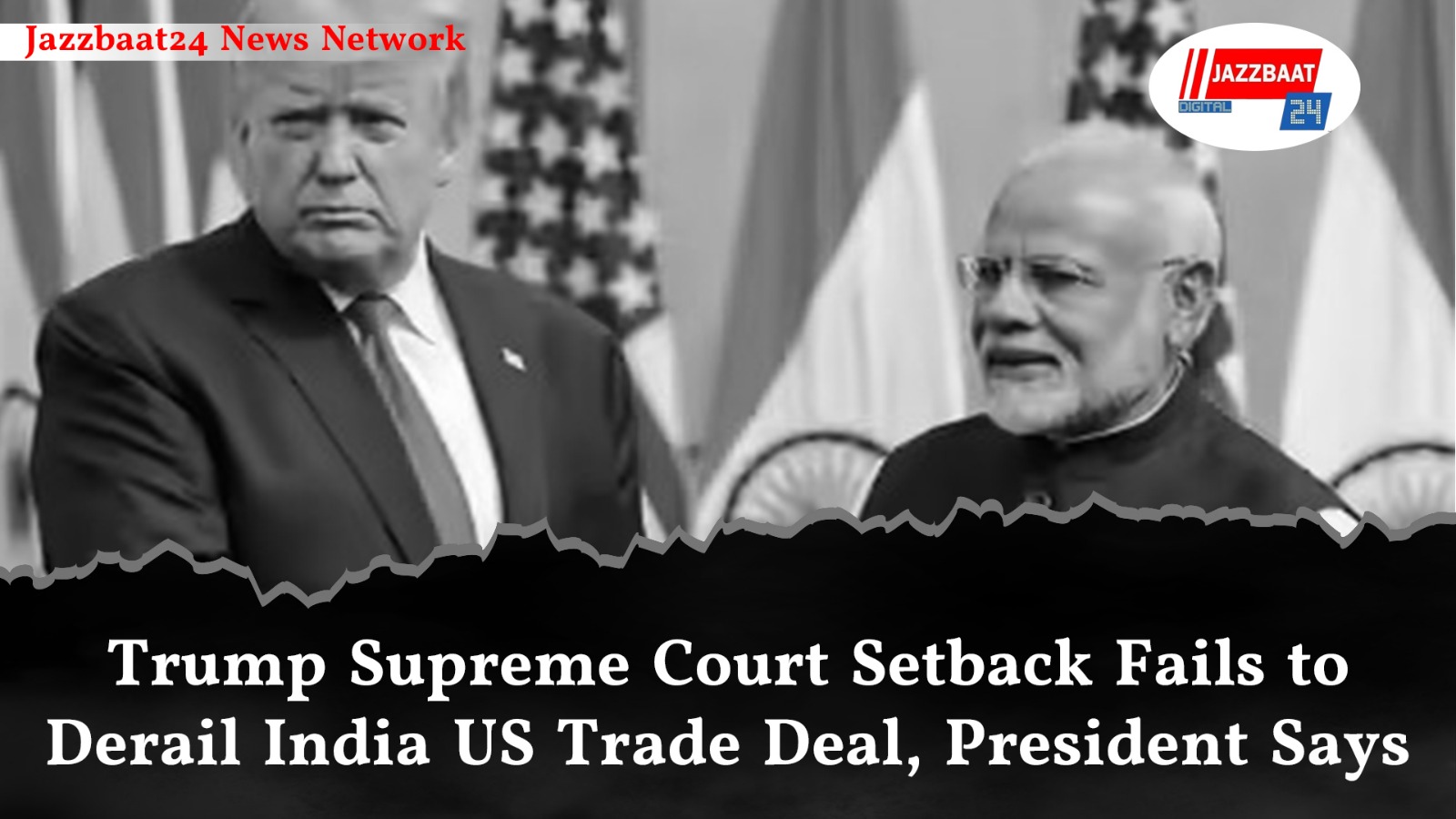
Despite the legal setback, Trump strongly maintained that the recently announced India‑US trade deal remains intact and unaffected. At a White House news briefing, he reiterated his “great relationship” with Indian Prime Minister Narendra Modi and said India had already “pulled back” from buying Russian oil at his request. Trump said the deal will proceed with India continuing to pay tariffs while the US will not, framing the agreement as a fair arrangement.
Economists and lawmakers in both countries are now watching closely to see how the administration will navigate the Court’s ruling while maintaining global trade ties and domestic economic goals.