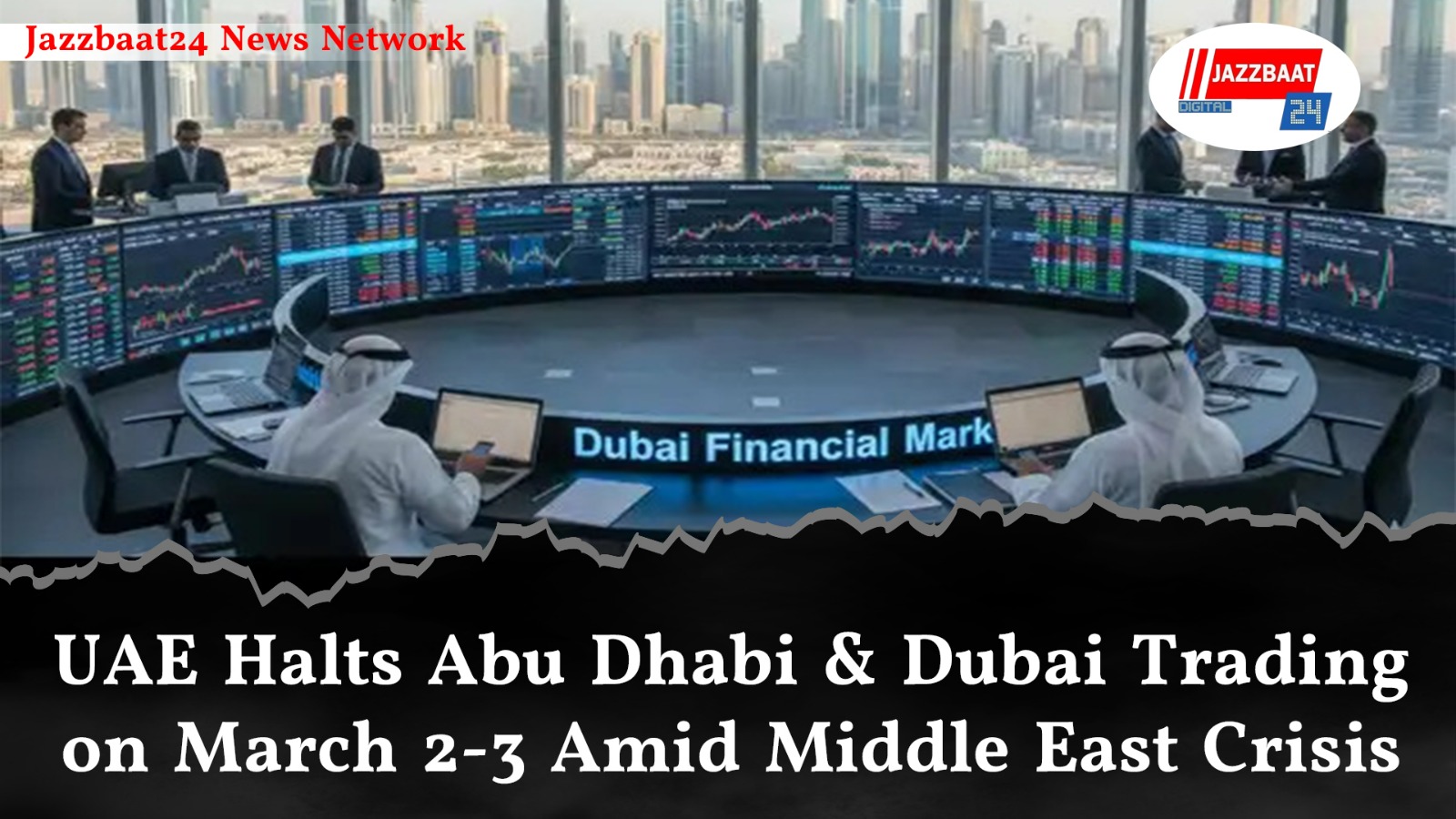
The United Arab Emirates has taken the extraordinary step of closing its major stock markets for two days March 2 and 3, 2026 as regional tensions spike over the widening conflict involving Iran, the United States and Israel. The decision affects both the Abu Dhabi Securities Exchange (ADX) and the Dubai Financial Market (DFM), reflecting deep concerns over financial volatility and investor confidence amid the crisis.
In an official move late Sunday, the UAE Capital Market Authority said trading would be halted on Monday and Tuesday as a precautionary measure in response to heightened geopolitical instability. The authority emphasised that the decision was taken under its regulatory and supervisory responsibilities, and that developments would continue to be closely monitored before markets reopen.
The shutdown comes amid an intense escalation of the Middle East crisis that has seen military strikes and counter-strikes across the region, including drone and missile exchanges involving Iran and allied forces, as well as allied military actions by the US and Israel. The conflict’s spillover effects have already disrupted several regional sectors, including aviation, energy and international trade.
The two exchanges in the UAE are among the Gulf’s largest, together hosting billions of dollars in market capitalisation. By suspending trading for two days, regulators aim to limit panic selling and safeguard economic stability while giving investors time to assess the rapidly evolving situation. Authorities have urged stakeholders to follow official communications from the Capital Market Authority, ADX and DFM for updates on when normal trading will resume.
Regional markets that remained open over the weekend reacted sharply to the tension. In other Gulf markets, indices recorded significant declines, with Saudi Arabia’s benchmark and other regional indexes falling broadly as investors weighed geopolitical risk. Meanwhile, some markets outside the conflict zone showed mixed performance depending on local conditions and global sentiment.
The temporary halt to trading underscores the economic uncertainty caused by the ongoing Middle East crisis, and signals a cautious approach by Gulf regulators facing one of the most serious regional security challenges in years. Market participants and international investors will be watching closely for further updates on both the conflict and the resumption of trading.