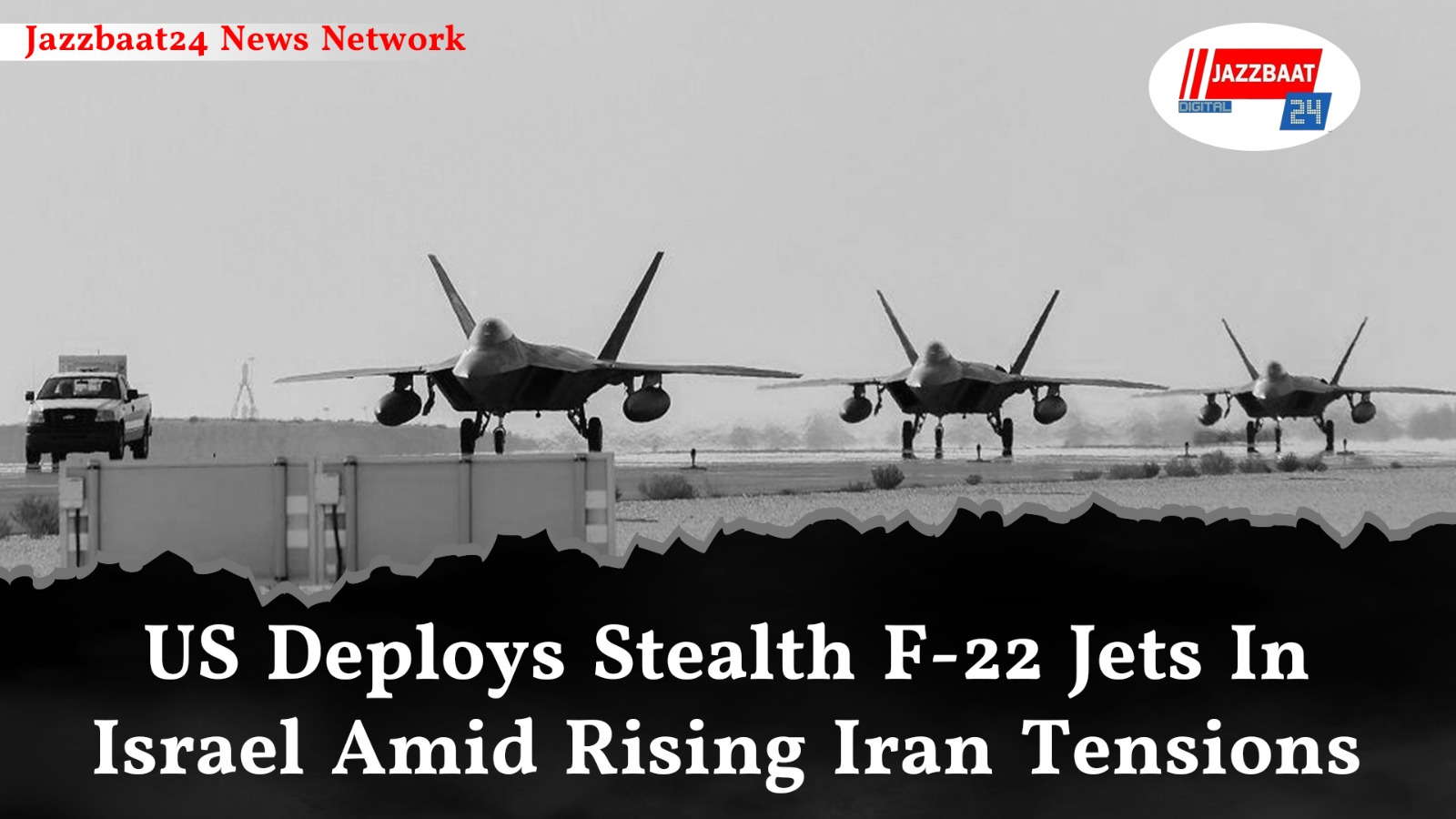
In a major strategic move, the United States has deployed stealth fighter jets to Israel for the first time as tensions with Iran continue to escalate. The deployment marks a significant shift in Washington’s military posture in the Middle East.
According to reports, advanced F‑22 Raptor aircraft from the United States Air Force have been stationed at Israeli air bases. The jets are expected to strengthen defence capabilities and help protect both Israeli territory and American forces in the region in case of retaliation from Iran.
Experts say operating US combat aircraft from Israeli bases is unprecedented. For decades, Washington kept its military footprint in Israel relatively limited to avoid escalating regional tensions.
The deployment comes at a time when several Gulf countries have reportedly refused to allow American forces to use their airspace for potential military operations. Both Saudi Arabia and United Arab Emirates are said to have denied such requests, limiting US options for positioning aircraft needed for a major operation.
Reports indicate that the stealth fighters were spotted leaving an air base in the United Kingdom before heading toward Israel earlier this week, based on open-source flight tracking data and observations from aviation enthusiasts.
Former US officials say the move reflects growing military cooperation between the United States and Israel, particularly after the signing of the Abraham Accords. The agreements reshaped regional alliances and strengthened security coordination between the two countries.
Another major change came in 2021 when Israel was reassigned from the United States European Command to the United States Central Command. The shift removed several operational barriers and allowed deeper military integration between Washington and Tel Aviv.
Meanwhile, diplomatic talks between the United States and Iran over Tehran’s nuclear programme are continuing. During a recent address to Congress, US President Donald Trump warned that Iran is developing long-range missiles capable of threatening American territory.
Despite the heightened military presence, Washington says it still prefers a diplomatic solution to the dispute. Iranian officials have also described the latest round of nuclear negotiations as constructive, raising cautious hopes that tensions might be resolved through dialogue rather than conflict.
However, with military forces being positioned across the region, analysts warn that the situation remains fragile and could escalate rapidly if negotiations fail.