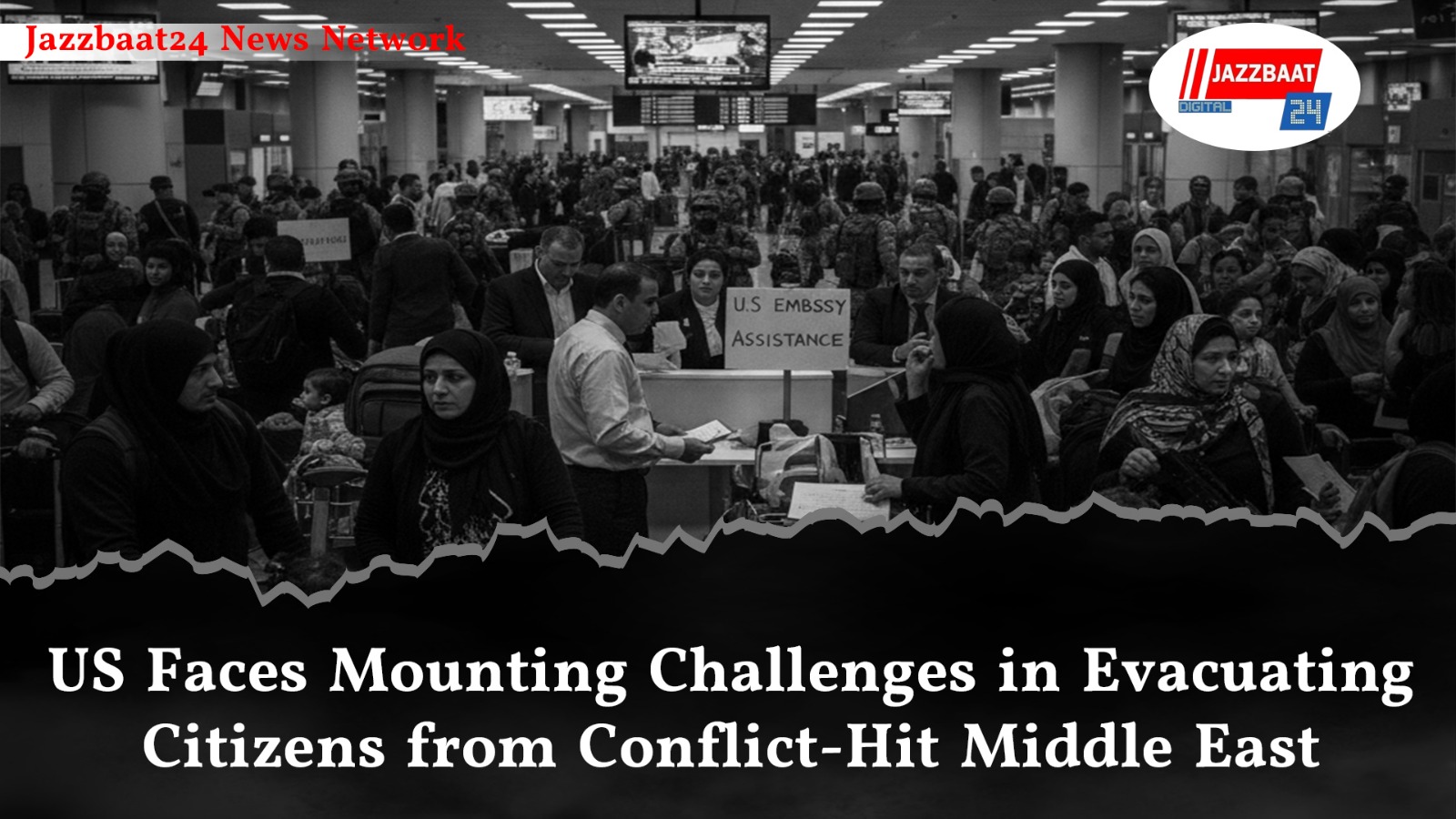
The United States is facing significant hurdles in evacuating its citizens from parts of the Middle East as tensions continue to escalate following the intensifying confrontation involving Iran and Israel. With airspace closures, flight suspensions and security threats disrupting commercial travel, thousands of Americans in the region are grappling with uncertainty.
The US State Department, led by Marco Rubio, has acknowledged the complexity of the evacuation effort, citing restricted air corridors and safety risks as major obstacles. Officials said commercial options remain limited in several countries, particularly where airports have temporarily shut down or airlines have cancelled operations due to security concerns.
The situation has been further complicated by the suspension of flights by major carriers, including Qatar Airways and Emirates, both of which serve as key transit hubs for international travellers. With Doha and Dubai functioning as critical connectors between West Asia, Europe and North America, disruptions there have had a ripple effect across global routes.
The State Department has issued multiple travel advisories urging Americans to avoid non-essential travel to parts of the region. It has also encouraged citizens already present to register with the Smart Traveler Enrollment Program (STEP) to receive updates and emergency assistance. However, officials admit that arranging chartered evacuation flights or military-assisted departures is challenging in a fast-moving conflict zone.
In some areas, land borders have become the only viable escape route. Reports indicate that Americans in affected countries are attempting to cross into neighbouring states where airports remain operational. US embassies and consulates are coordinating with local authorities to facilitate safe passage where possible, though capacity remains limited.
The White House has stated that ensuring the safety of American citizens abroad remains a top priority. At the same time, officials caution that evacuation operations depend heavily on cooperation from host governments and the evolving security environment.
Families back home have expressed growing anxiety, with some saying they have struggled to get timely information about their loved ones. The US government has urged patience, emphasising that evacuation efforts are ongoing but must prioritise safety above speed.
As the regional conflict continues to disrupt aviation and diplomatic channels, the US faces the delicate task of balancing urgent evacuation needs with the realities of operating in volatile and unpredictable conditions.