
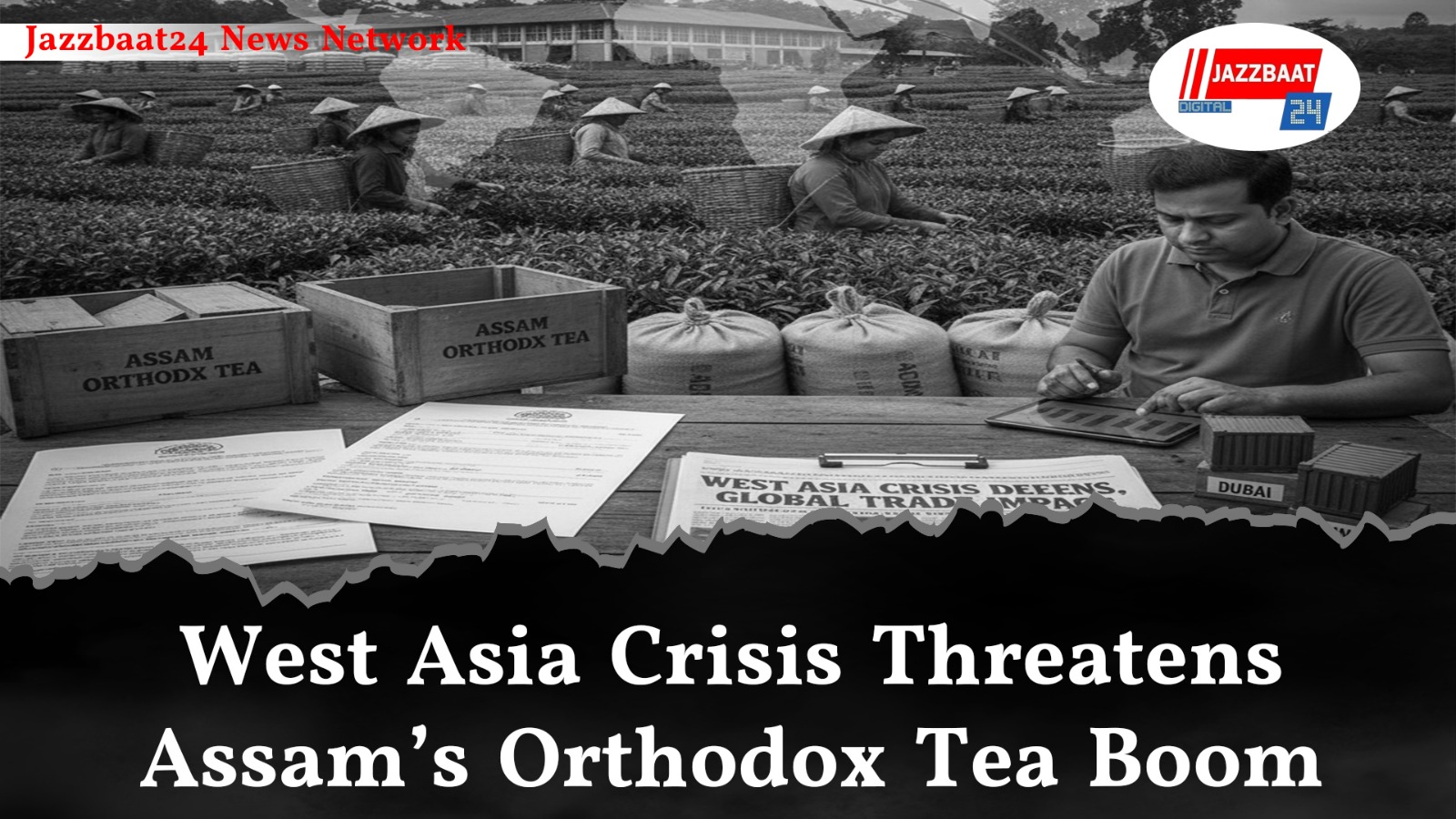
Guwahati: Rising tensions across West Asia are casting a shadow over Assam’s flourishing orthodox tea exports, with industry leaders warning that prolonged instability could disrupt a market that has delivered strong returns in recent years.
The Guwahati Tea Auction Buyers Association (GTABA) has flagged concerns over the impact of the ongoing conflict in Iran and neighbouring regions, which are key buyers of Assam’s orthodox tea. The segment had been witnessing steady export growth, especially to Middle Eastern countries.
GTABA Secretary Dinesh Bihani said India recently exported a record 280 million kilograms of tea, of which 122.50 million kilograms went to East Asian markets. Iran, in particular, had emerged as a strong destination for orthodox tea, offering attractive returns to exporters. “Last year, we received very good prices from Iran. However, the current geopolitical tensions may create serious export challenges,” he said.
While there is no immediate production crisis, as the tea season has yet to reach full momentum due to delayed rains, concerns loom over the coming months. Large-scale production typically begins in March and April. If instability continues in the Middle East during peak output, Assam’s orthodox tea segment could face significant setbacks.
Last year saw a notable shift within the industry, with several CTC producers switching to orthodox tea due to higher export realisations. Orthodox varieties were fetching Rs 40-50 more per kilogram compared to CTC, encouraging many growers to alter production strategies.
Logistics have become another major worry. Increased insurance premiums, rising freight costs and uncertainty around consignments in transit have added pressure on exporters. Some shipments stuck at ports or en route are facing payment uncertainties, industry representatives said.
Alternative markets may not easily absorb the volume meant for West Asia. According to traders, Middle Eastern consumers have specific taste preferences for orthodox tea that are difficult to replicate elsewhere. If the crisis persists, producers may be forced to revert to CTC production, which enjoys strong domestic demand but has seen stagnant prices over the past few years.
The Assam government’s decision to enhance subsidies for orthodox tea from 10 per cent to 15 per cent this year has offered some relief, particularly to small growers and local factories. However, stakeholders agree that sustained export demand remains crucial for ensuring better price realisation and protecting the long-term growth of Assam’s premium tea segment.