
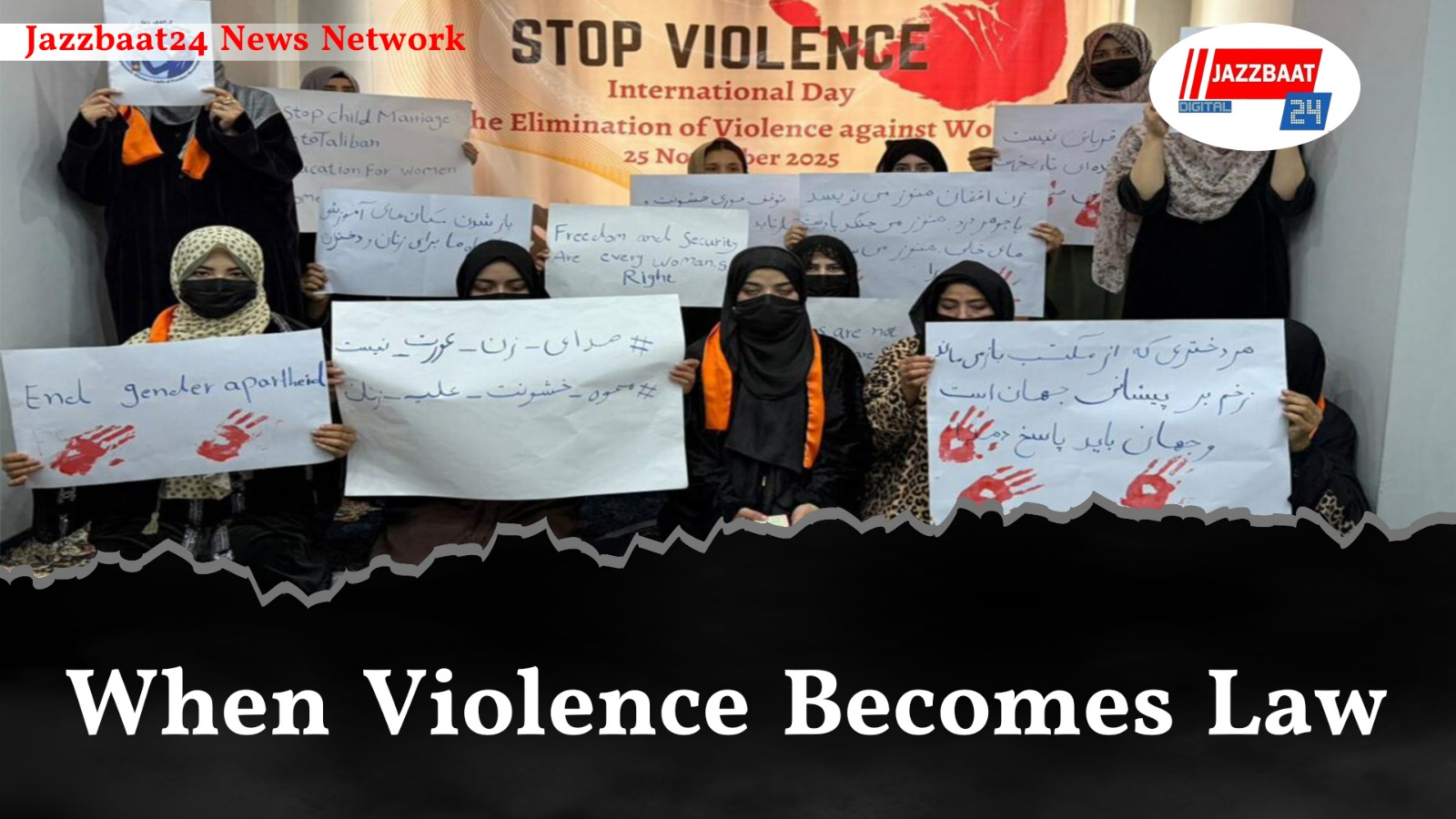
A controversial new legal code introduced in Afghanistan has sparked global outrage after reports emerged that it effectively allows domestic violence against women under certain conditions. Critics say the regulation, introduced by the ruling regime, marks another step backward for women’s rights in the country and formalises a culture of abuse that had already become widespread since the group returned to power in 2021. Taliban
The new criminal code, reportedly around 90 pages long, permits husbands to physically punish their wives and children as long as the violence does not result in “broken bones or open wounds.” If such serious injuries occur, the punishment for the perpetrator can be limited to a short jail sentence sometimes as little as 15 days according to reports examining the law.
The code was signed by the group’s supreme leader, Hibatullah Akhundzada, and is intended to guide courts operating under the regime’s interpretation of Islamic law. Human rights organisations and legal experts say the wording effectively legitimises violence inside households, as abuse that does not leave visible injuries may not be considered a punishable crime.
Critics argue that the law removes what little legal protection remained for women in Afghanistan. The earlier 2009 “Elimination of Violence Against Women” law, which criminalised many forms of abuse such as forced marriage and assault, has effectively been abolished under the new system.
Rights groups warn that the rule makes it extremely difficult for victims to seek justice. In many cases, women must show physical evidence of severe injuries in court to prove abuse. However, strict social rules such as requirements that women travel with a male guardian and remain heavily covered in public often prevent them from safely reporting violence or appearing in court independently.
The development has intensified international criticism of Afghanistan’s rulers. Since their return to power, women and girls have already faced sweeping restrictions including bans on secondary and university education, limitations on employment, and strict rules governing movement and dress in public spaces.
Human rights advocates say the new legal framework goes beyond social restrictions and moves toward institutionalising gender inequality. By redefining what counts as abuse and reducing punishments for violent acts, they argue, the law risks normalising domestic violence across Afghan society.
International organisations and activists have called for stronger global pressure to protect Afghan women. For many observers, the latest law symbolises how deeply the country’s legal system has shifted since the regime regained control leaving millions of women with fewer rights, less protection, and little access to justice.