It is a rare and unsettling moment in South Asian history when a leader long seen as the embodiment of resilience faces such a dramatic reversal. Sheikh Hasina, often hailed as the iron lady of Bangladesh, has been sentenced to death by the very tribunal established by her father to deliver justice after the 1971 genocide. This extraordinary turn of events, where a court once meant to uphold justice now appears transformed into a tool of political vendetta, reverberates far beyond Dhaka. It sends shockwaves through the region, with India particularly thrust into a difficult position, both morally and strategically.
Sheikh Hasina’s political journey has been intertwined with Bangladesh’s tumultuous history. Her father, Sheikh Mujibur Rahman, is revered as the founding father of the nation and had set up the International Crimes Tribunal (ICT) to address war crimes. Hasina herself championed these trials, promising justice and closure to the victims of 1971. Yet, over time, the tribunal’s purpose has been dramatically redefined, raising serious questions of its impartiality and fairness. Chief Prosecutor Tajul Islam, who previously defended Jamaat leaders, now leads a fragmented court with one branch focused exclusively on Hasina and her close allies.
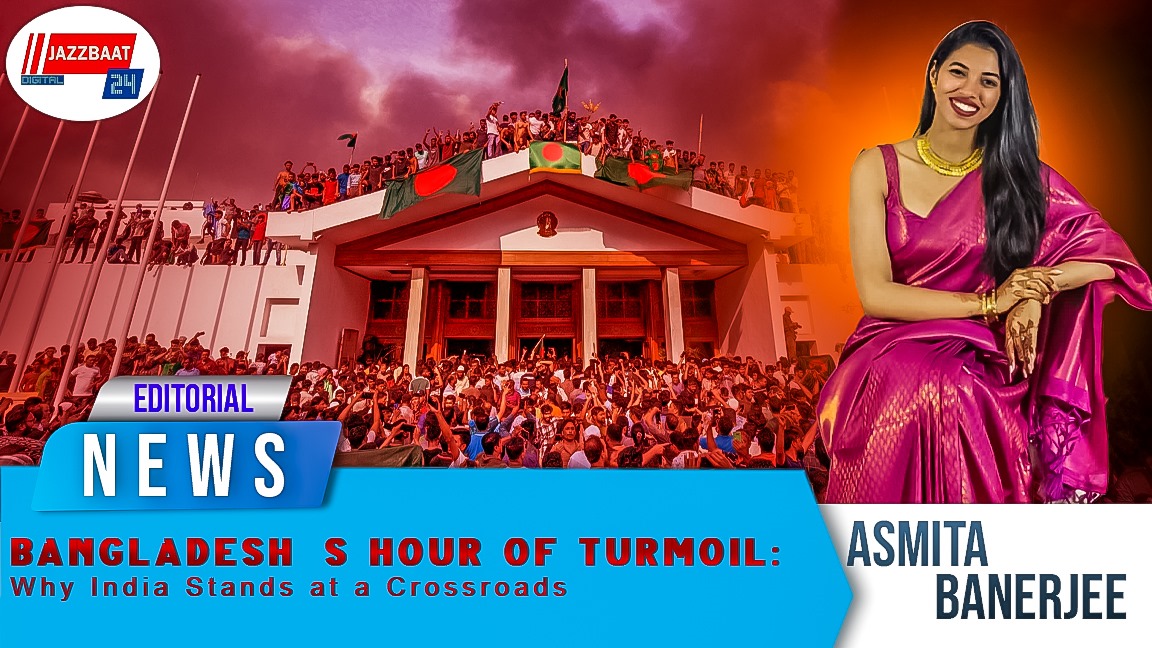
The verdict, pronouncing the death penalty on Hasina and her former Home Minister for alleged war crimes and abuses of power, was met with jubilation by her political adversaries within Bangladesh. Screens across Dhaka broadcast the trial’s outcome, igniting celebrations among supporters of the interim regime led by Muhammad Yunus. However, this victory is tainted by serious procedural concerns: allegations of fabricated charges, lack of proper defense, and politically motivated prosecutions have marred the tribunal’s legitimacy. Instead of justice, what many see is the triumph of retribution, a stark reminder of how law can be twisted to serve political ends.
The chaos unleashed by the verdict extends beyond courtroom drama. Sheikh Hasina’s Awami League party faces bans, violent cracks in the social fabric, and increased repression. Supporters have retaliated with violent protests, while Yunus’s government has responded with strong-arm tactics. Extrajudicial killings, arbitrary arrests, and enforced disappearances mark a grim deterioration of the rule of law. More than 20,000 arbitrary arrests and thousands of violent deaths have occurred under the interim government’s watch, painting a picture of a nation slipping toward anarchy rather than order. Journalist attacks and suppression of dissenting voices only deepen the crisis. The judiciary itself has been turned into a tool of repression, compounding political instability and human rights abuses.
India finds itself at a precarious crossroads. The bilateral extradition treaty with Bangladesh is intended primarily for criminals and terrorists, with built-in protections against politically motivated prosecutions. Given the highly politicized nature of Hasina’s trial, India cannot, under its legal and moral frameworks, comply with any extradition request for her without grave questions of justice and fairness. Such an act would not only violate international legal principles but also potentially irreparably damage decades of cooperation and trust between the two neighbors.
Yet, India’s refusal to extradite Hasina could inflame tensions with the Yunus government and fuel nationalist rhetoric in Bangladesh, where political rivalries are already bitter and volatile. Pakistan and China may exploit this situation, amplifying anti-India sentiments to expand their influence in the region. With elections looming in all three countries, the issue is primed to become a flashpoint in South Asian geopolitics.
Beyond geopolitics, the internal realities in Bangladesh are deeply troubling. The interim administration’s failure to uphold law and order has led to a spike in Islamist militancy and attacks on minority communities. Radical groups are gaining ground amid sectarian violence, while the government’s security forces often operate with impunity, engaging in “crossfire” killings disguised as encounters. Hundreds of activists and opposition figures have disappeared, their fates unknown, while the media faces relentless attacks and censorship. Bangladesh’s fragile democratic institutions have been hollowed out under Yunus, leaving society exposed to widespread fear and repression.
This deteriorating state risks not only Bangladesh’s future but also the broader stability of South Asia. The subcontinent has long been vulnerable to conflicts spilling across borders, and the rise of radicalization and communal violence in one country invariably affects its neighbors. India, with its own complex social fabric and security challenges, must be vigilant yet measured in its response.
India’s best course lies in thoughtful engagement rooted in principle and pragmatism. Publicly reaffirming its commitment to democratic values and human rights while working quietly behind the scenes to promote political dialogue and reconciliation in Bangladesh can help stabilize the situation. Strengthening economic ties, supporting shared water resource agreements, and fostering people-to-people connections remain vital tools for building long-term goodwill and regional harmony.
Moreover, India can encourage multilateral efforts, leveraging platforms like the South Asian Association for Regional Cooperation (SAARC) and partnerships with international human rights bodies to press for fair and transparent judicial processes in Bangladesh. Ensuring the safety of minorities and combating extremism should be prioritized as part of any comprehensive regional security strategy.
The wrenching political upheaval in Bangladesh is not merely the fate of one leader but a test of the resilience of democracy and justice in South Asia. It challenges India to balance legal obligations, strategic interests, and moral responsibilities delicately. The choices made today will resonate for years to come, determining whether the path leads toward reconciliation and stability or deeper division and chaos.
As Dhaka grapples with violence, political suppression, and an emboldened authoritarian regime, the regional neighborhood watches with growing concern. The legacy of Sheikh Hasina, once a symbol of perseverance, now stands at the center of this storm. India’s response will shape not only the future of bilateral relations but also the broader quest for peace, justice, and democratic governance across the subcontinent.