Swapna Menon
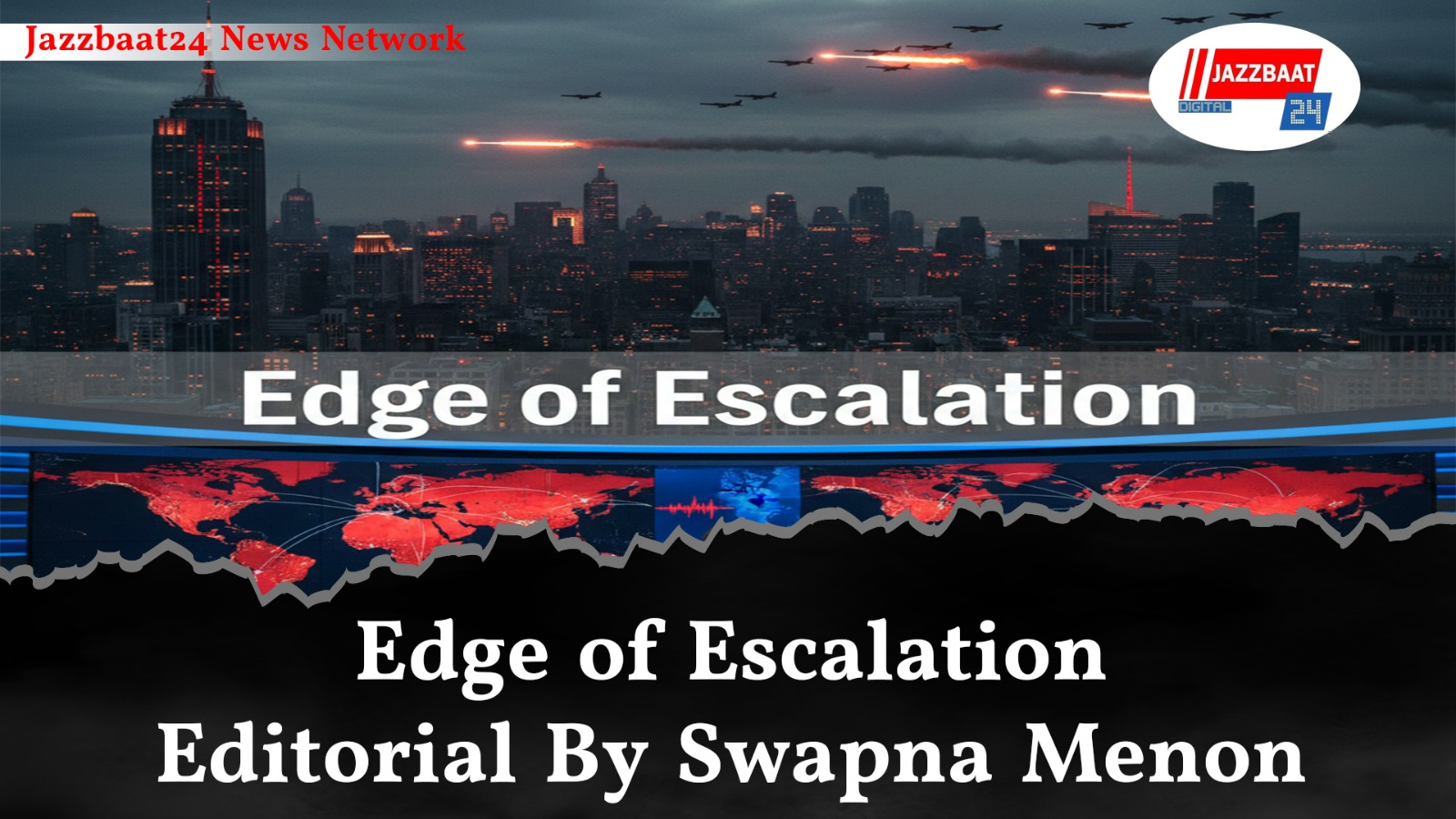
The Middle East stands once again at a perilous crossroads. On February 28, 2026, the United States and Israel carried out coordinated military strikes on Iranian military and defense facilities, marking one of the most significant direct confrontations in recent years. The operation, officials indicated, was aimed at curbing Iran’s advancing nuclear program and countering its expanding regional footprint. But what was framed as a targeted security action has rapidly spiraled into a volatile exchange with consequences far beyond the immediate battlefield.
Iran responded within hours, launching missile and drone attacks directed at Israeli territory and U.S. military assets across the region. Amid the chaos, reports confirmed at least one fatality caused by falling missile debris in the Gulf. The human toll, though currently limited, underscores the unpredictable and indiscriminate dangers of modern warfare where even indirect impacts can prove deadly.
The escalation has triggered a chain reaction across the Middle East’s fragile geopolitical landscape. Several countries temporarily closed their airspace, forcing airlines to reroute or cancel flights. Major carriers suspended operations to key destinations, leaving thousands of passengers stranded and amplifying economic uncertainty. Meanwhile, maritime traffic near the Strait of Hormuz a critical artery for global oil shipments faced disruptions, sending jitters through international energy markets. The narrow waterway has long been a flashpoint, and any threat to its stability reverberates across global supply chains.
Inside Iran, internet connectivity reportedly dropped sharply following the strikes. Whether a precautionary state-imposed restriction or the result of infrastructural damage, the communications blackout has limited the flow of information and heightened speculation about internal conditions. In moments of crisis, restricted connectivity often deepens anxiety, both domestically and internationally.
Global leaders have responded with urgency. France and China, among others, called for immediate restraint and renewed diplomatic engagement. Their appeals reflect a broader international concern: that a localized military exchange could ignite a wider regional conflict involving multiple state and non-state actors. The Middle East’s intricate web of alliances and rivalries means that even limited strikes carry the risk of rapid escalation.
For Washington and Tel Aviv, the strikes likely represent a strategic calculation demonstrating resolve while aiming to degrade perceived threats. For Tehran, retaliation was almost inevitable, signaling deterrence and projecting strength to both domestic and regional audiences. Yet deterrence can quickly morph into escalation, particularly when national pride, security doctrine, and political survival intersect.
The world now watches a delicate balancing act. Diplomacy has not vanished, but it appears overshadowed by military maneuvering. The coming days will test whether back-channel negotiations and international mediation can de-escalate tensions before they harden into a sustained confrontation.
History has repeatedly shown that in this region, sparks can travel far beyond their point of origin. What began as a strategic strike may yet evolve into a defining moment for regional stability. The urgent question is not who struck first but whether leaders can prevent the next strike from widening the circle of conflict.