
By Nilanjan Dasgupta
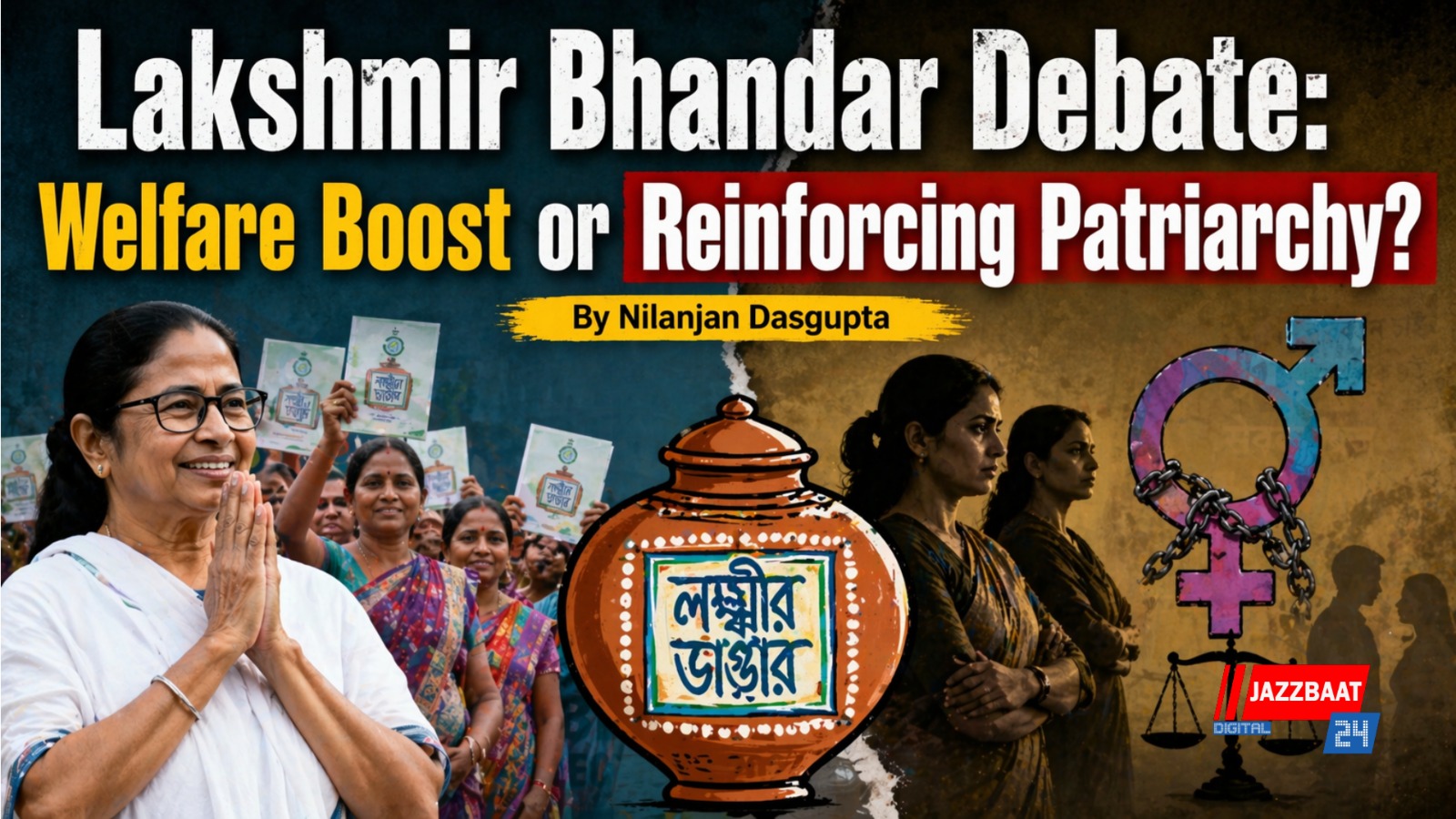
As West Bengal heads toward the 2026 Assembly elections, the state government’s flagship Lakshmir Bhandar scheme has become the centre of a growing debate among economists, policymakers, and beneficiaries—raising a key question: does the scheme empower women, or does it reinforce traditional gender roles?
Launched by the government under Chief Minister Mamata Banerjee, the scheme provides monthly cash assistance to women from economically weaker households. Recent budget changes increased the amount to around ₹1,500 for general category beneficiaries and ₹1,700 for SC/ST women, further expanding its reach and political significance.
Supporters argue that the scheme has significantly improved financial security for millions of women. Many beneficiaries say the money helps cover essential expenses such as medicines, food, and children’s education. For women with limited or unstable income, especially in rural and informal sectors, this direct cash transfer acts as a vital safety net. Some economists also defend the policy as part of a broader global trend of social protection measures, noting that such transfers can improve household welfare and decision-making power.
However, critics raise concerns about the deeper implications of the scheme. A section of economists argues that cash transfers like Lakshmir Bhandar often treat women primarily as caregivers or “custodians of family welfare,” rather than as independent economic agents. This, they say, reflects a subtle patriarchal framework where women are supported financially but not fully integrated into the workforce or economic decision-making structures.
Experts also point out that while the scheme offers immediate relief, it does little to address structural issues such as unemployment and declining participation of women in formal jobs. Data indicates that women’s presence in secure, organised employment remains low, even as welfare schemes expand. Critics argue that without parallel investments in job creation and skill development, such schemes risk creating dependency rather than long-term empowerment.
At the same time, political analysts highlight the electoral dimension. Welfare schemes targeting women voters have become a major factor in shaping electoral outcomes, with parties across the spectrum promising similar or higher cash benefits. This has intensified the debate over whether such policies are driven more by social welfare goals or political strategy.
Despite the criticism, many beneficiaries continue to strongly support the scheme, emphasizing its immediate impact on their daily lives. For them, Lakshmir Bhandar is not an abstract policy debate but a crucial lifeline.
As the debate continues, the scheme reflects a broader dilemma in public policy: balancing short-term welfare with long-term empowerment, and ensuring that financial support translates into genuine economic independence for women.