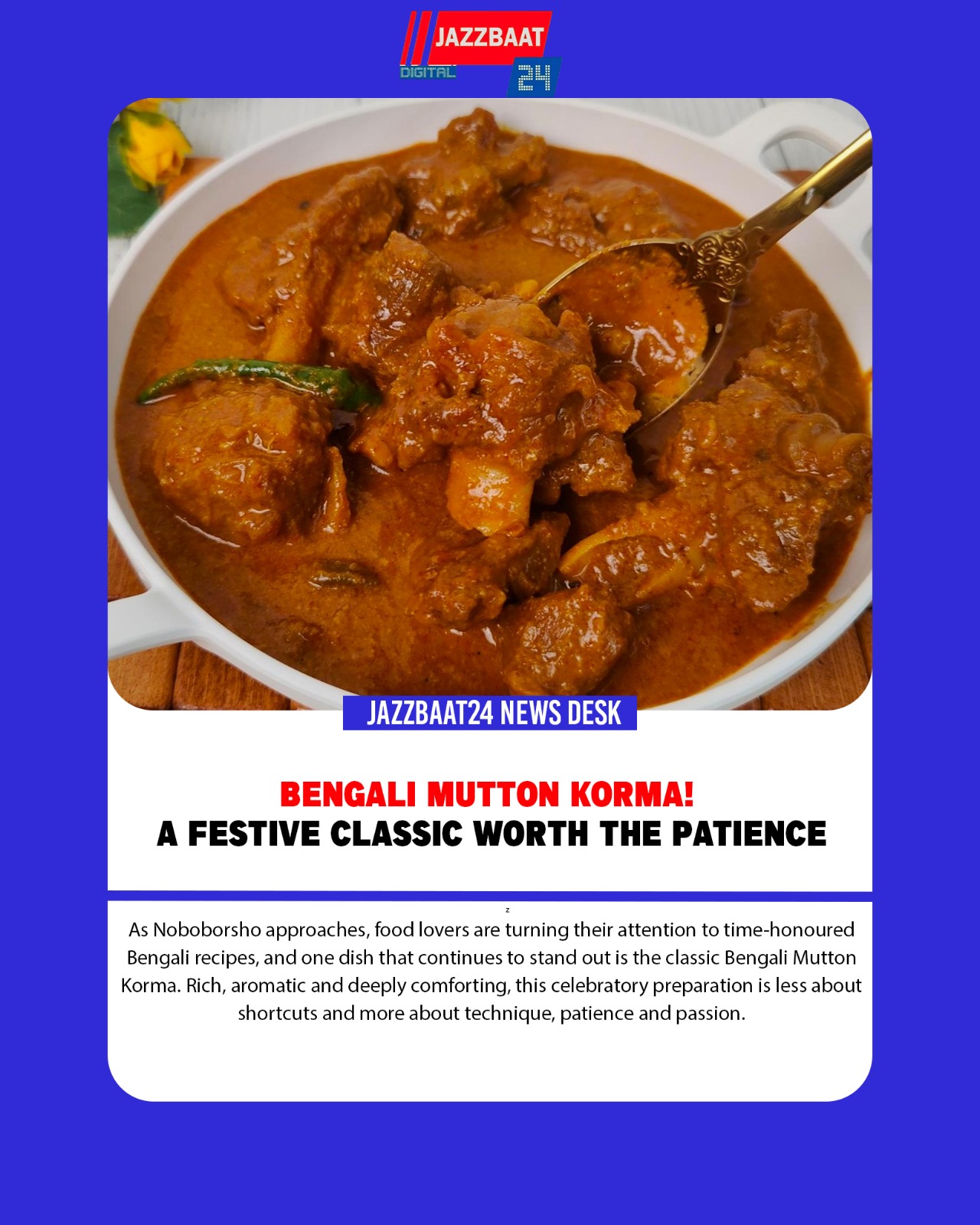
As Noboborsho approaches, food lovers are turning their attention to time-honoured Bengali recipes, and one dish that continues to stand out is the classic Bengali Mutton Korma. Rich, aromatic and deeply comforting, this celebratory preparation is less about shortcuts and more about technique, patience and passion.
Traditionally, korma refers to the method of braising meat. The process begins with frying marinated mutton and then slow-cooking it in a sealed pot until the meat turns tender and succulent. Unlike everyday curries, korma was once reserved for special occasions and family gatherings, making it a dish closely associated with celebration.
The foundation of a good korma lies in simple, everyday ingredients, onion paste, ginger-garlic paste and curd. Some variations include blanched nuts for added richness, but Bengali-style korma focuses more on balance than heaviness. What truly defines the dish is koshano (slow roasting of masala). This step demands attention: undercooking results in a pale, raw flavour, while overdoing it can make the dish bitter.
This particular Bengali Mutton Korma draws inspiration from the classic cookbook Rannar Boi by Leela Majumdar and Kamala Chattopadhyay. A unique twist is the use of carefully dry-roasted cumin powder added at the end, instead of the usual garam masala. This subtle change elevates the aroma and gives the dish its signature depth.
While a heavy kadhai or Dutch oven is ideal for slow cooking, the recipe also offers a pressure-cooker alternative for those mindful of time and energy. However, purists agree that slow cooking brings out the best flavours.
Best enjoyed with fragrant pulao or flaky paratha, Bengali Mutton Korma is more than just a recipe it’s a reminder that great food rewards those who cook with care, patience and heart.