
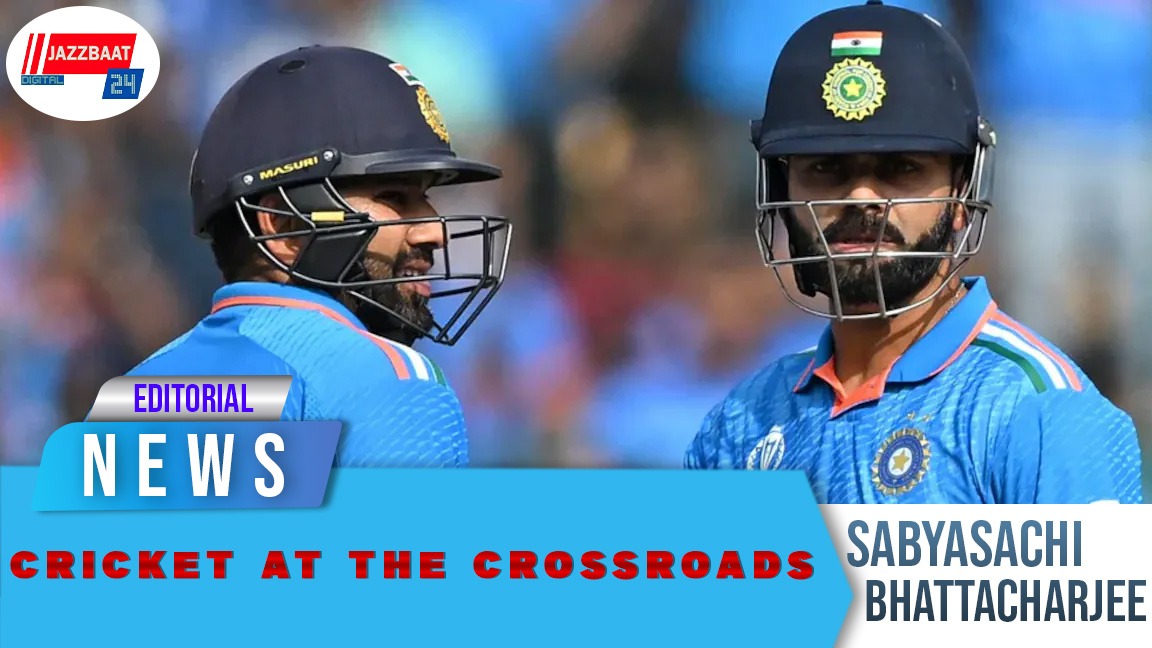
Not just the exclusion of a Bangladeshi cricketer from the IPL, the BCCI appears to be taking a much bigger step against Bangladesh. According to sources, the Indian cricket board has effectively decided to put on hold the Indian team’s proposed tour of Bangladesh this year. Officially, the BCCI maintains that the final call will be taken by the Indian government. Yet all indications suggest that Rohit Sharma’s team is unlikely to travel to Bangladesh anytime soon.
This is not an abrupt development. Last year, India was scheduled to tour Bangladesh in July, but the visit was eventually cancelled. Political instability in Bangladesh and the strong anti-India stance of the country’s interim authorities were believed to be major factors behind that decision. Still, the Bangladesh Cricket Board (BCB) did not abandon hope. Reviving the cancelled series, it recently announced a schedule of three ODIs and three T20Is against India, to be played in September.
However, a schedule on paper does not guarantee a series on the field. The uncertainty has deepened further after the BCCI dropped Mustafizur Rahman from the IPL. Board sources suggest that this move has intensified doubts over whether Indian stars like Rohit Sharma and Virat Kohli will travel to Bangladesh at all. Before any tour, the BCCI will seek clearance from the Indian government. Only if the government, after assessing the situation, grants permission will the tour take place. Given the current political climate, unless there is a major shift, India is unlikely to play in Bangladesh.
Significantly, the BCCI now seems to be viewing Bangladesh through the same lens as Pakistan. India does not play bilateral series with Pakistan, except in ICC or multi-nation tournaments. A similar policy is likely to be applied to Bangladesh, meaning no bilateral cricket in the near future.
This approach, however, raises an important question. While cricketing ties may be strained, India has not severed diplomatic relations with Bangladesh. On the contrary, the Indian government continues to favour dialogue and engagement. In that context, is it reasonable to freeze cricketing relations altogether? In South Asia, cricket has often acted as a form of soft diplomacy, opening channels of communication when politics faltered. Closing that avenue entirely may have consequences beyond the boundary ropes.
National interest and security must remain paramount. Yet sidelining sport as a bridge between peoples could harden attitudes on both sides. The BCCI’s stance may seem pragmatic in the short term, but its long-term diplomatic implications deserve careful reflection.
Ultimately, the debate returns to a familiar question: is cricket merely a game, or is it also a vital bridge in relations between neighbouring nations?