

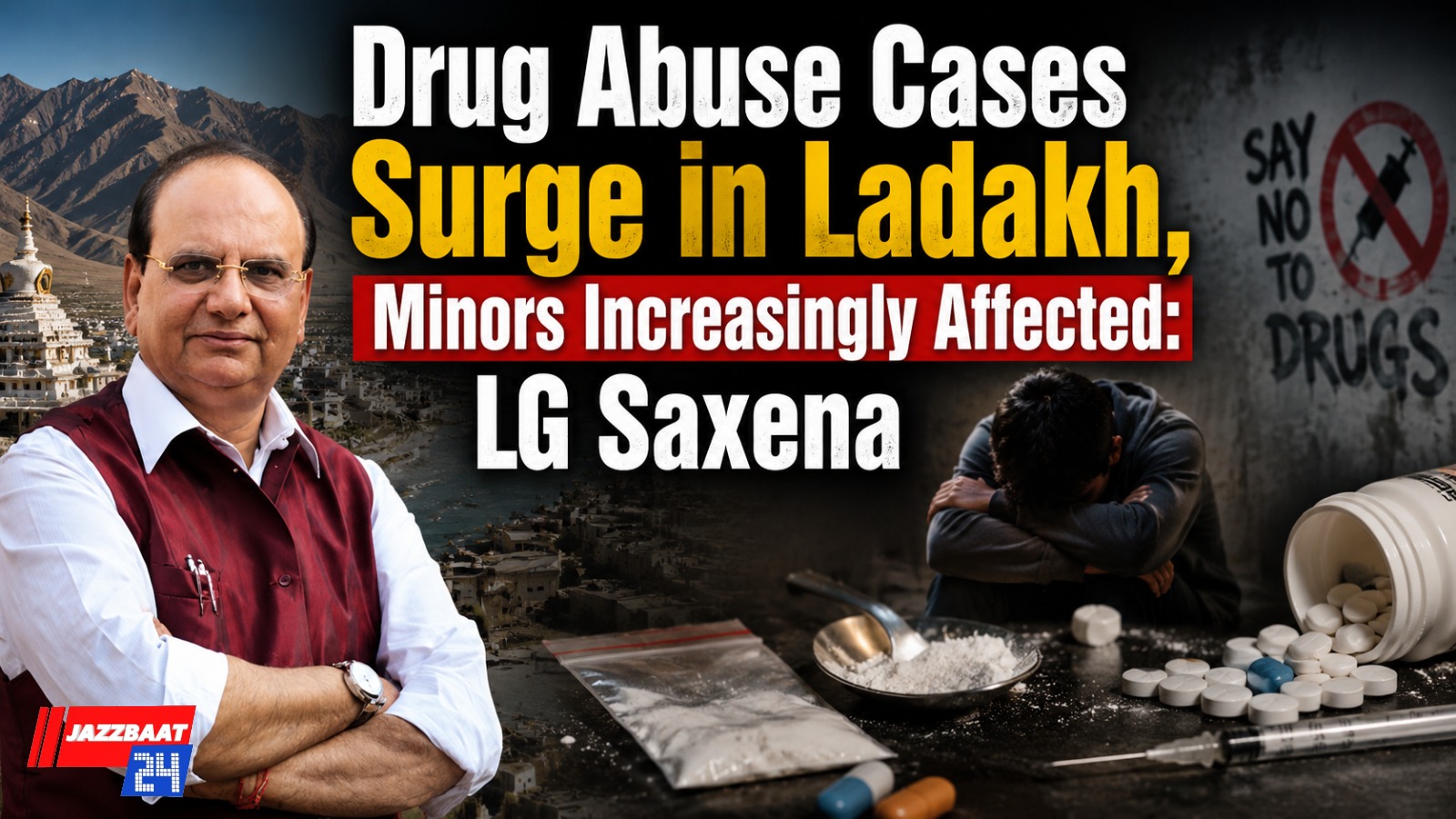
The growing menace of drug abuse in Ladakh has emerged as a serious concern, with an increasing number of minors falling victim to substance addiction. Raising alarm over the situation, Lieutenant Governor of Ladakh, Brigadier (Dr.) B.D. Mishra, highlighted the disturbing trend during a recent review of anti-drug initiatives in the Union Territory, stressing the urgent need for stronger preventive measures and community participation.
According to official figures shared by the administration, Ladakh has witnessed a sharp rise in reported drug abuse cases over the past year. Authorities recorded 298 new cases of drug abuse, including 101 opioid-related cases and 40 cases involving cannabis and poly-substance abuse. What has particularly alarmed officials is the growing involvement of adolescents and school-age children, indicating that substance abuse is no longer confined to adults.
The Lieutenant Governor described the trend as a significant social challenge that threatens the future of the region's youth. He emphasized that the increasing number of minors affected by addiction calls for immediate intervention from families, schools, community organizations, and law enforcement agencies. Officials noted that early exposure to narcotics can have severe consequences on physical health, mental well-being, education, and long-term social development.
During discussions on drug de-addiction and rehabilitation efforts, the administration reviewed the functioning of treatment and counselling centres across Ladakh. Authorities stressed the need to strengthen awareness campaigns in schools and colleges while improving access to rehabilitation services for those struggling with addiction. Special attention is expected to be given to identifying vulnerable youths and providing them with timely counselling and support.
Officials also expressed concern over the spread of opioid abuse, which has emerged as one of the most serious aspects of the drug problem. Experts warn that opioid addiction often leads to long-term dependency and can create significant health and social challenges if not addressed at an early stage. The administration has directed departments concerned to intensify surveillance, strengthen coordination among agencies, and curb the supply of illegal substances entering the region.
The Ladakh administration has reiterated its commitment to tackling the issue through a combination of prevention, treatment, rehabilitation, and public awareness. As the number of cases continues to rise, authorities have called upon parents, educators, religious leaders, and local communities to work together in protecting young people from the dangers of substance abuse and ensuring a healthier future for the region.