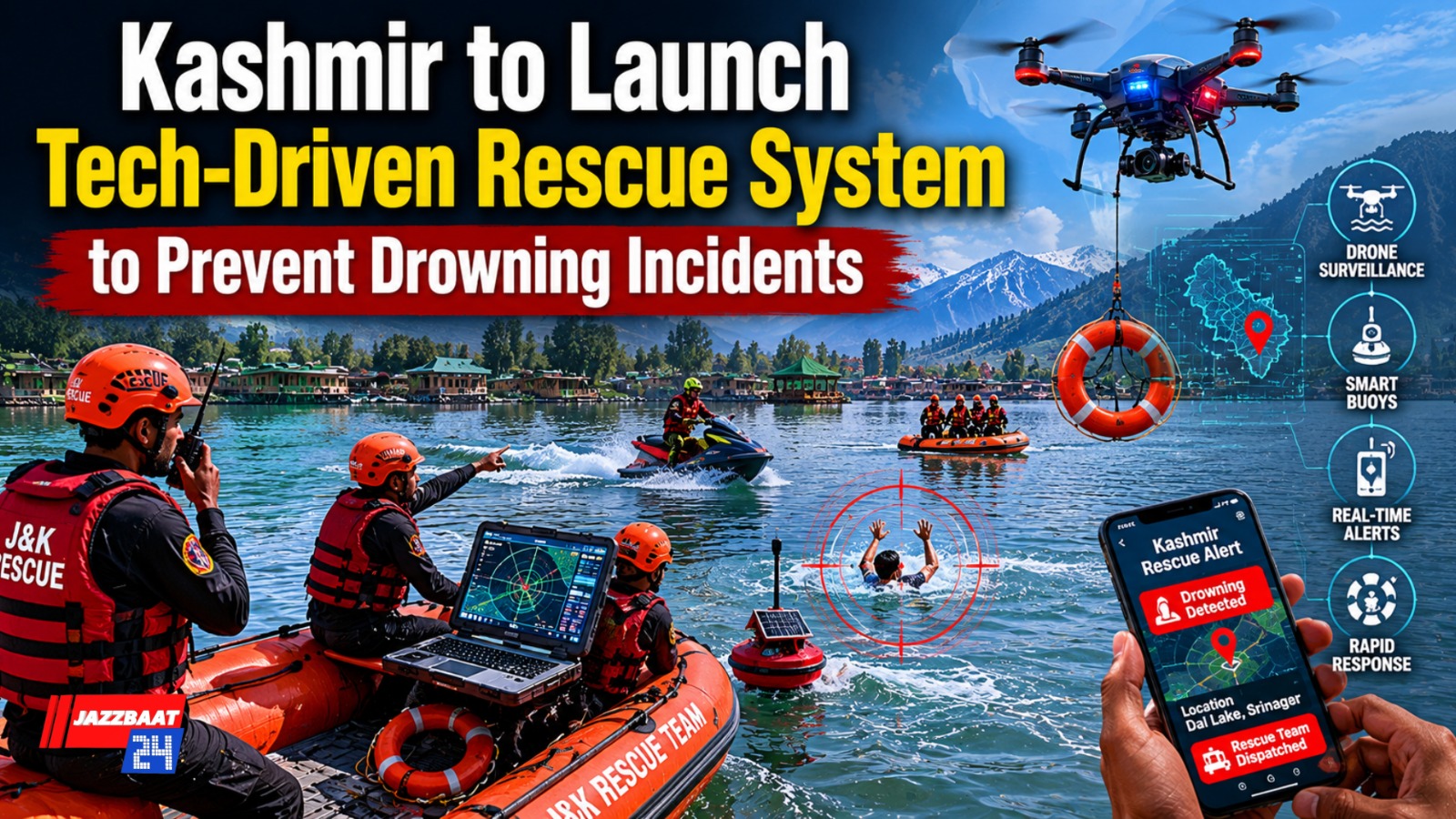
In a major step aimed at enhancing public safety around rivers, lakes, and other water bodies, the Jammu and Kashmir administration is set to introduce a technology-driven rescue mechanism to prevent drowning incidents across the Kashmir Valley.
The initiative comes in response to a growing number of drowning cases reported in recent years, particularly during the summer months when residents and tourists frequently visit water bodies. Officials said the new system will combine modern surveillance technologies, rapid-response infrastructure, and trained rescue personnel to improve emergency response times and save lives.
Under the proposed plan, vulnerable locations along rivers, streams, and lakes will be equipped with advanced monitoring systems, including CCTV cameras, sensors, and real-time alert mechanisms. These technologies will help authorities detect emergencies quickly and coordinate rescue operations more efficiently. Special focus will be given to accident-prone areas where drowning incidents have been reported repeatedly.
Officials stated that rescue teams will also be provided with modern equipment such as high-speed boats, life-saving devices, communication tools, and GPS-enabled tracking systems. The goal is to ensure that emergency responders can reach victims as quickly as possible and carry out rescue operations with greater effectiveness.
The administration is also considering the installation of warning systems and digital signboards at key tourist destinations and water bodies. These systems would provide safety instructions, weather updates, and alerts about dangerous conditions, helping visitors make informed decisions and avoid risky behavior.
Apart from technological interventions, authorities plan to strengthen public awareness campaigns focused on water safety. Educational programs in schools, colleges, and local communities are expected to highlight the dangers associated with swimming in unsafe areas and encourage adherence to safety guidelines.
Tourism officials have welcomed the initiative, noting that Kashmir attracts millions of visitors every year and that improving safety infrastructure is essential for both residents and tourists. They believe the deployment of modern rescue technology will boost confidence among visitors while reducing the risk of fatal accidents.
Experts have pointed out that a combination of surveillance technology, trained rescue personnel, and public awareness can significantly reduce drowning-related fatalities. Similar systems have been successfully implemented in several regions around the world, helping authorities respond more effectively to emergencies.
The project is expected to be rolled out in phases, with priority given to high-risk locations. Officials say the initiative reflects the administration's commitment to leveraging technology for public safety and ensuring better protection for people visiting Kashmir’s numerous rivers, lakes, and other water attractions.