

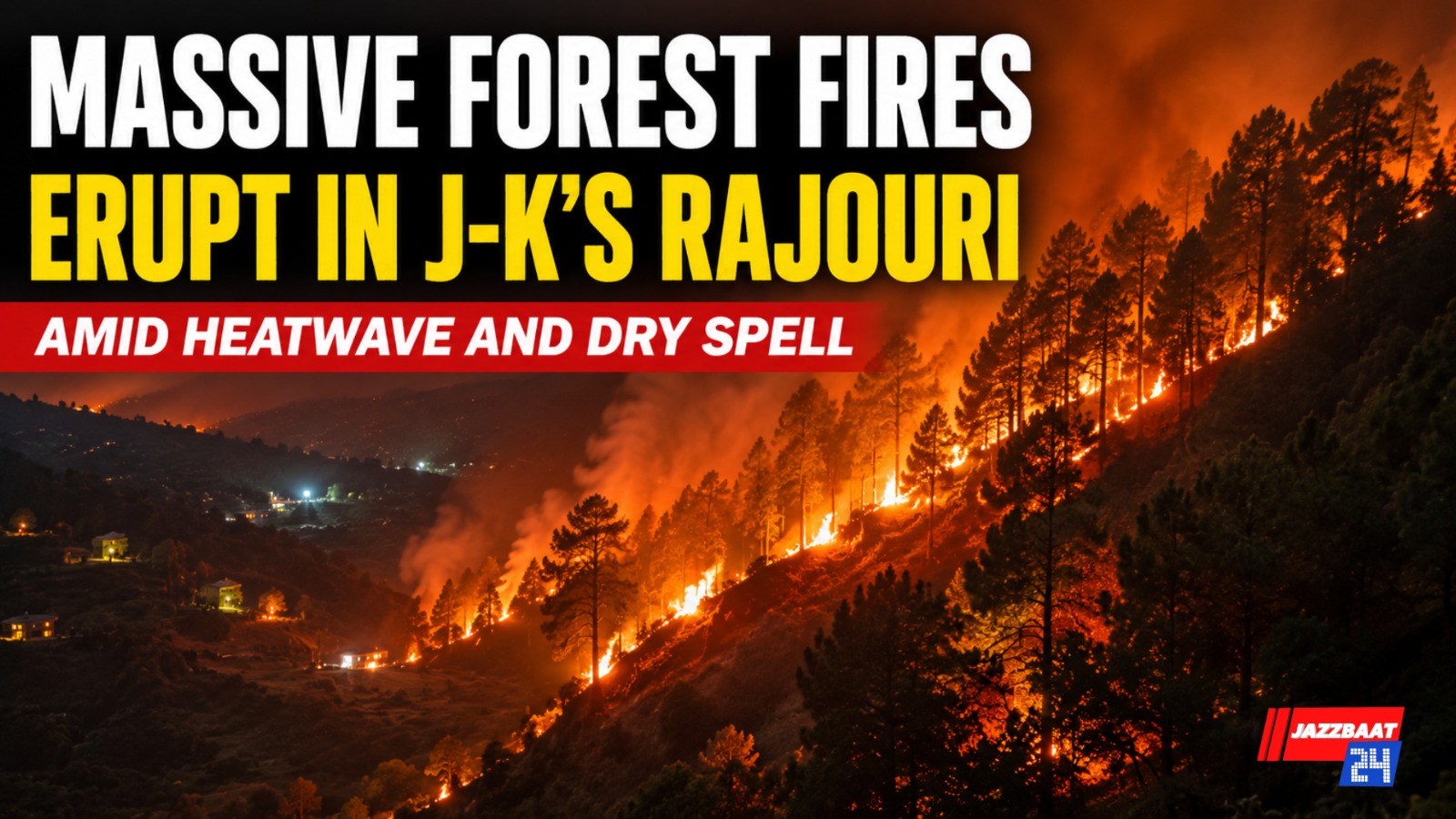
A series of massive forest fires broke out across multiple locations in Jammu and Kashmir's Rajouri district on Wednesday, triggering an emergency response from forest authorities as soaring temperatures and prolonged dry weather continue to grip the region. The fires spread rapidly through several forest ranges, raising concerns about environmental damage, wildlife safety, and the risk of the flames reaching nearby habitations.
According to officials, teams from the Forest Department, Forest Protection Force, Social Forestry Department, and local volunteers were immediately deployed to contain the blaze. Firefighters have been battling difficult terrain and strong dry conditions that have accelerated the spread of the fires. Authorities said efforts are focused on preventing the flames from reaching dense forest zones and minimizing damage to natural resources.
The latest outbreak comes amid an unusually severe forest fire season in Rajouri. Forest officials revealed that around 45 fire incidents have been recorded across the Rajouri and Nowshera forest divisions during the past 12 weeks. Large sections of forest land, particularly in the Sialsui Khadar area of Kalakote tehsil, have already been affected by repeated fires fueled by persistent heatwave conditions and a prolonged lack of rainfall.
Conservator of Forests Sat Pal recently said that the administration has intensified preparedness measures to tackle the growing threat. Meetings have been held with various agencies to improve coordination, communication, and rapid resource mobilization whenever fires are reported. While most of the incidents have been classified as surface fires rather than crown fires, officials warned that they still cause significant ecological damage by destroying vegetation and threatening birds, reptiles, and other wildlife species.
The environmental impact has already become visible. Reports from recent weeks indicate that several wild animals have been forced out of their natural habitats due to the fires and have entered nearby residential areas in search of food and shelter. This has increased concerns among local residents and wildlife officials alike.
Authorities have appealed to the public to cooperate in preventing forest fires by avoiding activities that could spark flames, including careless disposal of cigarette butts and unattended campfires. Officials emphasized that community participation is crucial in protecting the region's forests, especially during periods of extreme heat and dry weather.
Although recent light rainfall has brought a slight drop in temperatures in some parts of the district, officials remain cautious. With heatwave conditions continuing across much of northern India, the risk of fresh fire outbreaks remains high. Forest authorities are maintaining round-the-clock surveillance and have urged residents to report any signs of fire immediately to prevent further devastation.