

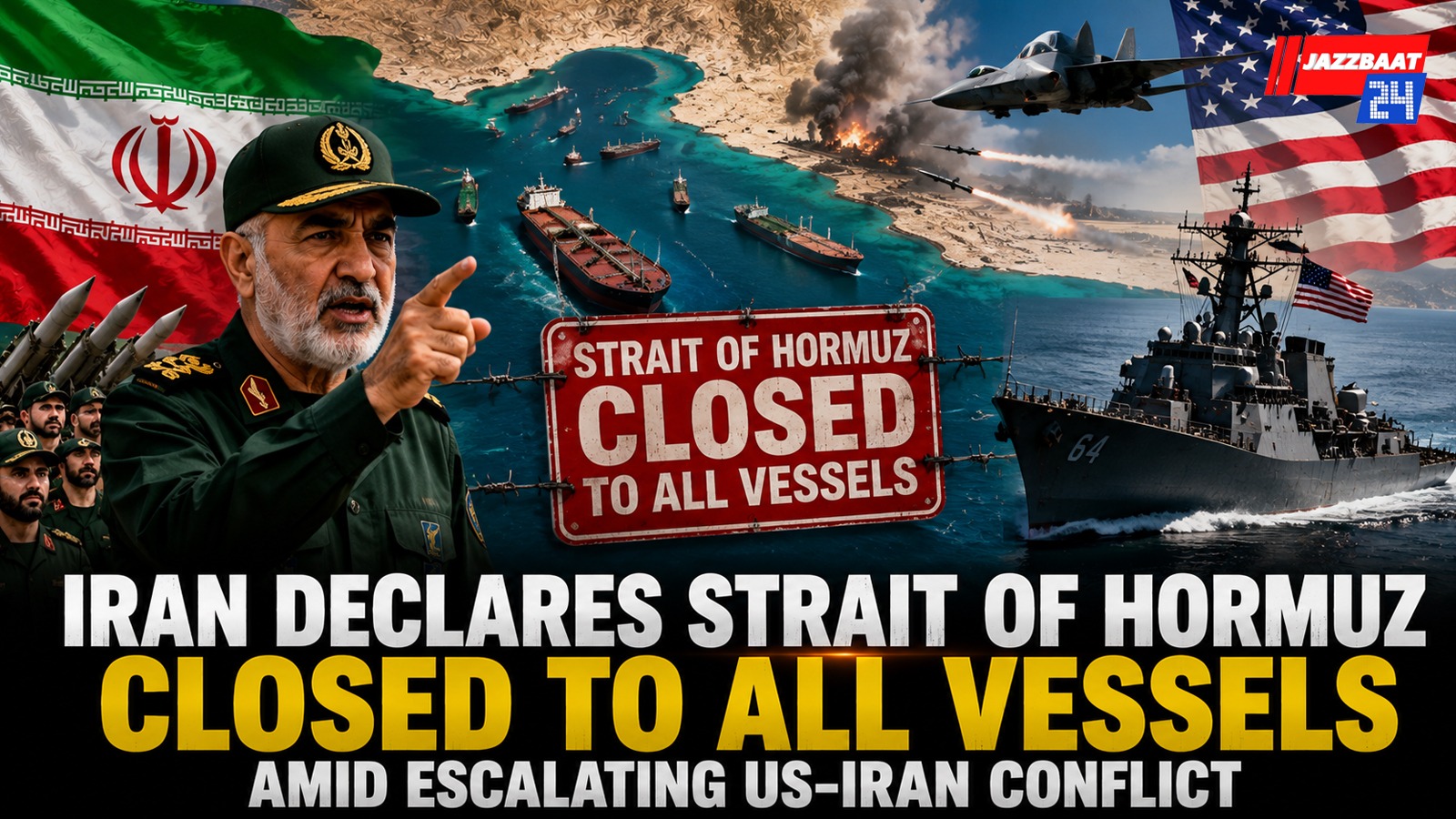
Iran's military leadership has announced the closure of the Strait of Hormuz to all vessels, dramatically escalating tensions in the Gulf following a fresh wave of U.S. airstrikes on Iranian targets. The announcement was made by Iran's Joint Military Command and echoed by the Islamic Revolutionary Guard Corps (IRGC), which warned that any vessel attempting to transit the strategic waterway could face military action.
The move comes after the United States launched additional strikes against Iranian military infrastructure, stating that the attacks were a response to Iran's "continued and unwarranted aggression." The latest round of strikes targeted surveillance, communication, and defense-related facilities across Iran, further intensifying an already volatile confrontation between the two countries.
The Strait of Hormuz is one of the world's most strategically important maritime chokepoints, connecting the Persian Gulf with the Gulf of Oman and the Arabian Sea. A significant portion of global oil and liquefied natural gas exports pass through the narrow waterway every day. Any disruption to shipping in the strait has immediate consequences for global energy markets and international trade.
Following Iran's announcement, oil prices surged by more than 2% amid fears of supply disruptions. Energy traders and shipping companies are closely monitoring the situation as concerns grow over the possibility of prolonged restrictions on commercial traffic through the region.
However, the situation on the water remains contested. The U.S. Central Command (CENTCOM) stated that commercial vessels continue to operate in and out of the Strait of Hormuz and rejected reports suggesting that American warships had been successfully targeted. U.S. officials indicated that maritime traffic had not come to a complete halt despite Iran's declaration.
The latest developments mark another dangerous phase in the ongoing US-Iran confrontation. Iran has reportedly launched retaliatory actions against American interests in the region, while Washington has signaled that further military action remains possible if hostilities continue. Regional governments and major world powers have urged restraint, warning that any broader conflict could threaten global energy security and destabilize the wider Middle East.
As diplomatic efforts struggle to keep pace with rapidly escalating military developments, the Strait of Hormuz once again finds itself at the center of a crisis with potentially far-reaching geopolitical and economic consequences.