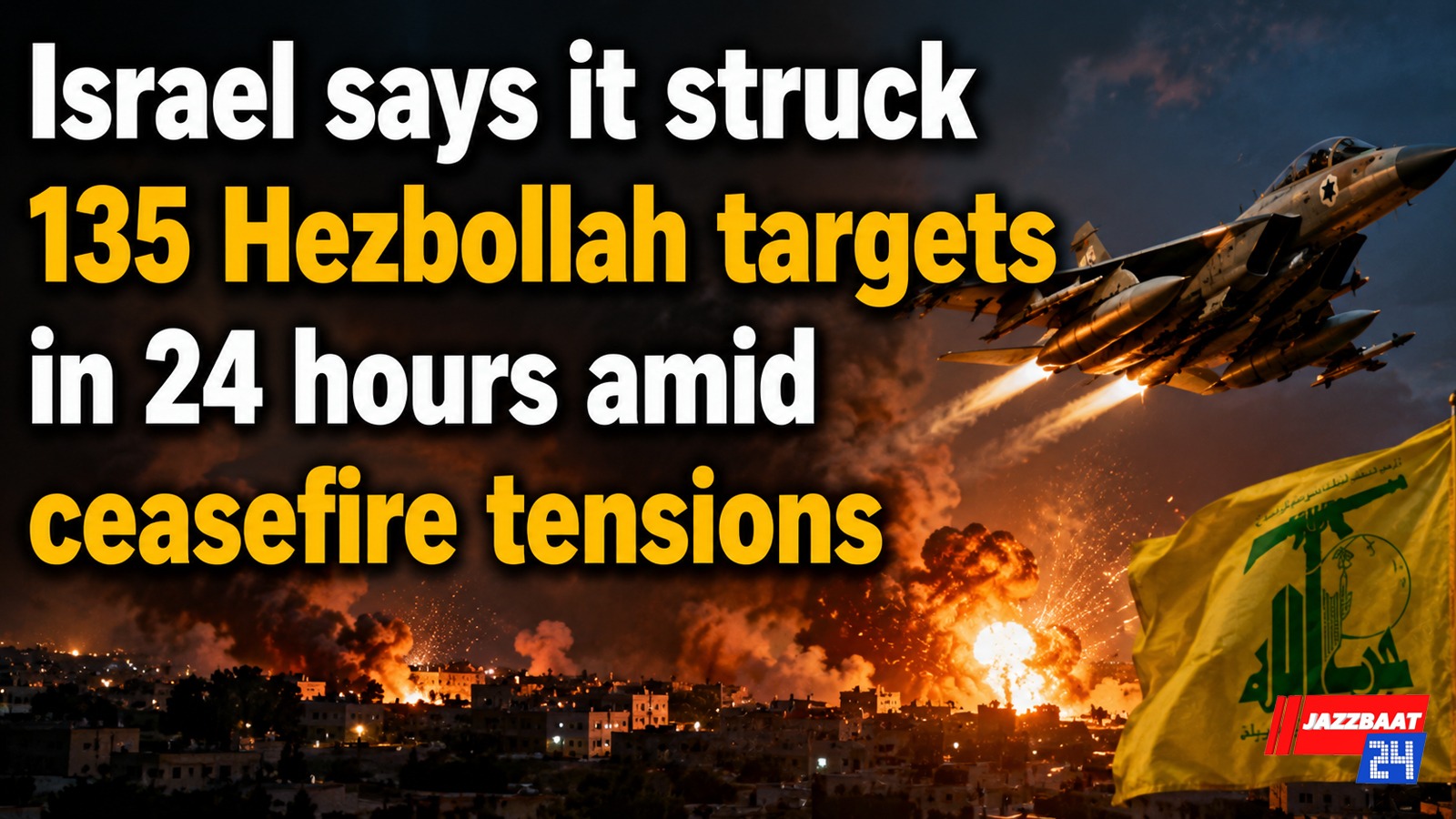
Israel has said its military carried out a major wave of strikes targeting Hezbollah positions in southern Lebanon, hitting around 135 sites over a 24-hour period, in what marks one of the most intense escalations since a ceasefire arrangement came into effect.
The Israel Defense Forces (IDF) stated that the strikes were aimed at Hezbollah infrastructure, including weapons storage facilities, rocket launch sites, and operational positions. According to Israeli officials, the operation was conducted in response to what they described as repeated ceasefire violations and continued militant activity near the border region.
Israeli authorities also claimed that 12 nationals have been killed since the ceasefire agreement, though they did not provide detailed breakdowns of the incidents or locations involved. Officials said the strikes were intended to “neutralize immediate threats” and prevent further cross-border attacks.
The developments come amid ongoing fragile calm along the Israel-Lebanon border, where tensions have remained high despite diplomatic efforts to maintain the ceasefire framework. Sporadic exchanges of fire and reported drone activity have continued in recent weeks, raising concerns about a wider escalation.
Lebanese sources and Hezbollah-linked media have reported damage to civilian infrastructure in some areas, although independent verification of the full extent of the strikes has not yet been confirmed. Emergency services in southern Lebanon have been placed on alert as assessments continue.
International observers have repeatedly warned that continued military action risks undermining the already fragile ceasefire understanding, which was intended to reduce hostilities following months of cross-border conflict. Humanitarian groups have also expressed concern about the impact on civilians living in border communities.
Israel, however, maintains that its operations are defensive in nature and necessary to prevent Hezbollah from rebuilding military capabilities near its northern frontier. Officials argue that the group continues to pose a security threat despite the ceasefire arrangement.
Diplomatic efforts by international mediators are expected to continue, though analysts say the situation remains highly volatile, with both sides maintaining high levels of alert and limited trust in the ceasefire process.
As the situation develops, the risk of further escalation remains significant, particularly if retaliatory actions follow the latest round of strikes.