
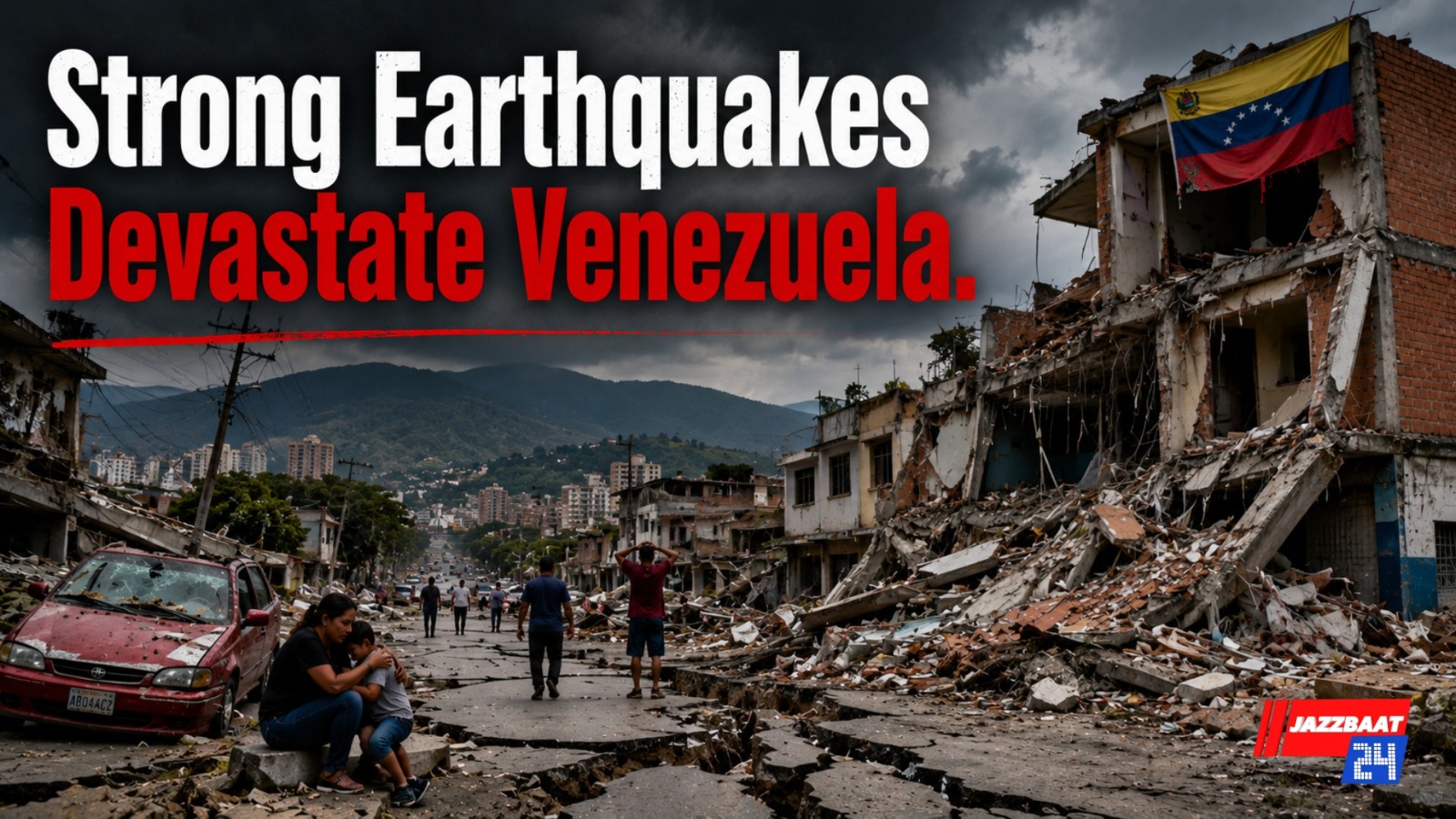
Venezuela has been hit by two powerful back-to-back earthquakes, leaving widespread destruction in the capital, Caracas, and surrounding regions. The quakes, measuring magnitude 7.2 and 7.5, struck within less than a minute of each other on Wednesday evening, making them among the strongest earthquakes to affect the country in more than a century. Authorities have declared a nationwide state of emergency as rescue teams continue searching for survivors trapped beneath collapsed buildings.
According to the U.S. Geological Survey (USGS), the epicentre was located near the city of Morón, around 168 kilometres west of Caracas, at a relatively shallow depth. The strong shaking was felt across much of northern Venezuela and even in neighbouring Caribbean countries. The shallow depth significantly increased the intensity of the tremors, leading to severe structural damage in densely populated areas.
Caracas suffered the worst destruction, with several residential and commercial buildings collapsing in districts including Baruta, Chacao and La Guaira. Roads were littered with debris, vehicles were crushed under falling concrete, and power outages affected large parts of the capital. The main international airport temporarily suspended operations after parts of its infrastructure were damaged, while metro services were halted as engineers inspected underground tunnels for safety.
Officials have confirmed at least 32 deaths and more than 700 injuries, though authorities warn the toll is expected to rise as emergency crews continue rescue operations. Dozens of people remain missing, and hospitals across Caracas are overwhelmed with injured residents. Rescue workers, assisted by firefighters, military personnel and volunteers, are using heavy machinery and trained dogs to search through collapsed structures.
The earthquakes also triggered around 20 aftershocks, forcing many residents to spend the night outdoors in parks and open spaces due to fears of further collapses. Emergency officials have urged people to avoid damaged buildings until structural inspections are completed. A tsunami warning was briefly issued for parts of the Caribbean but was later cancelled after further seismic analysis showed no significant threat.
Several countries, including the United States and regional neighbours, have offered humanitarian assistance, including search-and-rescue teams, medical supplies and emergency relief. Venezuela's government has thanked the international community for its support as the country begins assessing the full scale of the disaster. Authorities have promised that restoring essential services, including electricity, transport and communications, remains their top priority while rescue efforts continue around the clock.