
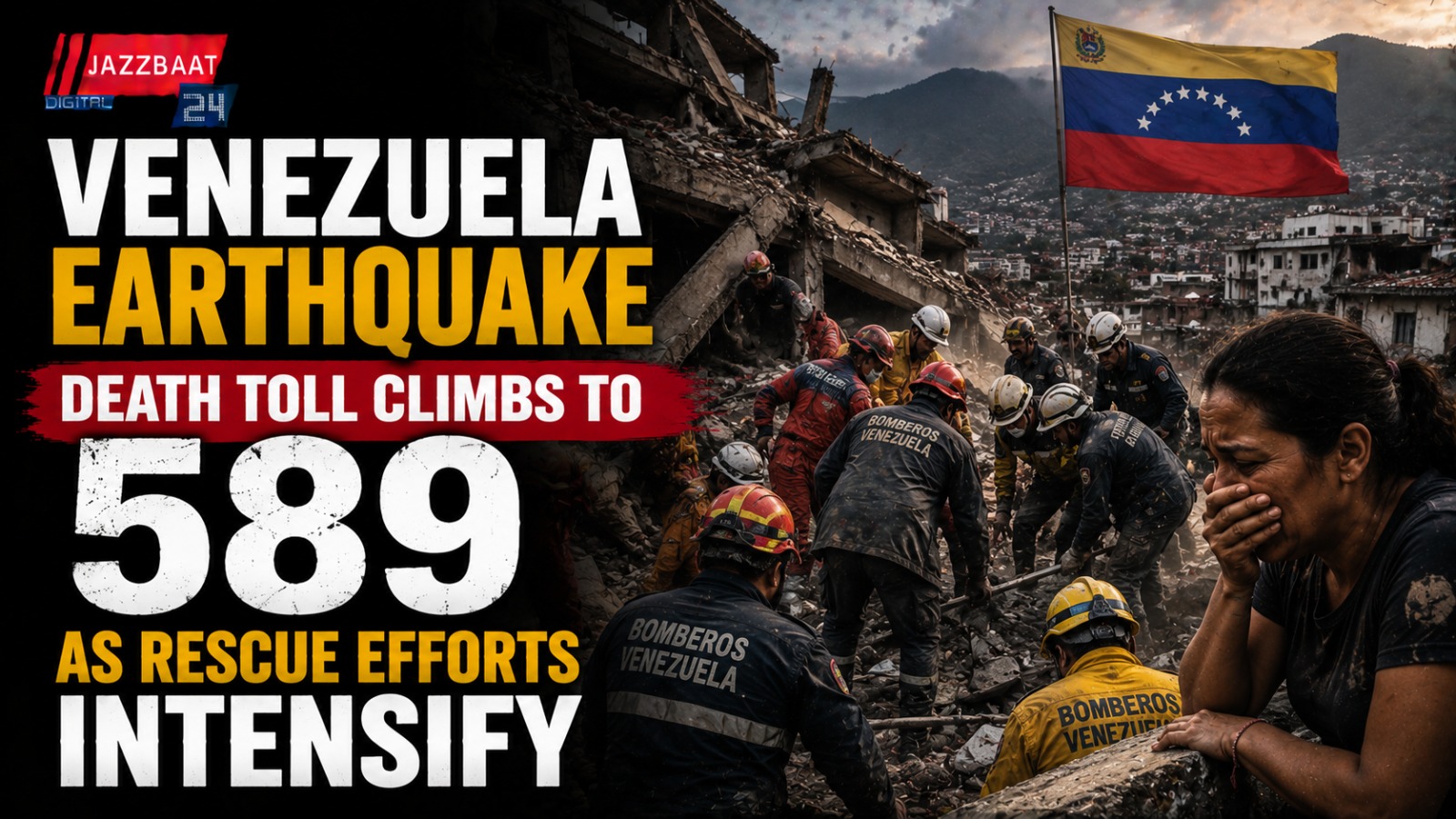
The death toll from the devastating twin earthquakes that struck Venezuela has risen to at least 589, with nearly 3,000 people injured and thousands more feared missing, according to Acting President Delcy Rodríguez. Rescue teams are continuing a desperate search for survivors amid widespread destruction across the country's northern coast.
The two powerful earthquakes, measuring 7.2 and 7.5 in magnitude, struck within seconds of each other on Wednesday evening, making them among the strongest earthquakes to hit Venezuela in more than a century. The coastal state of La Guaira, north of the capital Caracas, has emerged as the worst-affected area, with more than 100 buildings collapsing, including apartment blocks, hotels and commercial structures.
Emergency workers, soldiers and volunteers have been digging through piles of concrete and twisted metal in hopes of finding survivors trapped beneath the rubble. Authorities say nearly 3,000 people have been injured, while tens of thousands have been displaced from their homes. Large parts of Caracas and surrounding regions suffered power outages, communication disruptions and damage to critical infrastructure, including roads and the country's main international airport.
The Venezuelan government has declared La Guaira a disaster zone and deployed military forces to maintain order and support relief operations. Hundreds of aftershocks have been recorded since the initial quakes, complicating rescue efforts and increasing fears of further building collapses.
An international humanitarian response is now underway. Several countries, including India, the United States, Germany, Mexico and Brazil, have dispatched rescue teams, medical personnel and emergency supplies. India has launched "Operation Amistad," sending Air Force aircraft carrying relief materials and a specialised Army medical team to assist in rescue and healthcare operations.
Seismologists warn that the final death toll could rise significantly as rescuers continue to reach remote areas and search through collapsed buildings. The tragedy has once again highlighted Venezuela's vulnerability to major seismic events and the challenges posed by ageing infrastructure and limited disaster-response capabilities.