
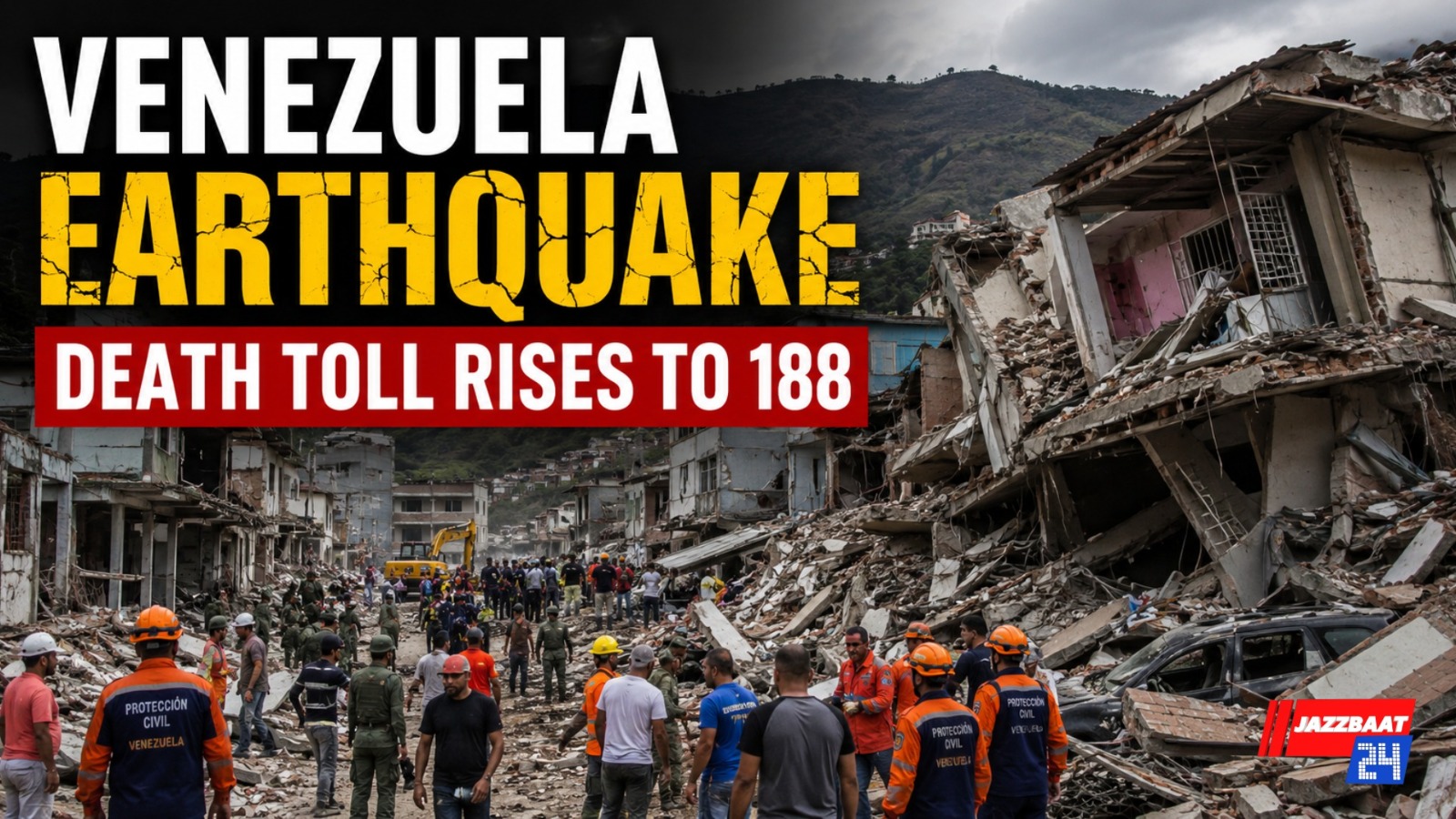
At least 188 people have been confirmed dead after a devastating earthquake disaster struck Venezuela, with rescue teams continuing to search through collapsed buildings for survivors. More than 1,500 people have been injured, and authorities fear the death toll could rise further as emergency operations continue in some of the worst-hit areas.
The powerful seismic event shook northern Venezuela on June 24, causing widespread destruction across Caracas, La Guaira, and several nearby states. Initial reports described the disaster as a rare "earthquake doublet" after two powerful tremors, measuring 7.2 and 7.5 in magnitude, struck just 39 seconds apart. However, seismologists are continuing to study the sequence, and some experts suggest the event may ultimately be interpreted as a single major earthquake followed by an unusually large accompanying shock.
Residential towers, office buildings, hospitals, roads and public infrastructure suffered extensive damage. La Guaira, located north of Caracas, emerged as one of the hardest-hit regions, with more than 100 buildings reportedly collapsing. Simón Bolívar International Airport sustained significant damage, forcing authorities to suspend flight operations. Power outages and communication disruptions have complicated rescue efforts across affected communities.
Emergency responders, firefighters, military personnel and volunteers have been working around the clock to locate people trapped beneath the rubble. Heavy equipment has been deployed in several cities, while temporary shelters have been opened for thousands of displaced families. Hospitals continue to treat a large number of injured residents despite damage to several medical facilities.
The Venezuelan government has declared a state of emergency and appealed for international assistance. Several countries and humanitarian organizations have pledged search-and-rescue teams, medical supplies, and financial aid to support relief operations. Authorities have also warned residents to remain alert, as dozens of aftershocks have already been recorded and additional strong tremors remain possible in the coming days.
The disaster is being described as one of Venezuela's strongest and deadliest earthquakes in more than a century. Seismologists say the event occurred along the complex boundary between the Caribbean and South American tectonic plates, an area capable of producing powerful earthquakes. While rescue efforts continue, thousands of families remain displaced, and officials expect the humanitarian response to continue for weeks as damage assessments are completed.