

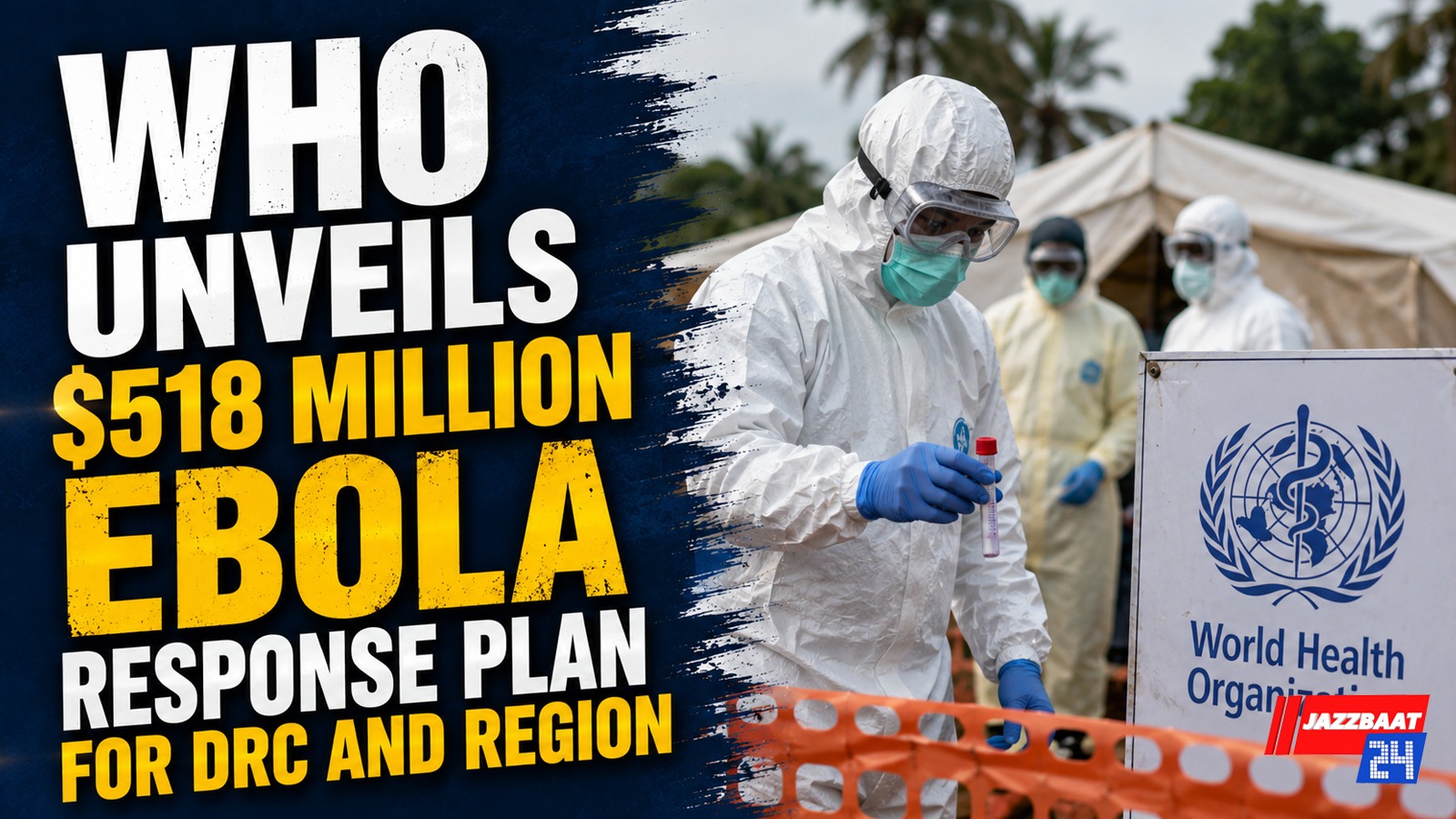
The World Health Organization (WHO), in partnership with the Africa Centres for Disease Control and Prevention (Africa CDC), has launched a six-month emergency response plan worth $518 million to combat the rapidly expanding Ebola outbreak in the Democratic Republic of the Congo (DRC) and neighboring countries. The initiative aims to strengthen disease surveillance, treatment, laboratory testing, community engagement, and border preparedness from June through November 2026.
The plan comes as health authorities struggle to contain an outbreak caused by the rare Bundibugyo strain of the Ebola virus, for which there is currently no approved vaccine or specific treatment. WHO Director-General Tedros Adhanom Ghebreyesus called for urgent international support, warning that the outbreak has spread faster than response efforts in several affected areas.
According to WHO and Africa CDC, the outbreak is now among the largest Ebola epidemics recorded in Africa. Recent figures show hundreds of confirmed infections and dozens of deaths in the DRC, while cases have also been detected in neighboring Uganda. Health officials say the virus may have circulated undetected for weeks before being formally identified, allowing transmission to expand across multiple provinces.
The joint strategy follows a “One Response” approach, bringing together governments, international agencies, and local communities. Funding will support emergency coordination, contact tracing, infection prevention, clinical care, research, logistics, and the maintenance of essential health services in affected regions. Border screening and preparedness measures will also be expanded in countries considered at risk of cross-border transmission.
Health workers on the ground continue to face significant challenges. Ongoing conflict in eastern Congo, population displacement, weak healthcare infrastructure, delays in testing, and community mistrust have complicated containment efforts. There have also been reports of attacks on medical teams and treatment facilities, further hampering the response.
International health experts warn that the absence of an approved vaccine for the Bundibugyo strain makes rapid detection and isolation of cases even more critical. Research organizations are accelerating the development and testing of experimental vaccines and treatments, while global donors are being urged to close funding gaps that could slow the response.
WHO officials stressed that political commitment, sustained financing, and strong community participation will be essential to bringing the outbreak under control. While progress has been made in expanding testing and treatment capacity, health authorities caution that the coming weeks will be crucial in determining whether the spread of the virus can be contained before it reaches more densely populated areas.