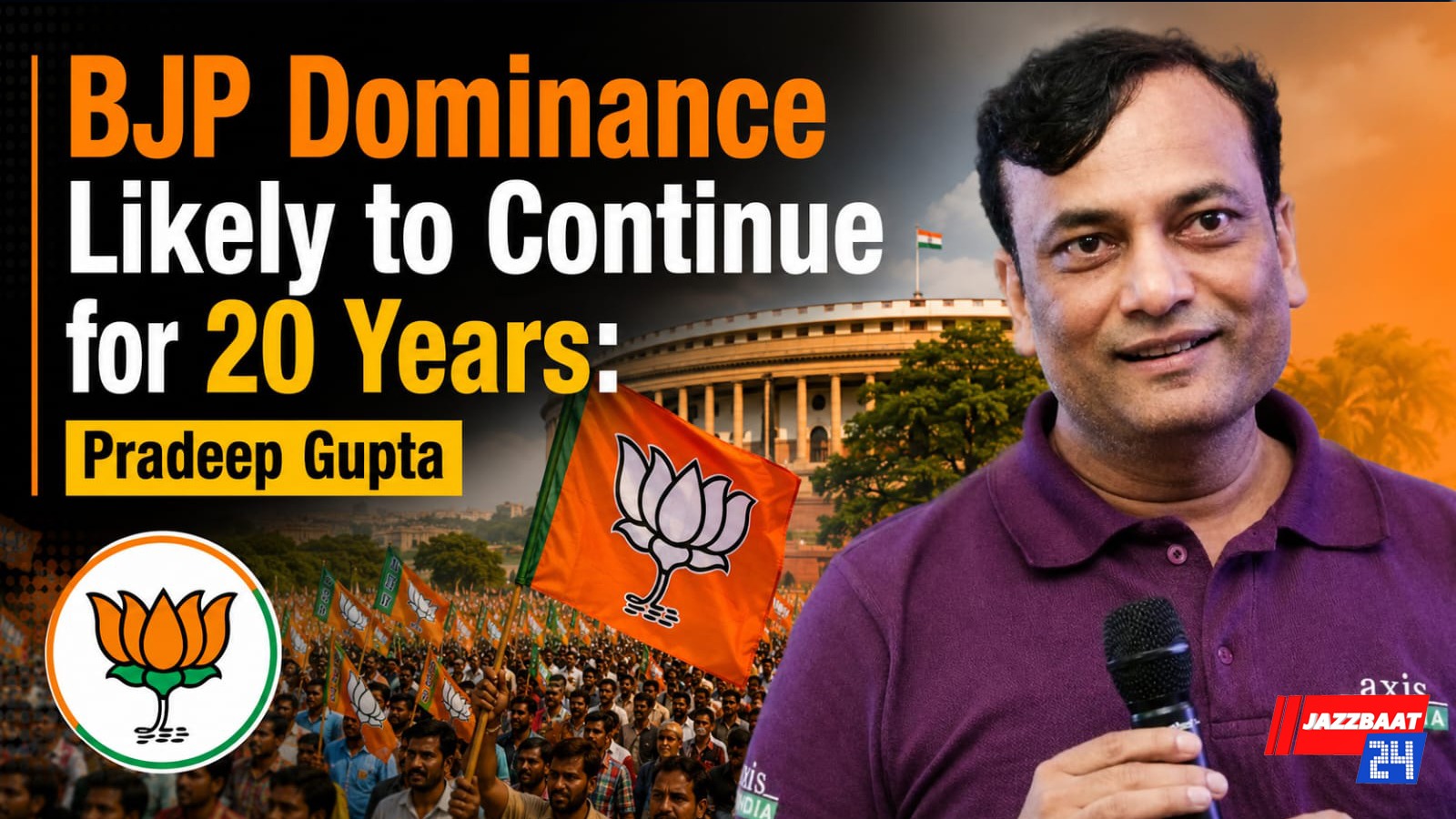
Political strategist and pollster Pradeep Gupta of Axis My India has said that the Bharatiya Janata Party’s (BJP) current phase of political dominance in India, which began in 2014, is likely to continue for at least another 20 years. His remarks have once again sparked discussion about the long-term trajectory of Indian politics and the strength of the ruling party’s nationwide appeal.
According to Gupta, the BJP has managed to build a broad-based electoral coalition that goes beyond traditional vote banks. He argued that the party’s organisational strength, leadership structure, and ability to connect with voters across regions have contributed significantly to its sustained popularity. He also pointed out that recent electoral trends suggest the BJP continues to enjoy strong public support in several key states.
His statement aligns with earlier observations where he highlighted that the BJP’s influence has only expanded since its national rise in 2014. Gupta suggested that unless there is a major political shift or a strong alternative emerging at the national level, the BJP is well-positioned to remain the dominant force in Indian politics for a long period.
The pollster’s comments come at a time when political parties across the country are preparing for upcoming elections, including several crucial state contests that are expected to shape the national mood ahead of future general elections. Analysts note that while the BJP remains strong, opposition parties are attempting to regroup and build alliances to counter its influence.
However, Gupta’s projection has drawn mixed reactions in political circles. Supporters of the BJP see it as validation of the party’s strong grassroots presence and governance model, while critics argue that Indian politics is highly dynamic and long-term predictions are uncertain.
Despite differing opinions, Gupta’s assessment highlights a broader trend in recent political analysis, that the BJP continues to be a central force in Indian electoral politics, with its influence likely to remain significant in the foreseeable future.
The statement adds to ongoing debates about whether India is moving toward a long phase of one-party dominance or if competitive politics will eventually reshape the landscape in the coming decades.