
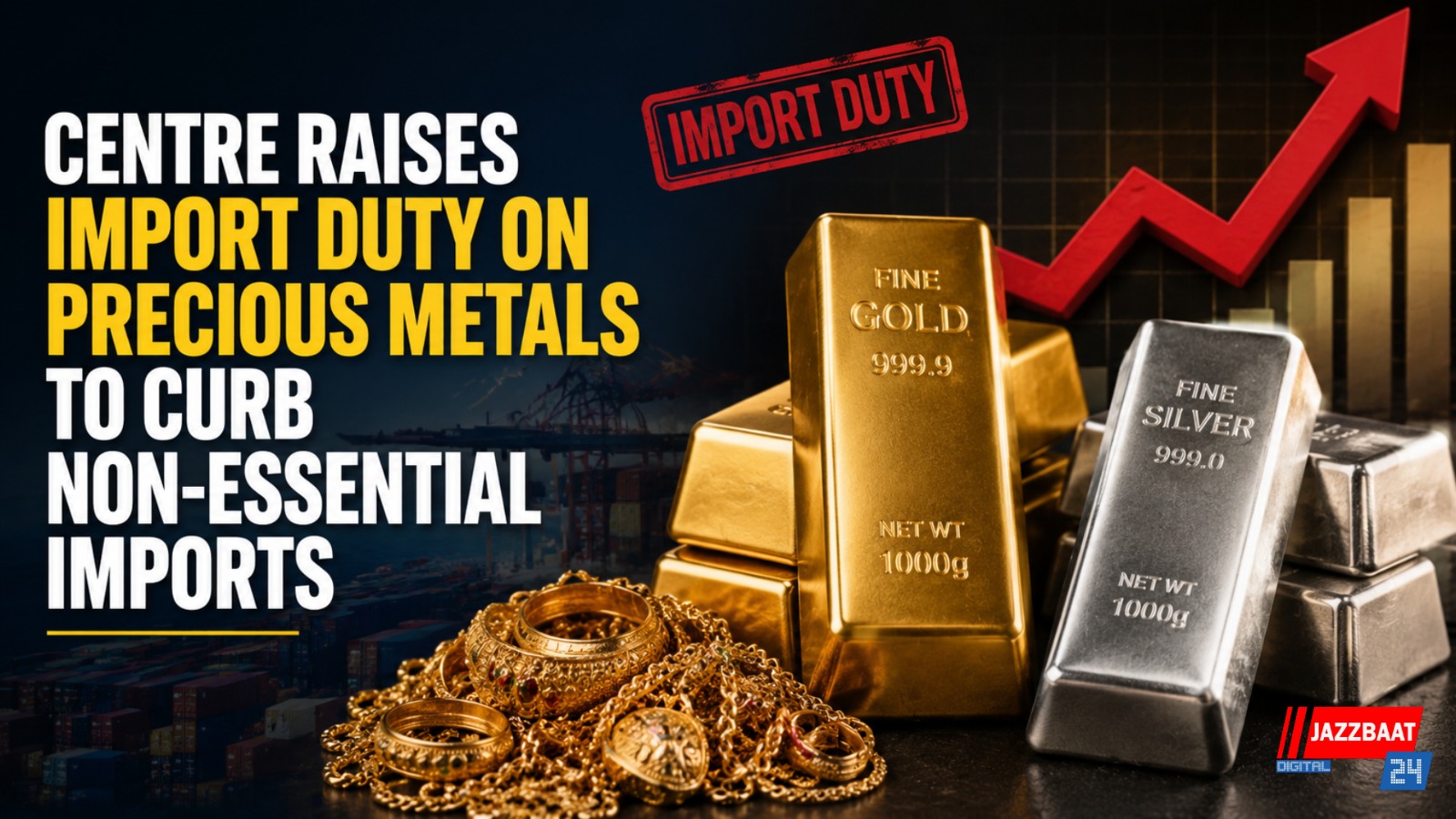
The Central government has increased import duties on gold, silver and platinum as part of its broader strategy to moderate non-essential imports and manage the country’s trade balance, according to government sources. The move is expected to impact the domestic bullion market while also influencing jewellery prices and import trends in the coming months.
Officials said the decision was taken after reviewing rising imports of precious metals, which contribute significantly to the country’s import bill. By raising customs duties, the government aims to discourage excessive inflow of luxury and non-essential commodities while encouraging more balanced foreign exchange management.
Sources indicated that the increase applies to key precious metals including gold, silver and platinum, all of which witness high demand in India for jewellery, investment and industrial use. The revised duty structure is also expected to support the government’s efforts to strengthen domestic economic stability amid global financial uncertainties.
Industry experts believe the decision could temporarily raise prices in the local bullion market, as importers and jewellers may pass on the additional cost to consumers. Gold prices in particular often react sharply to changes in import duty because India remains one of the world’s largest consumers of the precious metal.
The government has maintained that the measure is part of a larger fiscal and economic strategy rather than a restriction on trade. Officials noted that controlling non-essential imports can help reduce pressure on the current account deficit and support the value of the Indian rupee.
Jewellery traders and bullion associations are expected to closely monitor the impact of the revised duties. Some industry representatives have expressed concern that higher import costs could affect retail demand, especially during the festive and wedding seasons when purchases of gold and silver traditionally increase.
Economists, however, pointed out that governments often use import duties as a policy tool to regulate demand for luxury items and protect macroeconomic stability during periods of high import expenditure.
The decision may also encourage greater interest in recycled gold and domestically sourced bullion as businesses look for ways to manage rising costs. Analysts believe the long-term impact will depend on international metal prices, consumer demand and future economic conditions.
The Centre is expected to continue reviewing import patterns and economic indicators before considering any further changes to customs duties or trade-related policies concerning precious metals.