Adil

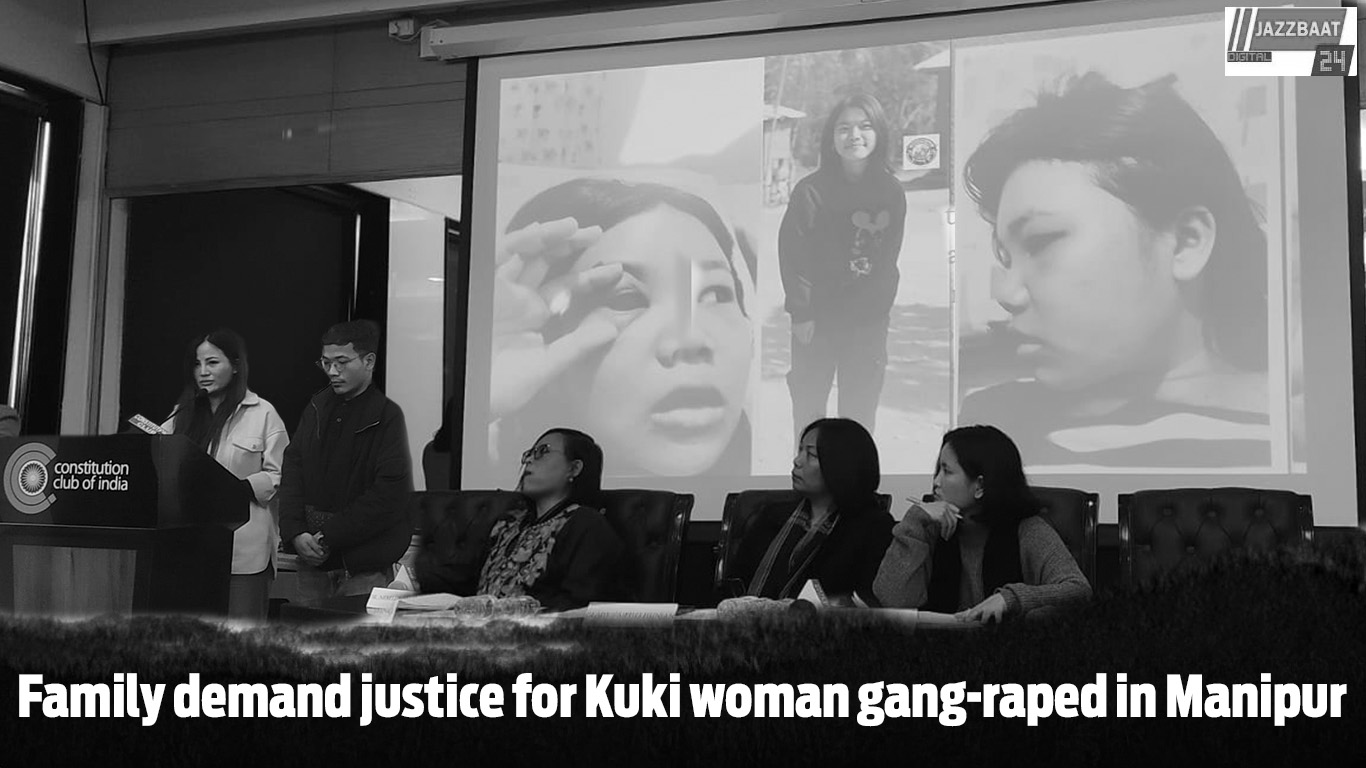
A press conference in New Delhi brought together scholars,
women’s rights activists, and members of a grieving family to expose the
prolonged failure of justice in Manipur, centring on the death of an
18-year-old Kuki-Zo woman who survived sexual violence in May 2023 but died on
10 January 2026 after nearly three years of medical suffering, psychological
trauma, displacement, and institutional neglect.
Speakers stressed that her death must be understood not as
an isolated medical incident, but as the cumulative outcome of sexual violence,
untreated trauma, and justice denied.
A Life Cut Short, A Future Taken Away
 Shila Hoakip speaks at the Constitution Club of India
in New Delhi, demanding justice for her sister, a survivor of the Manipur
violence.
Shila Hoakip speaks at the Constitution Club of India
in New Delhi, demanding justice for her sister, a survivor of the Manipur
violence.
Family members described the young woman not only as a
survivor, but as a daughter, sister, and provider who carried dreams far beyond
her years.
“She was only 18 years old when her life—and her bright
future—was taken away,” a family statement during the press conference. “She
was joyful, independent, and strong. Despite her young age, she never burdened
our parents. In fact, she supported them financially whenever she could. As a
sister, she was kind, loving, and always ready to help.”
On 15 May 2023, the family said, her dreams were “brutally
extinguished.”
Although she survived the assault physically, they
explained, her spirit did not. From that moment onward, she lived in constant
trauma, repeatedly asking why the violence had happened to her and what purpose
her life still held.
“There was not a single night when she slept peacefully,”
the family said. “She suffered nightmares, screamed for help in her sleep, and
relived the assault until her last breath.”
For over two years, she was largely bedridden, battling
insomnia, depression, numbness, and fear so severe that she withdrew even from
close family members. She stopped eating and had to be force-fed at times as
memories overwhelmed her body and mind.
“Until the end, she cried for justice,” the statement said.
“But no one gave her justice. Not then. Not even today.”
What the FIR Documents

Social activist and women’s rights advocate Glady Vaiphei
Hunjan, advisor to the Kukiis of Women Forum, Delhi, read excerpts from the
survivor’s First Information Report (FIR), recorded before a magistrate in July
2023.
According to Hunjan, the FIR meticulously documents the
sequence of sexual violence, the movement between multiple locations, the
specific vehicles used—including a purple Maruti Swift—and identifiable
landmarks in Imphal.
The survivor recorded that multiple men assaulted her and
documented their words verbatim, including discussions about her age—18 at the
time—and whether she would report the crime.
“These are not interpretations. These are her own words,”
Hunjan said. “She was not ashamed to write the truth. We should not be ashamed
to confront it.”
Despite the detailed FIR and medical records, panelists
stated that no meaningful progress followed. No senior government official
visited her during more than two years of hospitalization, and arrests remained
absent.
Trauma, Medicine, and Institutional Failure
A research scholar specializing in identity, community
studies, and ethnographic research explained that sexual violence produces not
only physical harm, but what is known as “social death”—a rupture of safety,
dignity, and belonging.
Medical and trauma research, she noted, confirms that
long-term post-traumatic stress significantly increases the risk of premature
death. Trauma weakens immune function, disrupts hormonal balance, and erodes
physical resilience—especially when compounded by delayed justice and
institutional silence.
“This was not a single trauma,” she said. “It was layered,
cumulative, and prolonged—through hospital wards, repeated infections, and
years of unanswered legal waiting.”
“When a survivor dies waiting for justice,” she added, “the
system itself becomes part of the harm.”
Beyond One Case: A Community Under Siege

Speakers placed the case within the broader context of
violence in Manipur since May 2023, documenting sexual assaults, killings,
lynchings, forced displacement, and the circulation of videos showing women
paraded naked.
Activists described how Kuki-Zo families were driven out of
the Imphal Valley within days, leaving behind homes, livelihoods, and even the
graves of loved ones. Roads remain blocked, education disrupted, examination
results altered, and access to healthcare and employment severely restricted.
“This is not merely ethnic violence,” Hunjan said. “When an
entire community is erased from the valley in days, it is ethnic cleansing.”
A Family’s Questions to the Nation

In its concluding statement, the family framed their loss as
a national one.
“We say ‘Beti Bachao, Beti Padhao.’ We say women are the
pride of this nation,” the statement read. “Was my sister not a daughter of
this country? Was she not Hindustan’s daughter?”
They asked how many more daughters must be lost before
accountability exists, and how many futures must be destroyed before justice is
delivered.
“We mourn not only our sister,” the family said, “but the
teacher, doctor, leader, and citizen she could have become.”
Even after filing her FIR and giving her statement, the
young woman reportedly asked her mother why no arrests had been made.
“Today, her voice has been silenced,” the family concluded.
“But our demand for justice will only grow louder.”
The family demanded systemic change, accountability from the
state government, and intervention by the central government—not only for their
daughter, but for every woman facing sexual violence and abandonment.
They also requested privacy and dignity as they navigate
what they called “immeasurable grief.”