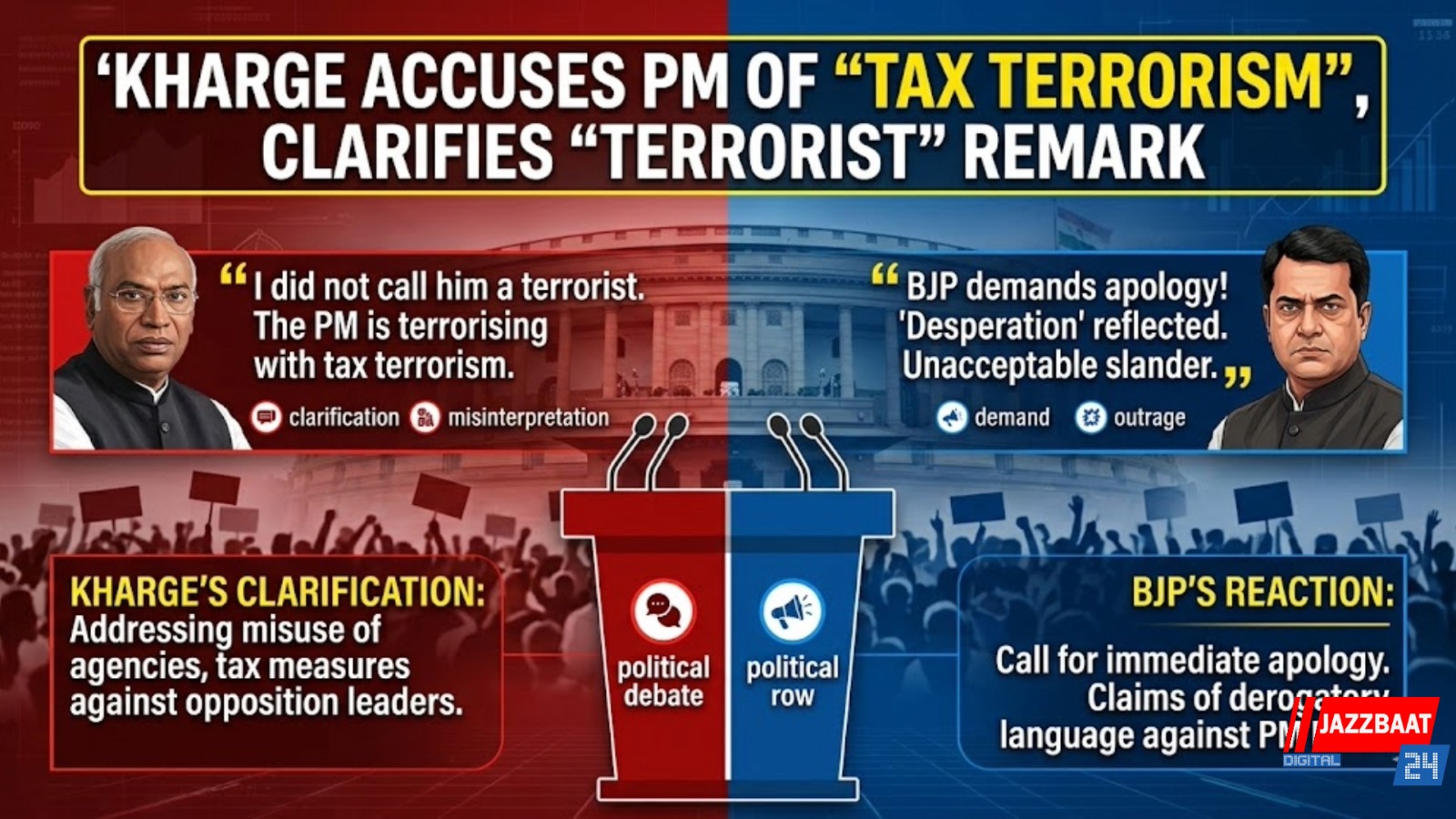
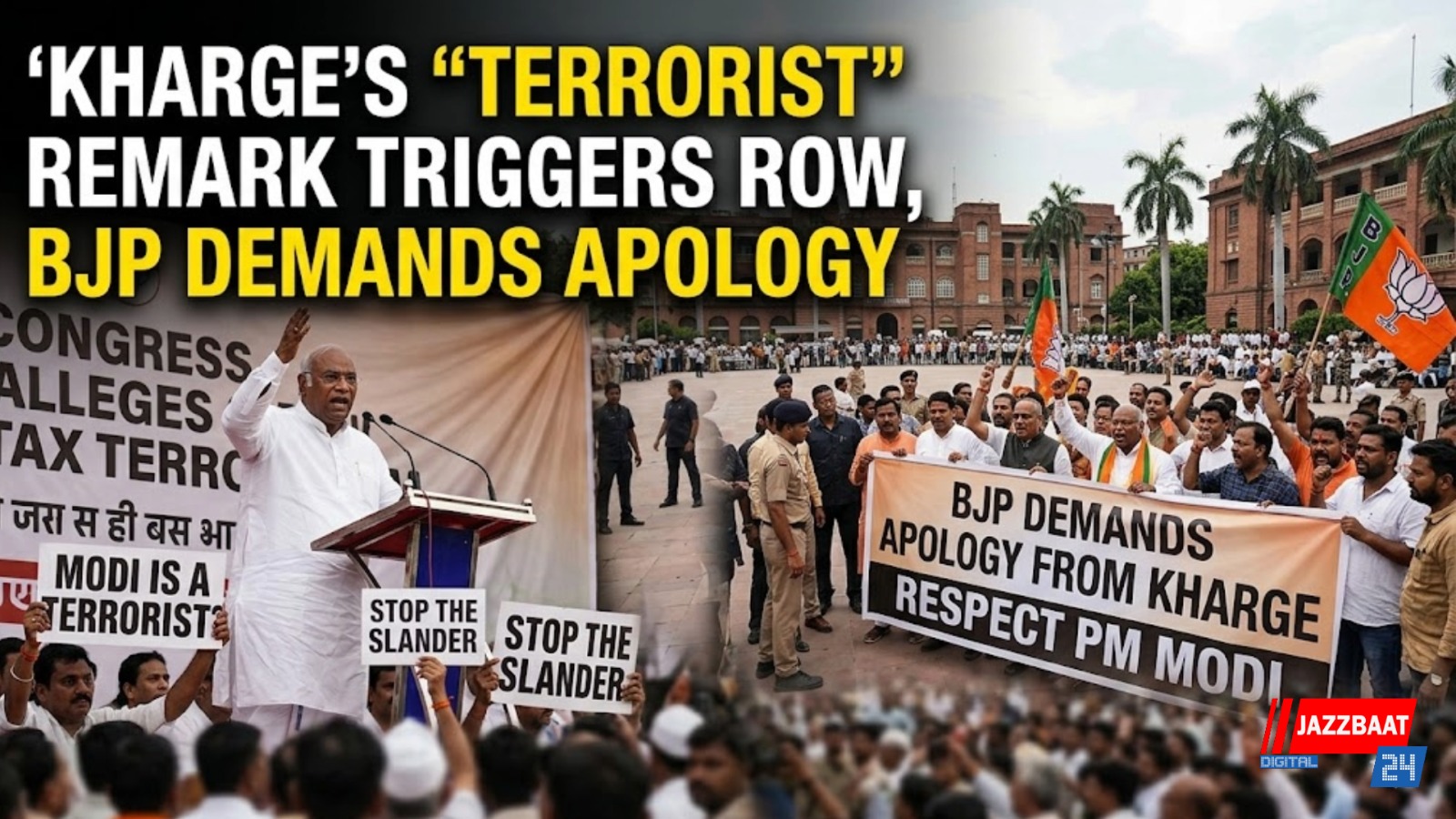
A political storm erupted after Congress president Mallikarjun Kharge allegedly referred to Prime Minister Narendra Modi as a “terrorist” during an election campaign speech, prompting sharp reactions from the Bharatiya Janata Party (BJP), which demanded an immediate apology.
The controversy began when Kharge, addressing a rally, criticised the central government and its functioning. Portions of his speech were widely circulated on social media, with BJP leaders accusing him of using highly derogatory language against the Prime Minister. The ruling party termed the remark “unacceptable” and said it reflected the Congress party’s “desperation” ahead of elections.
Soon after the backlash intensified, Kharge issued a clarification, asserting that his statement had been misrepresented. He said he had not called Modi a terrorist, but instead meant that the Prime Minister’s policies were “terrorising” opposition leaders, candidates, and democratic institutions. Kharge reiterated his allegation of “tax terrorism,” claiming that investigative agencies were being used to target political opponents.
“I did not call him a terrorist. I said the government is terrorising politicians and there is tax terrorism in the country,” Kharge clarified, attempting to defuse the situation.
Despite the clarification, BJP leaders remained unconvinced and continued to press for a formal apology. Several party spokespersons argued that even indirect insinuations against the Prime Minister were inappropriate and damaging to the dignity of public discourse. They also accused the Congress of repeatedly resorting to personal attacks instead of focusing on policy issues.
The Congress, on the other hand, defended its president, accusing the BJP of deliberately twisting his words for political gain. Party leaders said the focus should be on the broader concerns raised by Kharge regarding the alleged misuse of central agencies and financial scrutiny against opposition figures.
The episode has added to the increasingly sharp rhetoric seen in ongoing election campaigns across the country. With both sides trading accusations, the controversy is likely to further intensify political tensions in the coming days.
Political observers note that such verbal clashes often dominate headlines during election season, sometimes overshadowing substantive policy debates. As campaigning gathers momentum, the focus now shifts to whether the issue will have any impact on voter sentiment or remain confined to political sparring between the two major parties.