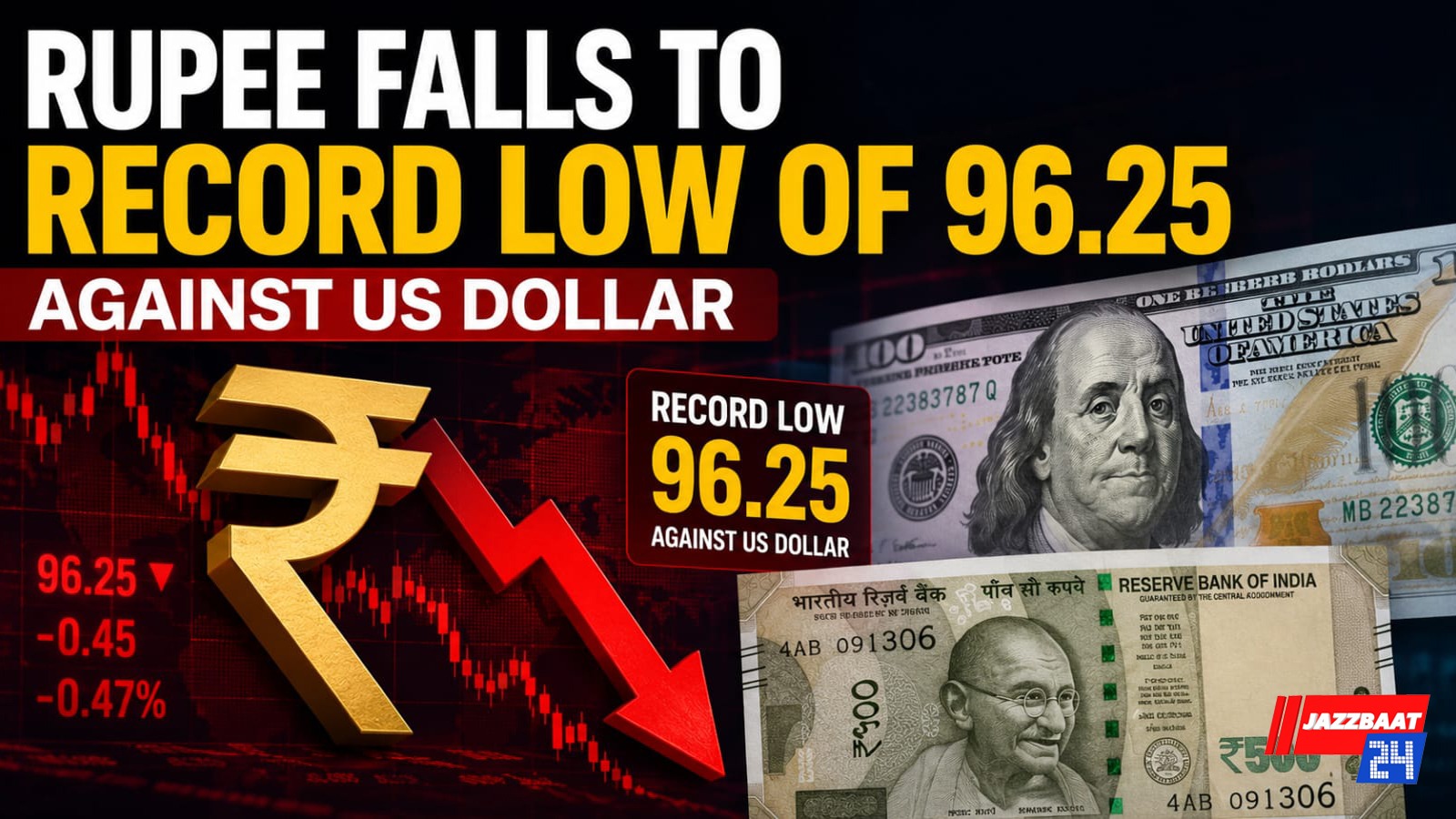
Mumbai: The Indian rupee fell to a fresh record low of 96.25 against the US dollar on Monday, extending its recent downward trend amid sustained foreign fund outflows, a stronger greenback, and rising global uncertainty in financial markets.
In early trade, the domestic currency opened weak and continued to slide as import demand for dollars remained high. Forex traders said the pressure on the rupee has been building over the past few sessions due to global risk aversion and concerns over interest rate movements in the United States.
Market experts pointed out that the US dollar has strengthened against most major currencies, supported by expectations that the US Federal Reserve may keep interest rates elevated for a longer period. This has made emerging market currencies, including the rupee, more vulnerable to depreciation.
At the same time, foreign institutional investors have reportedly continued to pull money out of Indian equity markets, adding to the demand for dollars and weakening the rupee further. Importers, especially in sectors such as crude oil and electronics, have also increased dollar purchases, contributing to the pressure.
Dealers in the forex market said the Reserve Bank of India has been intervening intermittently to smooth volatility, but the overall trend has remained under pressure due to global factors rather than domestic liquidity conditions alone.
The rupee’s fall to 96.25 marks its weakest level on record, raising concerns among import-dependent industries. A weaker currency is expected to make imports more expensive, particularly crude oil, which could eventually feed into inflationary pressures if the trend continues.
However, exporters may benefit from the depreciation, as it makes Indian goods more competitive in global markets. Sectors such as information technology and textiles could see short-term gains if the rupee remains weak.
Analysts say the outlook for the rupee will depend on multiple factors, including global crude oil prices, US monetary policy signals, and foreign investment flows into Indian markets. Any stabilisation in global conditions could help the currency recover some losses, but volatility is expected to persist in the near term.
Economists also caution that while a weaker rupee can support exports, a sharp and sustained fall may increase input costs for businesses and widen the current account deficit.
For now, market participants are closely watching central bank actions and upcoming global economic data for further cues on the currency’s direction.