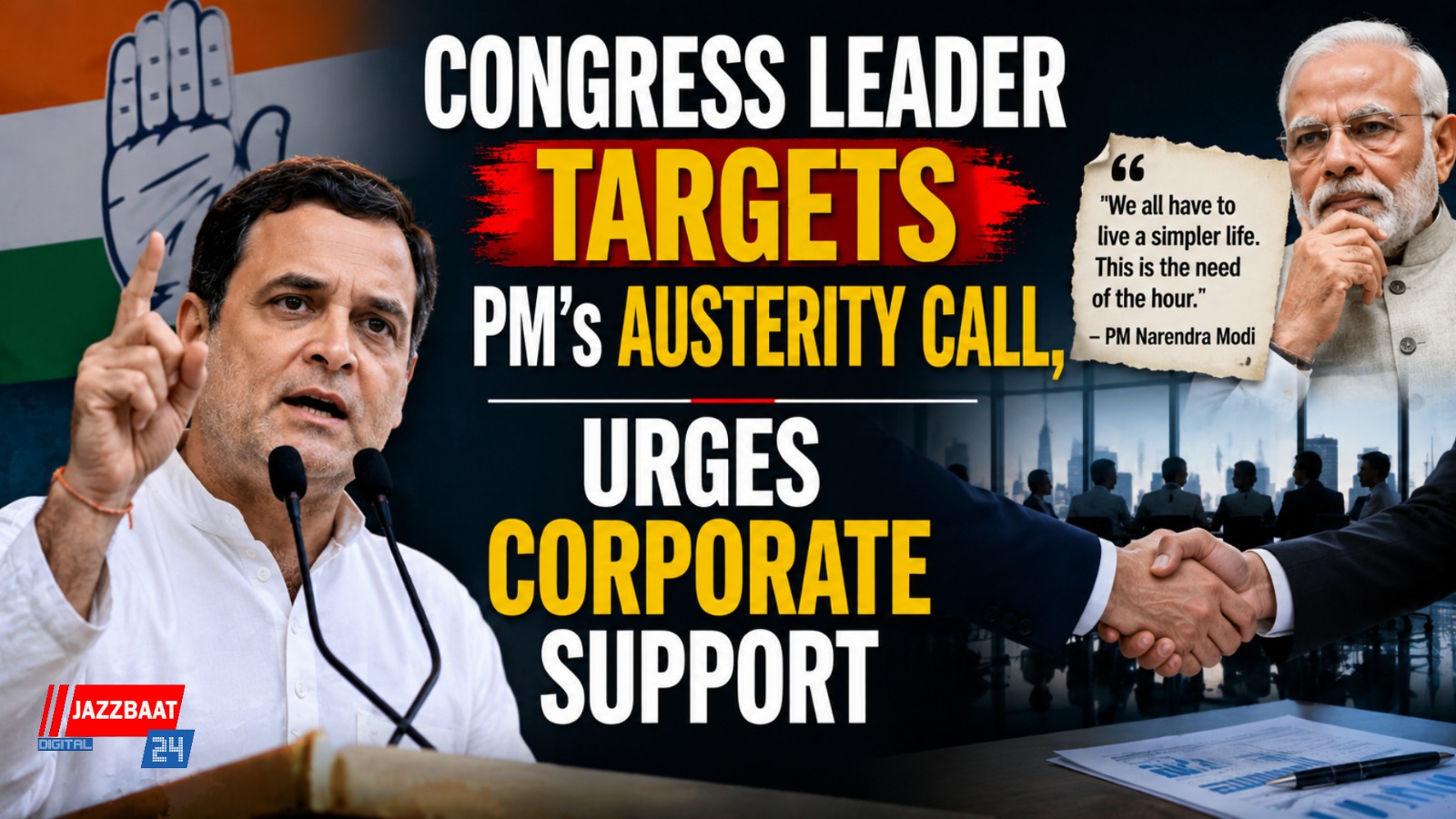
A political row has erupted after senior Congress leader V. Hanumantha Rao criticized the Prime Minister’s recent “spend less” message, calling it a post-election lecture and urging that industrialists like Gautam Adani and Mukesh Ambani should instead be asked to contribute more toward national development.
Rao’s remarks come in response to the Prime Minister’s appeal for fiscal discipline and cautious public spending, which he framed as necessary for economic stability. However, the Congress leader argued that such advice places an unfair burden on ordinary citizens while ignoring the role of large corporations in supporting the economy.
According to Rao, India’s wealthiest business houses have the capacity to play a more active role in nation-building, especially during times of economic pressure. He suggested that instead of asking people to tighten their belts, the government should encourage major corporate players to invest more in public welfare, infrastructure, and employment generation.
The comments have added to the ongoing political debate between the ruling Bharatiya Janata Party (BJP) and the opposition Indian National Congress. Congress leaders have often accused the government of being too close to big business, while the BJP has defended its economic policies as growth-oriented and inclusive.
Reacting to Rao’s statement, BJP leaders dismissed the criticism, asserting that economic prudence is essential for long-term stability. They also pointed to ongoing government initiatives aimed at boosting investment, supporting startups, and expanding infrastructure as evidence of balanced policymaking.
The debate highlights a broader ideological divide over how economic responsibility should be shared between citizens, corporations, and the state. While the government emphasizes fiscal discipline and controlled spending, opposition voices continue to push for greater corporate accountability and redistributive measures.
Political observers note that such exchanges are likely to intensify as economic issues take center stage in public discourse. With inflation, employment, and growth remaining key concerns, competing narratives on economic management are expected to shape political messaging in the months ahead.