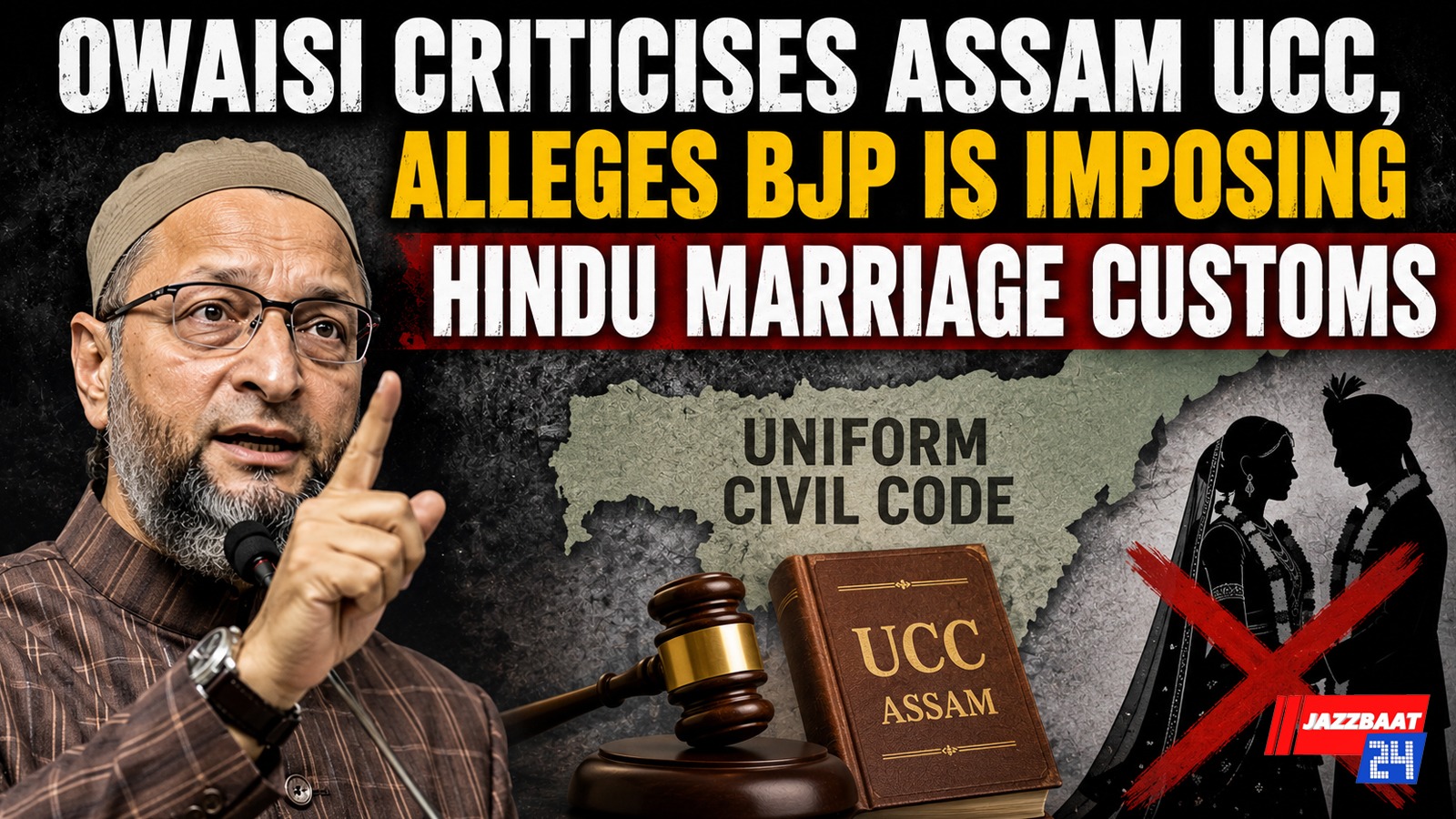
AIMIM chief and Hyderabad MP Asaduddin Owaisi has strongly criticised the newly passed Uniform Civil Code (UCC) legislation in Assam, accusing the BJP-led state government of imposing Hindu marriage and inheritance practices on Muslims through the law.
Speaking at a public gathering and through posts on social media, Owaisi described the Assam UCC as a “backdoor imposition of Hindu law on Muslims.” He argued that the legislation interferes with Muslim personal laws related to marriage, divorce, inheritance, and succession. According to him, several provisions of the new law conflict with Islamic religious practices and traditions.
Owaisi also questioned the government's claim that the law is truly “uniform.” He pointed out that Scheduled Tribes and several tribal communities have been exempted from the UCC’s provisions, while other communities will be required to follow the new rules. He said that if cultural autonomy is being protected for tribal groups, similar protections should be available to other communities as well.
The Assam Assembly recently passed the Uniform Civil Code Bill, 2026, making Assam the third state after Uttarakhand and Gujarat to adopt such legislation. The law includes provisions such as a ban on polygamy, compulsory registration of marriages and divorces, and mandatory registration of live-in relationships. The state government says the measure is aimed at ensuring equality and creating a common civil framework for all citizens.
Defending the legislation, Assam Chief Minister Himanta Biswa Sarma called the UCC a major social reform and said it reflects the BJP’s long-standing commitment to legal uniformity and gender justice. The government maintains that the law is intended to strengthen women's rights and remove legal inequalities across communities.
However, opposition parties and several community organisations have continued to raise concerns over the bill’s impact on religious freedom and personal laws. Owaisi has insisted that the legislation is not genuinely uniform and has warned that it could create further debate over constitutional protections for cultural and religious practices.