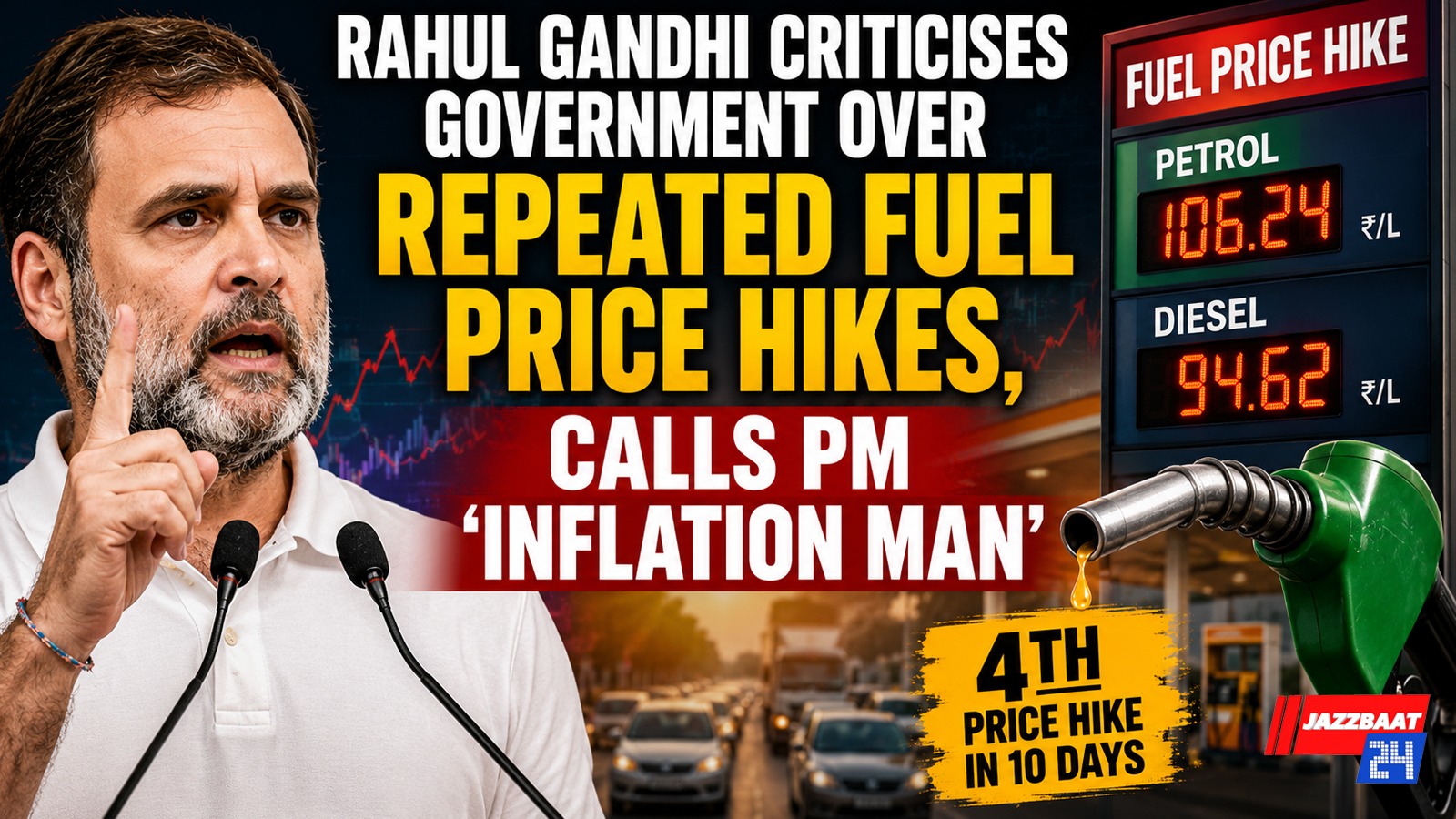
Congress leader Rahul Gandhi has launched a sharp attack on the central government, accusing it of failing to control rising fuel prices after reports of another hike in petrol and diesel rates across several parts of the country. The criticism comes amid what the opposition claims is the fourth increase in fuel prices within a span of ten days.
In a strongly worded statement shared on social media, Gandhi referred to Prime Minister Narendra Modi as “Inflation Man Modi,” alleging that common citizens are being repeatedly burdened due to rising fuel costs and overall inflationary pressure. He said the government has “lost touch with the daily struggles of ordinary people” and accused it of prioritising revenue collection over public relief.
According to early reports from fuel retail outlets, minor but frequent revisions in petrol and diesel prices have been recorded in multiple states over the past week and a half. While official pricing adjustments are linked to international crude oil movement and dynamic pricing mechanisms, opposition leaders argue that the frequency of hikes is causing instability in household budgets and transport costs.
Gandhi further claimed that rising fuel prices have a cascading effect on essential commodities, including food and transportation fares, which ultimately impacts low and middle-income families the most. He urged the government to consider reducing excise duties and providing immediate relief to consumers.
The Congress party has also echoed similar concerns, stating that inflation has become one of the biggest challenges facing the economy. Party spokespersons alleged that repeated fuel price increases reflect poor economic management and demanded a rollback of recent hikes.
On the other hand, government sources maintain that fuel pricing is largely influenced by global crude oil trends and currency fluctuations. Officials argue that India continues to maintain one of the more stable retail fuel pricing systems compared to several other economies, and any changes are part of automatic market-linked adjustments.
Economists remain divided on the issue, with some pointing to global energy volatility as a key factor, while others highlight the need for better domestic cushioning mechanisms to protect consumers from sudden price shocks.
The latest exchange between the ruling party and the opposition is expected to further intensify political debate over inflation, which continues to be a central issue ahead of upcoming state-level political developments.