
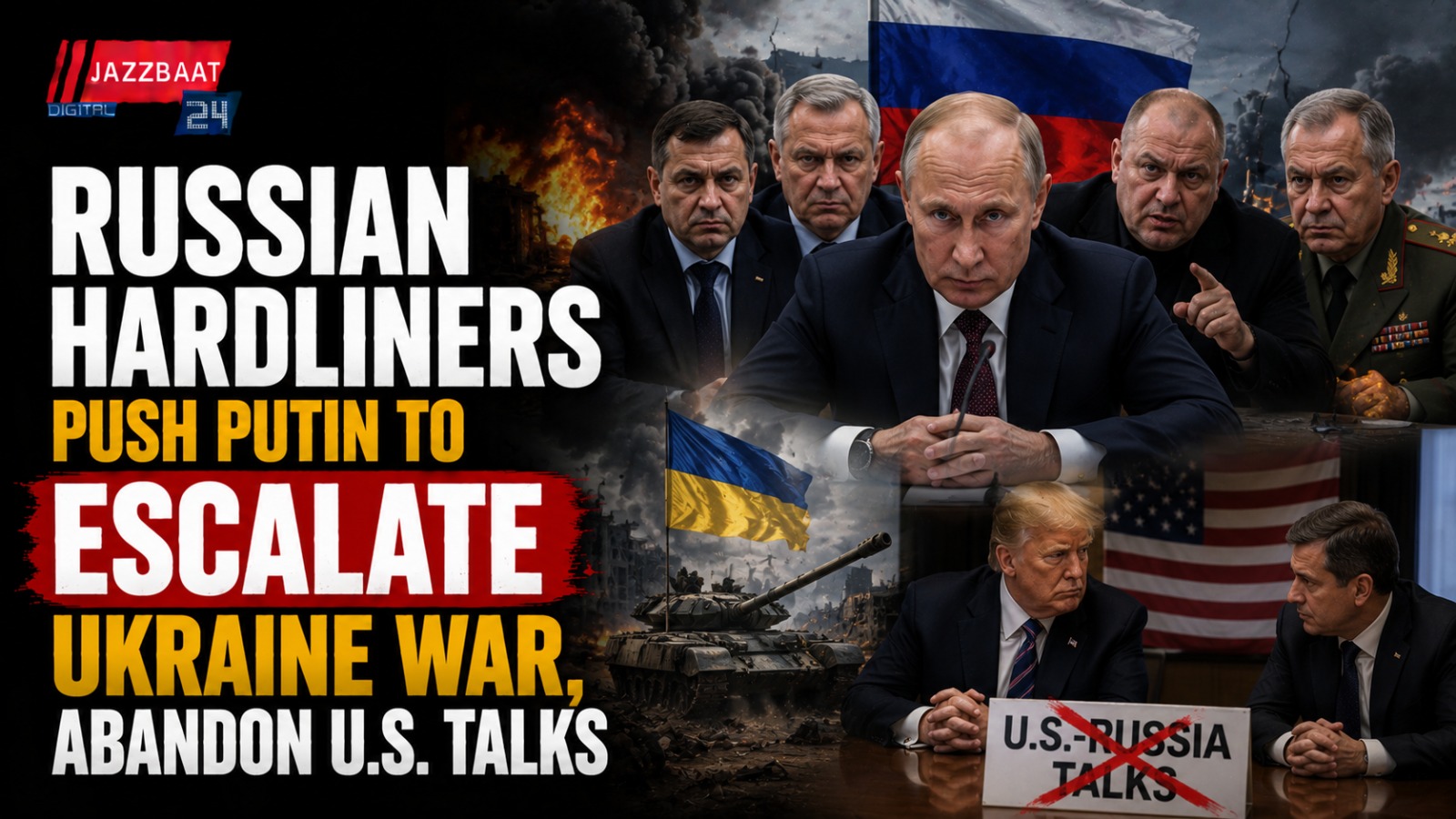
Russian nationalist hardliners are intensifying pressure on President Vladimir Putin to abandon diplomatic efforts with the United States and dramatically escalate the war in Ukraine following a series of deep Ukrainian drone strikes inside Russian territory.
The renewed calls come after Ukraine launched attacks targeting Moscow, St. Petersburg and Crimea, exposing vulnerabilities in Russia's air defence network and causing growing concern among pro-war commentators and military bloggers. Many of these hardliners argue that diplomacy has failed and that Russia should respond with much harsher military measures.
Several nationalist figures have openly advocated for full military mobilisation, intensified bombing campaigns against Ukrainian cities and even strikes on European facilities that allegedly produce drones for Kyiv. Some extreme voices have gone further, calling for the consideration of tactical nuclear weapons to force Ukraine into submission.
Russian businessman and nationalist commentator Konstantin Malofeyev questioned why Moscow was not "fighting for real," arguing that Russia should use every means necessary to secure victory. Other influential bloggers have accused Washington of encouraging Ukrainian attacks and have urged the Kremlin to end U.S.-brokered peace discussions entirely.
Despite the mounting pressure, the Kremlin has so far resisted the most radical proposals. Senior Russian officials have acknowledged that talks with Washington have stalled and expressed disappointment over what they describe as unfulfilled American promises regarding peace initiatives. Nevertheless, Putin has continued to leave the door open for diplomacy while simultaneously intensifying military operations in parts of eastern Ukraine.
Analysts believe the increasingly aggressive rhetoric from Russia's nationalist camp reflects a deeper anxiety over Ukraine's growing ability to strike targets far from the front lines. The attacks have fuelled a broader debate within Russia about how the country can protect its vast territory while continuing its military campaign.
For now, Putin appears confident that his current strategy remains effective. He recently expressed optimism about Russia's military advances in the Donbas region and suggested that political changes in Europe could eventually create more favourable conditions for Moscow. However, the growing pressure from hardliners signals that internal debates over the future direction of the war are becoming increasingly intense.