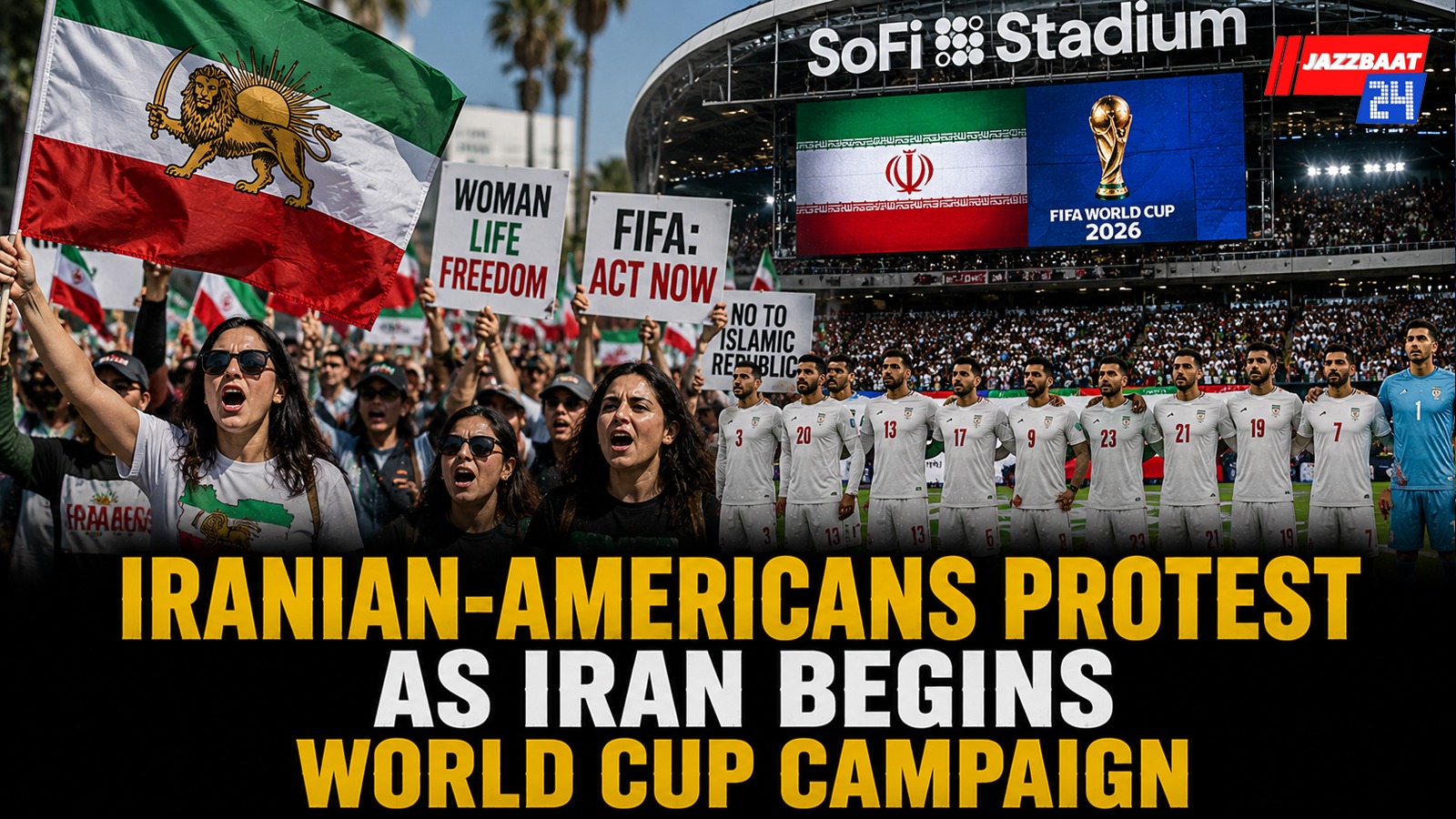
Thousands of Iranian-Americans gathered in and around Los Angeles as Iran prepared for its opening match of the 2026 FIFA World Cup, highlighting the political tensions surrounding the national team's participation in the tournament. The demonstrations took place before Iran's Group G opener against New Zealand at SoFi Stadium, with protesters calling on FIFA to take action against the Iranian government and its alleged human rights record.
Los Angeles, home to one of the world's largest Iranian diaspora communities, witnessed a mix of passionate football support and anti-government activism. Many protesters waved Iran's pre-revolution lion-and-sun flag, a symbol commonly used by opponents of the current regime. Others carried banners and chanted slogans criticizing Tehran while gathering outside the stadium and near the team's hotel.
The politically charged atmosphere extended into the stadium. Reports indicated that some spectators booed the Iranian national anthem, while others openly displayed opposition symbols despite concerns about FIFA's restrictions on political messaging during matches. Security was significantly increased around the venue as authorities prepared for possible demonstrations.
The protests came amid broader controversy surrounding Iran's participation in the tournament. Iranian activists have argued that the national team is being used by the government for political purposes and have urged FIFA to suspend Iran from international competition. Former players and members of the Iranian diaspora have joined those calls in recent weeks.
Meanwhile, Iran's football team has faced logistical and diplomatic challenges throughout the tournament. Several support staff members reportedly encountered visa issues, forcing the team to base itself in Tijuana, Mexico, and travel to the United States for matches. Following the 2-2 draw against New Zealand, Iran's coach Amir Ghalenoei criticized what he described as unfair treatment and travel arrangements that disrupted the team's preparations.
Despite the political backdrop, many Iranian fans attending the match emphasized their support for the players rather than the government. The game itself ended in an entertaining 2-2 draw, with Iran twice coming from behind to earn a point in its opening Group G fixture. The result leaves the team with work to do ahead of crucial upcoming matches against Belgium and Egypt.
The events surrounding Iran's World Cup opener underscored how football and geopolitics have become deeply intertwined at the 2026 tournament, with tensions both on and off the pitch continuing to attract global attention.