

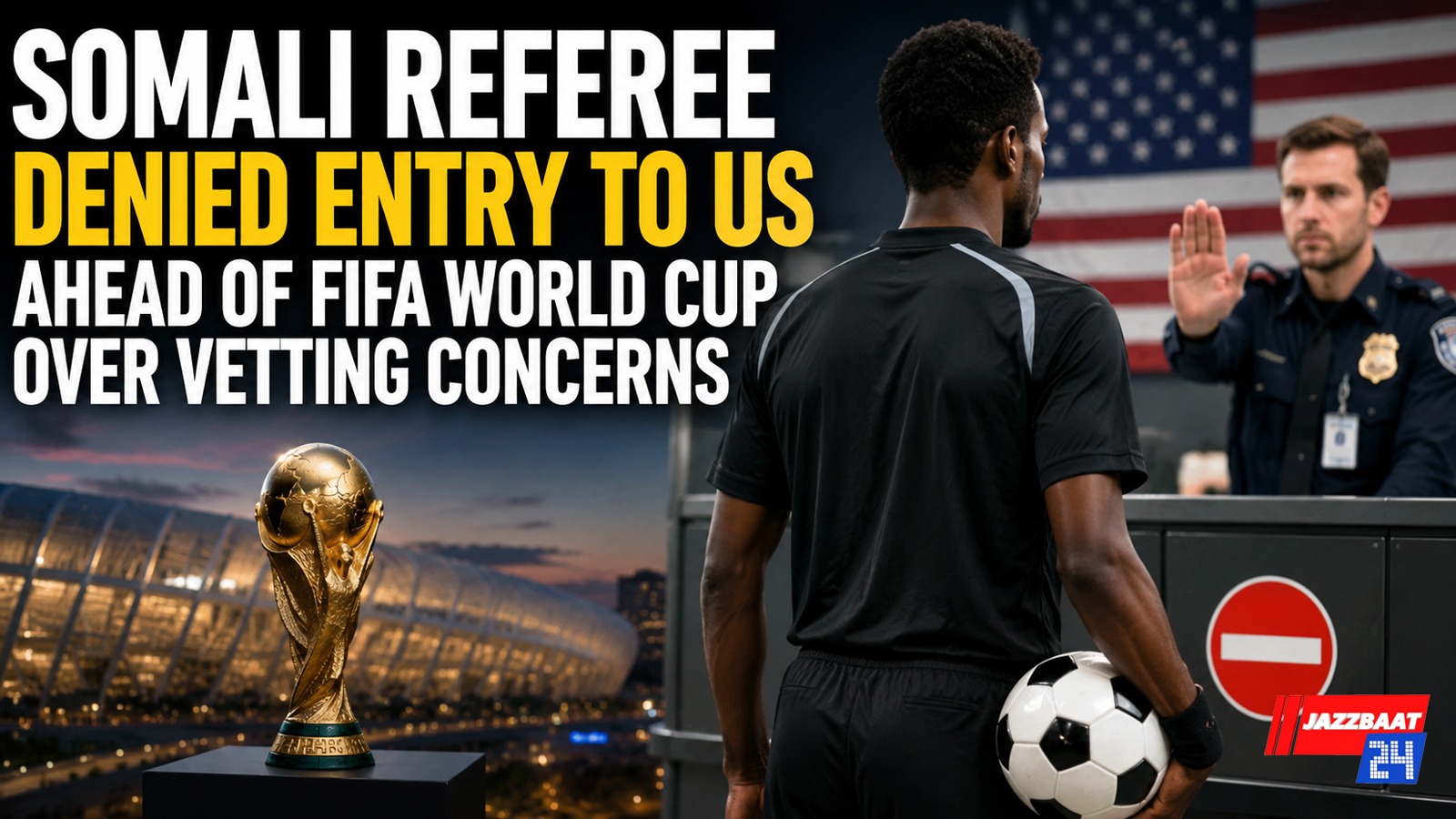
A Somali referee selected to officiate at the 2026 FIFA World Cup has reportedly been denied entry into the United States due to what American authorities described as “vetting concerns,” creating an unexpected controversy just days before the start of the tournament.
The referee, who had been appointed by FIFA as part of the World Cup officiating team, was stopped during the visa and entry clearance process. According to reports, US officials raised concerns during security screening procedures and subsequently refused entry authorization. Authorities have not publicly disclosed the specific reasons behind the decision, citing privacy and security protocols.
The development has drawn attention because FIFA referees typically undergo extensive background checks and eligibility reviews before being selected for major international tournaments. The official had successfully completed FIFA's qualification process and was expected to travel to the United States to participate in pre-tournament training and briefings alongside other match officials.
Sources familiar with the matter indicated that the decision was linked to broader immigration and security screening measures rather than any allegations related to match-fixing, misconduct or professional performance. Nevertheless, the refusal has sparked debate about the challenges faced by individuals from countries subject to heightened security scrutiny.
FIFA is understood to be in contact with US authorities to seek clarification regarding the decision. The governing body has not issued a detailed statement but is reportedly exploring options to ensure that officiating appointments for the tournament are not disrupted. If the issue is not resolved quickly, FIFA may be forced to replace the referee with another official from its reserve list.
The incident comes as the United States, one of the three co-hosts of the 2026 FIFA World Cup, prepares to welcome thousands of players, officials, media personnel and supporters from around the world. Security and immigration procedures have been significantly strengthened for the tournament, with authorities emphasizing comprehensive screening measures for all visitors.
Human rights advocates and some football observers have expressed concern that the decision could affect perceptions of inclusivity at a global sporting event designed to bring nations together. Others argue that host countries retain the sovereign right to enforce their immigration and security policies, regardless of an individual's professional role.
As discussions continue between FIFA and US officials, uncertainty remains over whether the Somali referee will ultimately be allowed to enter the country and take part in the tournament. The case has added an unexpected off-field controversy to the build-up of what is expected to be the largest FIFA World Cup in history.