

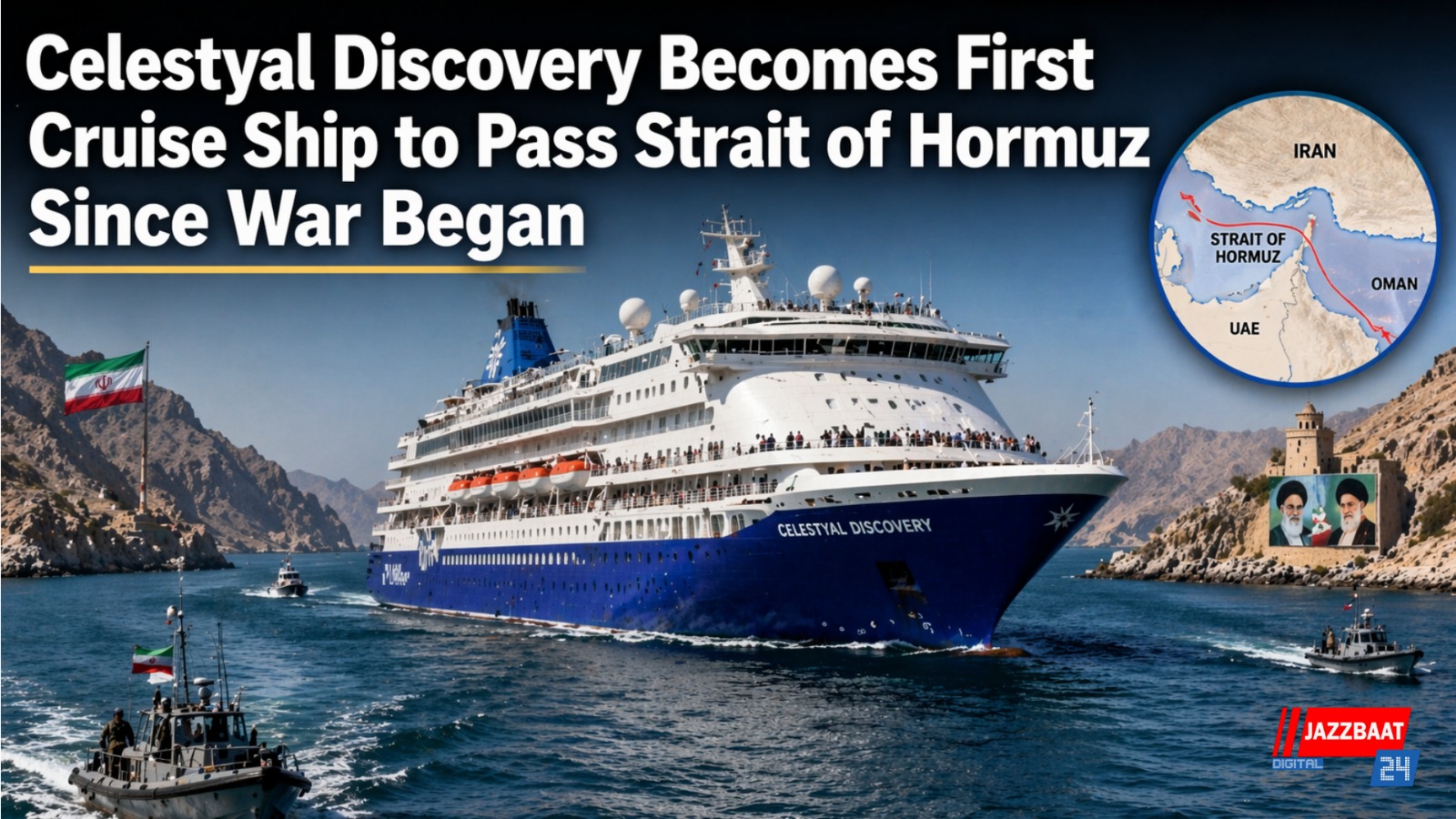
The cruise ship Celestyal Discovery has become the first passenger vessel to successfully cross the Strait of Hormuz since the outbreak of conflict in the region, marking a significant development for maritime movement through one of the world’s most sensitive waterways.
The Malta-flagged ship, operated by Greece-based Celestyal Cruises, passed through the strategic strait on April 17 after weeks of suspended civilian shipping due to escalating tensions and security risks in the Persian Gulf. The vessel reportedly sailed from Dubai toward Muscat, Oman, and was noted to be without passengers during the transit for safety reasons.
The Strait of Hormuz, a narrow but vital water passage linking the Persian Gulf with the Gulf of Oman, had seen major disruptions after the outbreak of conflict in late February 2026. Several cruise ships and commercial vessels were stranded in regional ports after shipping companies halted operations amid security concerns.
According to maritime tracking data, the Celestyal Discovery left Dubai after being docked for several weeks and became the first cruise vessel to navigate the route since the suspension of passenger services in the region.
The transit comes after reports of a temporary ceasefire arrangement and renewed assurances that the waterway would remain open for commercial shipping under coordinated security arrangements. The reopening is being seen as an early sign of stabilisation in maritime operations in the Gulf region.
The ship’s movement is also significant for the global cruise industry, which had been heavily disrupted due to the conflict. Several cruise operators had earlier rerouted or suspended itineraries in the Middle East, leaving multiple vessels idle in ports such as Dubai, Doha, and Abu Dhabi.
Maritime experts say the passage of Celestyal Discovery may indicate cautious restoration of confidence among shipping operators, although they stress that the situation remains sensitive and dependent on ongoing geopolitical developments.
The Strait of Hormuz is one of the world’s most critical energy and trade chokepoints, handling a significant share of global oil and liquefied natural gas shipments. Any disruption in the region has widespread implications for global trade, fuel prices, and international shipping routes.
While the reopening has allowed limited commercial movement, authorities and shipping companies continue to monitor the situation closely before fully restoring normal cruise operations in the region.