

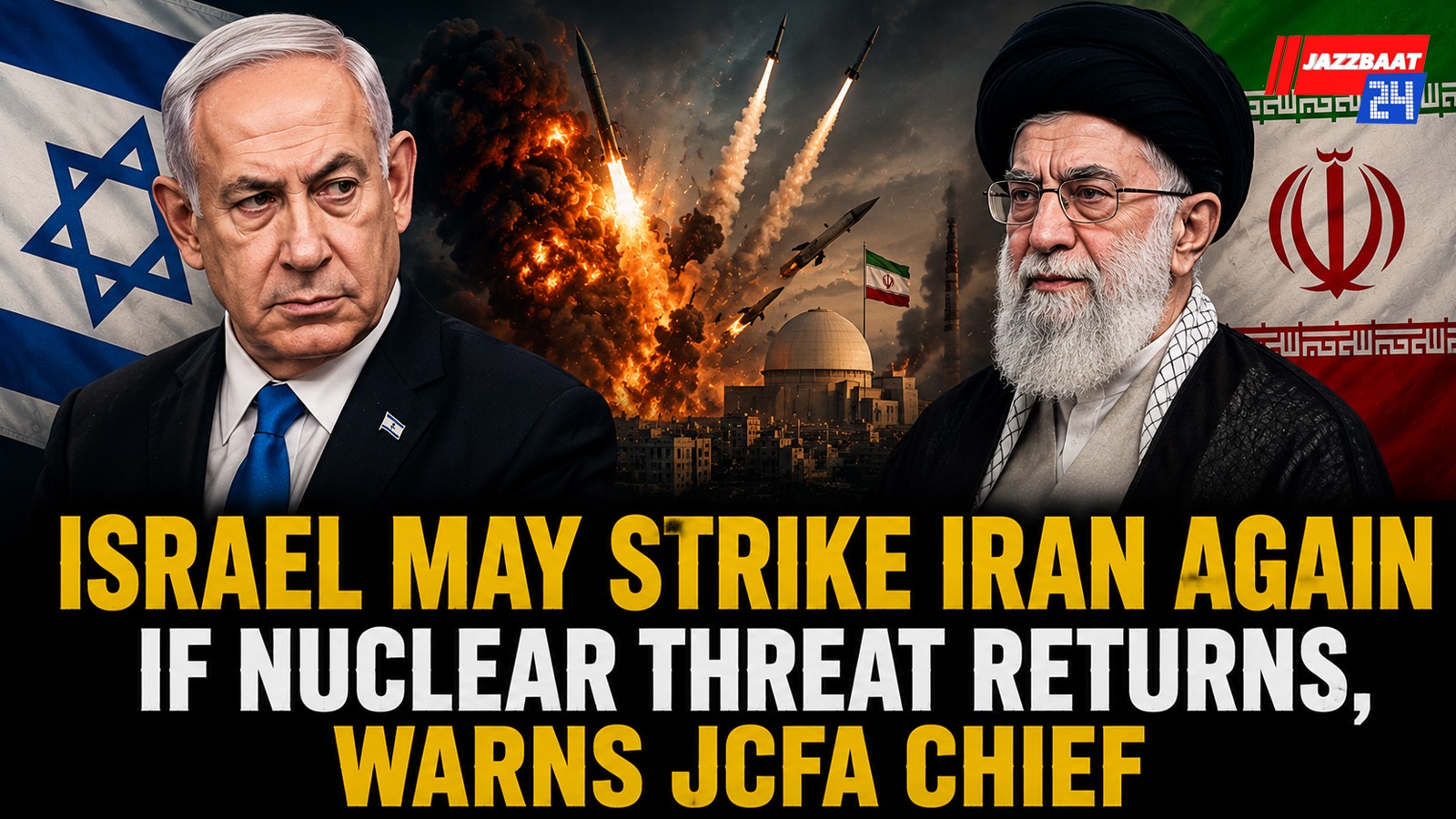
Israel could launch fresh military action against Iran if it believes Tehran is once again moving toward acquiring nuclear weapons, according to Sagiv Steinberg, CEO of the Jerusalem Center for Security and Foreign Affairs (JCFA). His remarks come amid ongoing debate over the recently announced U.S.-Iran agreement, which many Israeli security analysts view as a temporary ceasefire rather than a lasting peace settlement.
Speaking in an interview with ANI, Steinberg said Israel remains firmly committed to preventing Iran from becoming a nuclear-armed state. He argued that any future signs of Iran rebuilding its nuclear capabilities could prompt another Israeli military response, regardless of the current diplomatic framework.
Steinberg was critical of the U.S.-Iran deal, describing it as "another 60 days of ceasefire" rather than a comprehensive peace agreement. According to him, key issues such as Iran's nuclear program, missile development, and regional proxy networks remain unresolved. He suggested that the agreement does not achieve Washington's original objectives and may simply provide Tehran with time to regroup.
His comments reflect broader concerns within Israel's security establishment. Israeli leaders have repeatedly stated that they reserve the right to act independently against perceived threats from Iran. Recent statements from Israeli officials have emphasized that any renewed aggression or nuclear advancement by Tehran would be met with a strong response.
The current U.S.-Iran understanding, reportedly set to formalize a 60-day ceasefire, has generated significant debate across the Middle East. While supporters see it as an opportunity to reduce tensions after months of conflict, critics argue that it leaves fundamental disputes unresolved, particularly regarding Iran's enrichment activities and regional influence.
Analysts note that Israel was not directly involved in negotiating the agreement and remains skeptical about its long-term effectiveness. Several Israeli political and security figures have warned that the country's strategic concerns have not been adequately addressed and that Iran could eventually restore elements of its military and nuclear infrastructure.
For now, the ceasefire has reduced immediate hostilities, but Steinberg's remarks highlight the continuing distrust between Israel and Iran. As negotiations continue and details of the agreement emerge, the question of Iran's nuclear ambitions is likely to remain one of the most sensitive and potentially explosive issues in the region.