
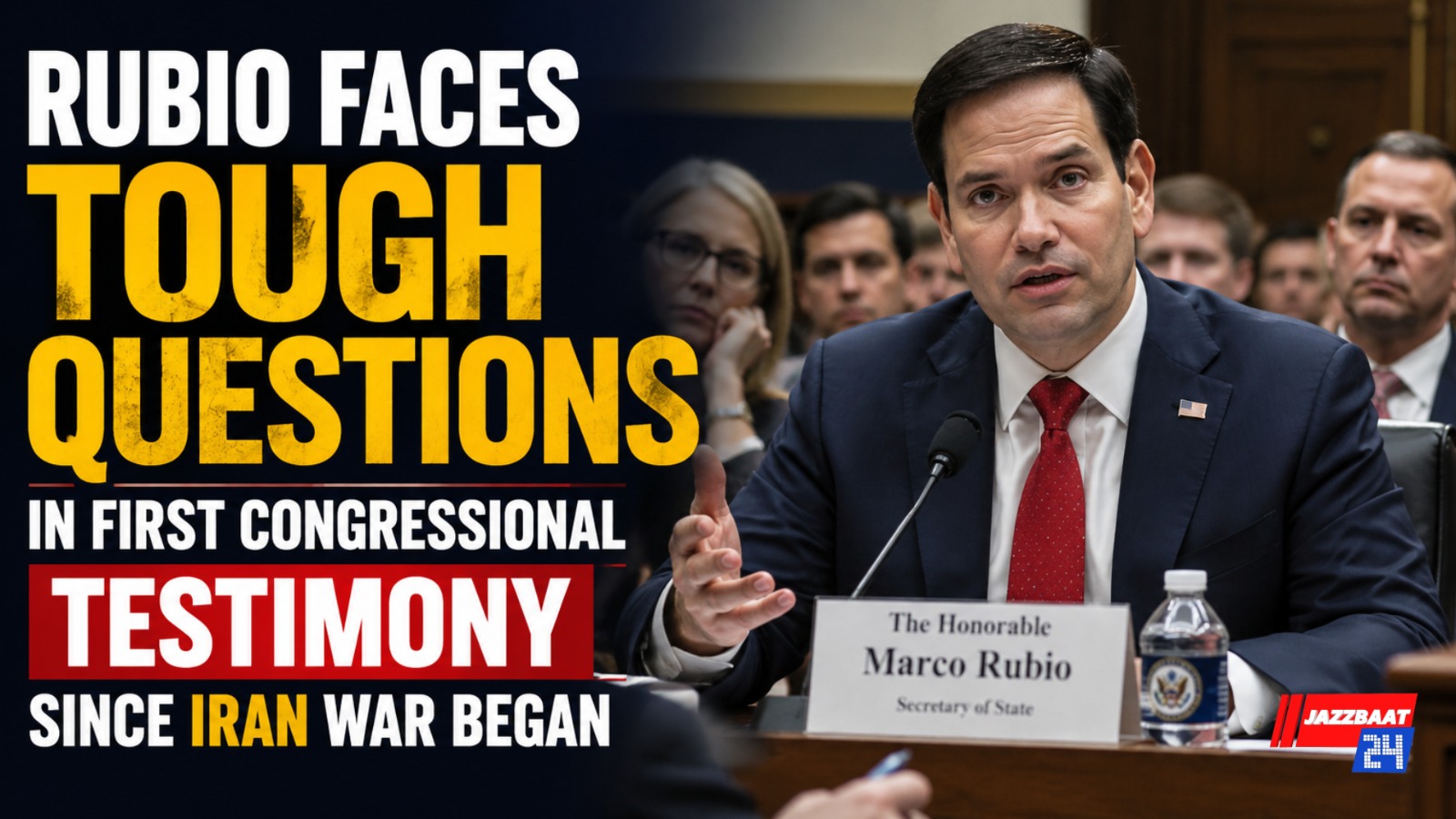
U.S. Secretary of State Marco Rubio appeared before Congress on Tuesday for the first time since the outbreak of the Iran war, facing intense scrutiny from lawmakers over the Trump administration’s handling of the conflict, diplomatic efforts with Tehran, and the war’s growing economic and political costs.
Rubio testified in back-to-back hearings on Capitol Hill, where he was originally scheduled to discuss the State Department’s budget request. However, much of the questioning focused on the ongoing conflict with Iran, which began on February 28 and has become a major issue in Washington. Lawmakers from both parties pressed Rubio on the administration’s strategy, the prospects for peace negotiations, and concerns about congressional oversight of military actions.
Democratic lawmakers challenged the administration over its decision to enter the conflict without explicit congressional authorization, while some Republicans raised concerns about the war’s mounting costs and its impact on American voters ahead of the midterm elections. Rising fuel prices and disruptions to shipping through the Strait of Hormuz have increased pressure on the White House to find a path toward a lasting resolution.
During the hearing, Rubio defended the administration’s actions, arguing that Iran had developed conventional military capabilities to protect its nuclear program and that military intervention was necessary to address the threat. He maintained that any future agreement with Tehran would require significant limits on Iran’s nuclear activities before sanctions relief could be considered.
Rubio also suggested that there are signs Iran may be willing to discuss elements of its nuclear program that it had previously refused to negotiate. However, he stressed that sanctions would not be lifted simply in exchange for reopening the Strait of Hormuz, a key global energy route.
The secretary’s testimony comes as lawmakers continue debating measures that could limit presidential war powers and increase congressional involvement in decisions related to the conflict. Questions remain about the durability of the ceasefire and the administration’s long-term objectives in the region.
With the Iran war entering its fourth month, Rubio’s appearance highlighted the growing political challenges facing the administration as it seeks to balance military pressure, diplomatic negotiations, and domestic concerns over the conflict’s economic impact.