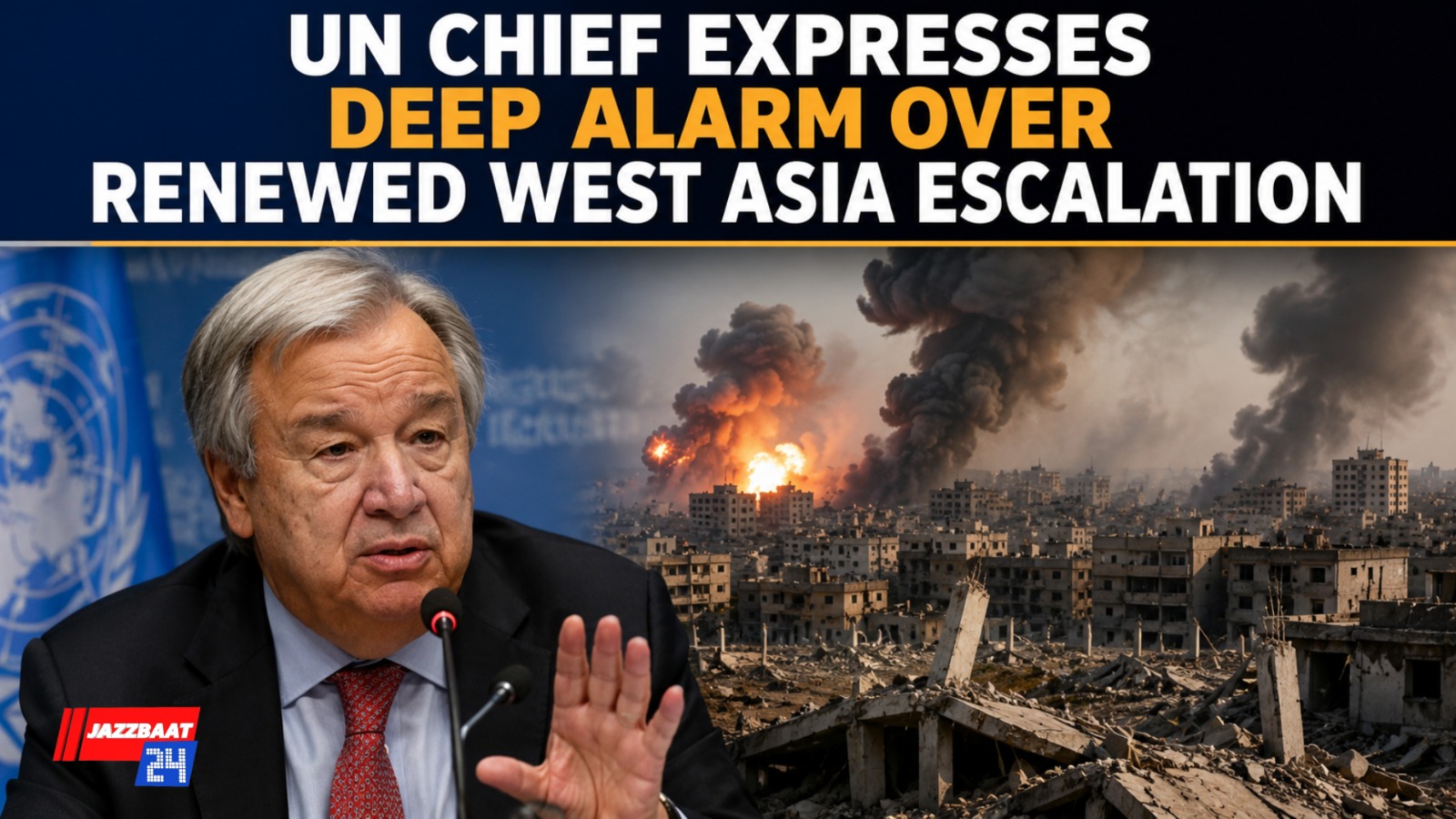
United Nations Secretary-General António Guterres has expressed deep concern over the latest escalation of tensions across West Asia, urging all parties to exercise maximum restraint and return to diplomacy to prevent the region from sliding into a wider conflict.
In a statement issued through the United Nations, Guterres warned that the renewed exchange of military actions and growing hostilities pose a serious threat to regional and international peace and security. He emphasized that the people of the region have already endured years of conflict and instability and cannot afford another prolonged confrontation.
The UN chief called on all sides to avoid actions that could further inflame the situation, stressing that military solutions cannot provide lasting peace. He reiterated that dialogue, diplomacy, and adherence to international law remain the only viable path toward resolving disputes and reducing tensions.
Guterres also voiced concern about the humanitarian consequences of a broader conflict, noting that any further escalation could result in civilian casualties, displacement, and severe disruptions to essential services and economic activity across the region. He urged governments to prioritize the protection of civilians and critical infrastructure.
The Secretary-General's remarks come amid heightened tensions involving regional powers and growing fears of a wider confrontation that could affect global energy markets, international trade routes, and overall geopolitical stability. Diplomatic efforts by several countries and international organizations are continuing in an attempt to prevent the crisis from deepening.
Reaffirming the United Nations' commitment to peace, Guterres said the organization stands ready to support all diplomatic initiatives aimed at de-escalation and conflict resolution. He called on regional and global leaders to engage constructively and work toward restoring stability, security, and mutual trust.
As the situation remains fluid, the UN chief's appeal underscores the international community's concern that continued military escalation could have far-reaching consequences beyond West Asia, making urgent diplomatic engagement more critical than ever.