

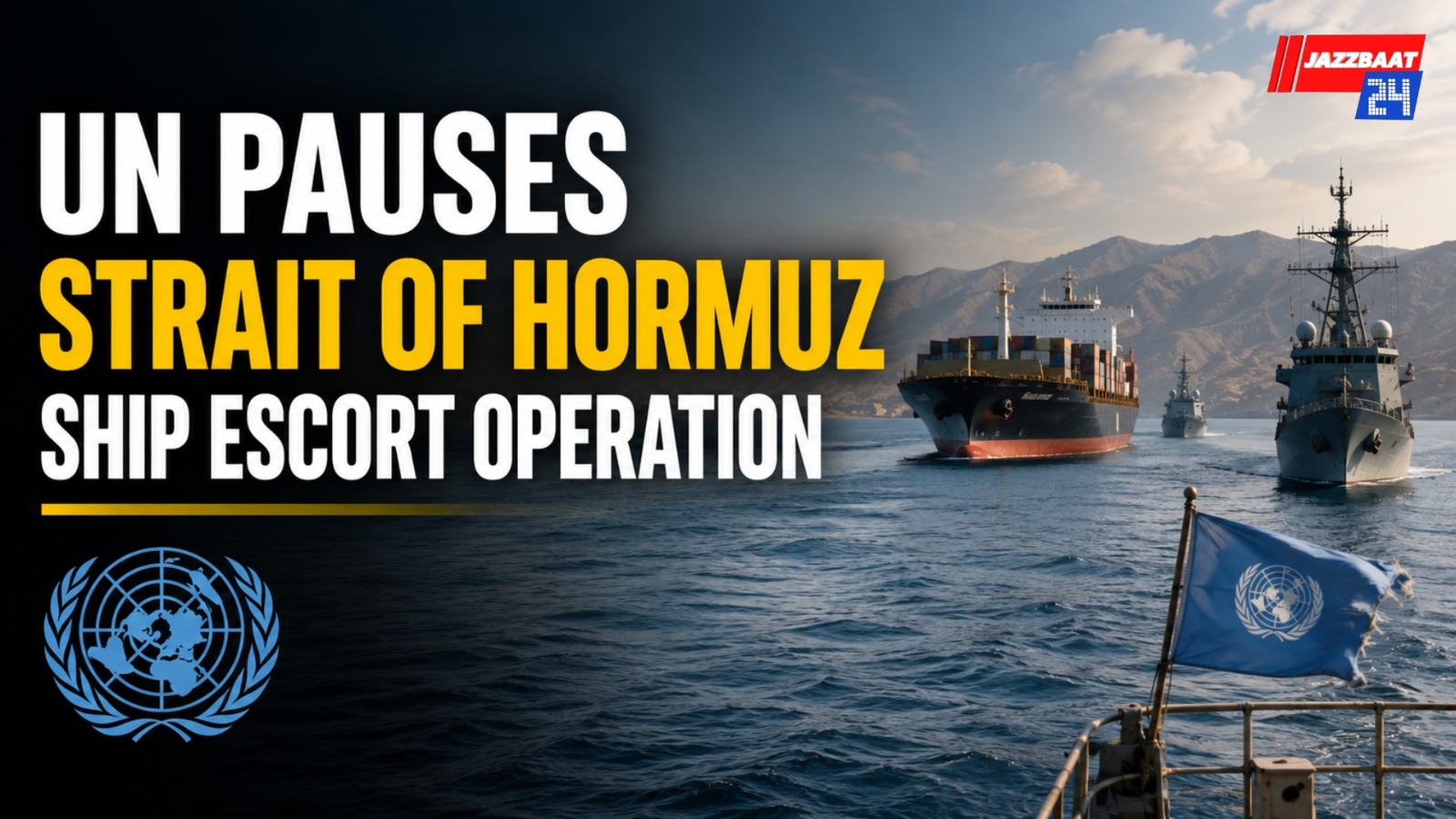
The United Nations' shipping agency has temporarily suspended its operation to escort and evacuate commercial vessels through the Strait of Hormuz after a merchant ship was attacked in the Gulf of Oman, raising fresh concerns over maritime security in one of the world's busiest shipping routes.
The operation, launched earlier this week by the International Maritime Organization (IMO), was designed to help hundreds of stranded ships and thousands of seafarers safely transit through the Strait of Hormuz using designated routes coordinated with regional authorities. Before the suspension, 57 ships carrying around 1,100 crew members had successfully completed the passage under the initiative.
According to IMO Secretary-General Arsenio Dominguez, the decision was taken after reports emerged that a vessel had come under attack in the Gulf of Oman. The affected ship was not part of the IMO's evacuation framework, but the incident prompted the agency to halt operations while it reassesses security guarantees for participating vessels.
British maritime authorities reported that the cargo vessel was struck by a projectile near the Omani coast. Maritime security sources indicated the attack may have involved a drone, although the attacker has not been officially identified. U.S. officials have blamed Iran, while Iranian authorities warned that ships using routes not approved by Tehran would not be guaranteed safe passage.
The Strait of Hormuz remains one of the world's most strategically important waterways, serving as a critical corridor for global oil and liquefied natural gas exports. The latest incident has renewed concerns about the stability of regional shipping and energy supplies, with oil prices rising after news of the attack and the suspension of the UN-backed operation.