

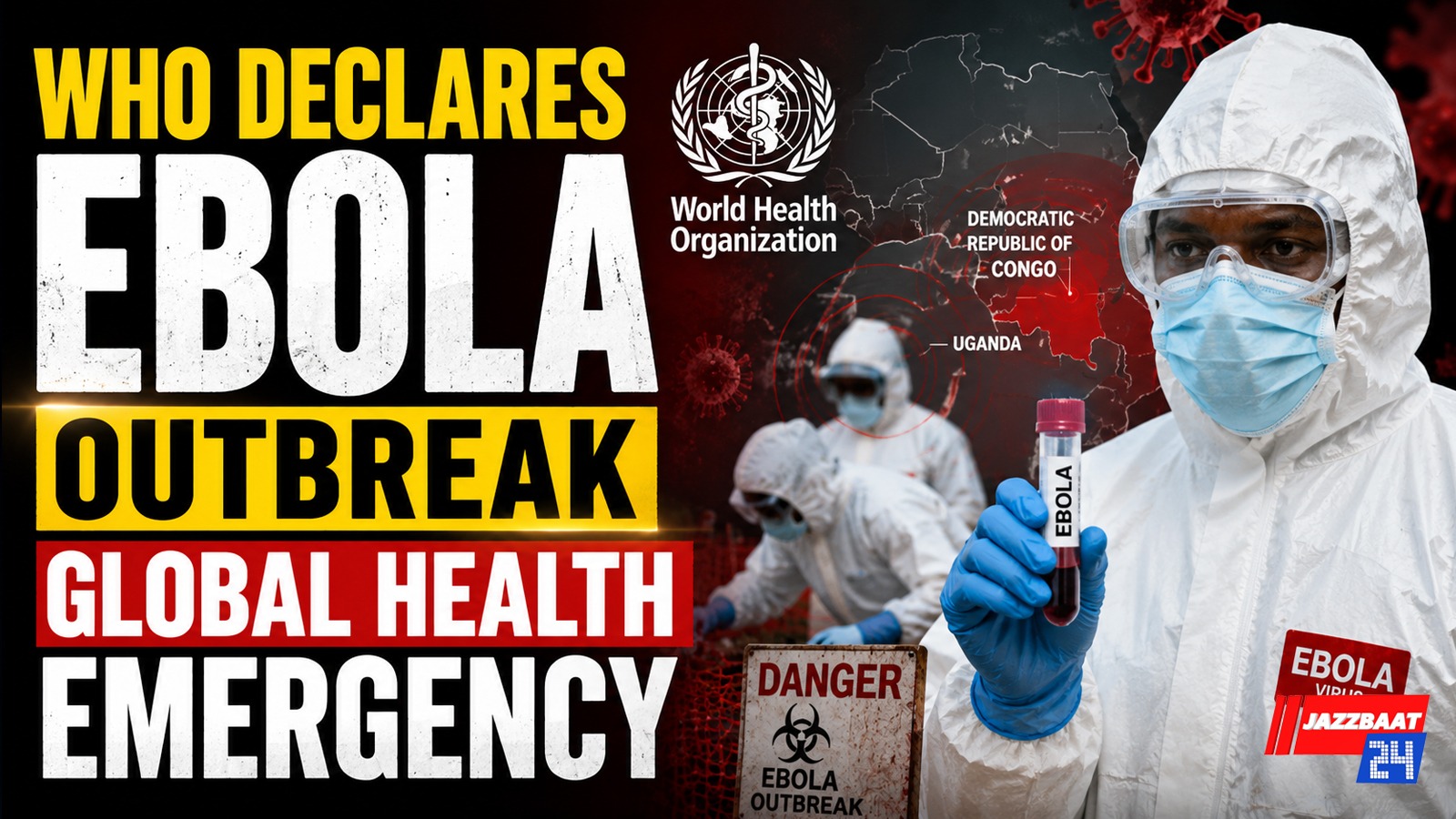
The World Health Organization (WHO) has officially declared the ongoing Ebola outbreak in the Democratic Republic of Congo (DRC) and Uganda a “Public Health Emergency of International Concern” (PHEIC), raising alarm over the rapid spread of the deadly virus across Central Africa. The declaration was made after a sharp rise in suspected infections and deaths linked to the rare Bundibugyo strain of Ebola.
According to WHO, the outbreak currently poses a serious cross-border health threat and requires an urgent coordinated international response. The organization clarified that while the situation is extremely concerning, it does not yet meet the criteria for a pandemic emergency.
The outbreak began in eastern Congo’s Ituri province, where hundreds of suspected cases have already been reported. Uganda has also confirmed multiple cases connected to travelers arriving from the DRC. Health officials fear the virus could spread further because of high population movement, weak healthcare infrastructure, and ongoing violence in conflict-hit regions.
WHO Director-General Tedros Adhanom Ghebreyesus expressed deep concern over the “speed and scale” of the outbreak. The agency said the Bundibugyo strain is especially worrying because there are currently no licensed vaccines or approved treatments specifically designed for this variant of Ebola.
Recent reports indicate that the number of suspected cases has crossed 700, while deaths linked to the outbreak have risen sharply. Several healthcare workers have also been infected, increasing fears of transmission inside hospitals and clinics. Aid organizations on the ground say many treatment centers are overwhelmed and struggling with shortages of medical supplies and staff.
The WHO has urged countries not to impose blanket border closures but instead strengthen screening, surveillance, isolation facilities and cross-border cooperation. Emergency funds have already been released to help authorities in Congo and Uganda improve testing, contact tracing and patient care.
Following the WHO declaration, India issued a travel advisory asking citizens to avoid non-essential travel to the Democratic Republic of Congo, Uganda and South Sudan until the situation improves.
International health agencies, including the Africa CDC, UNICEF and the European Union health authorities, are now coordinating efforts to contain the outbreak before it spreads further across borders.