
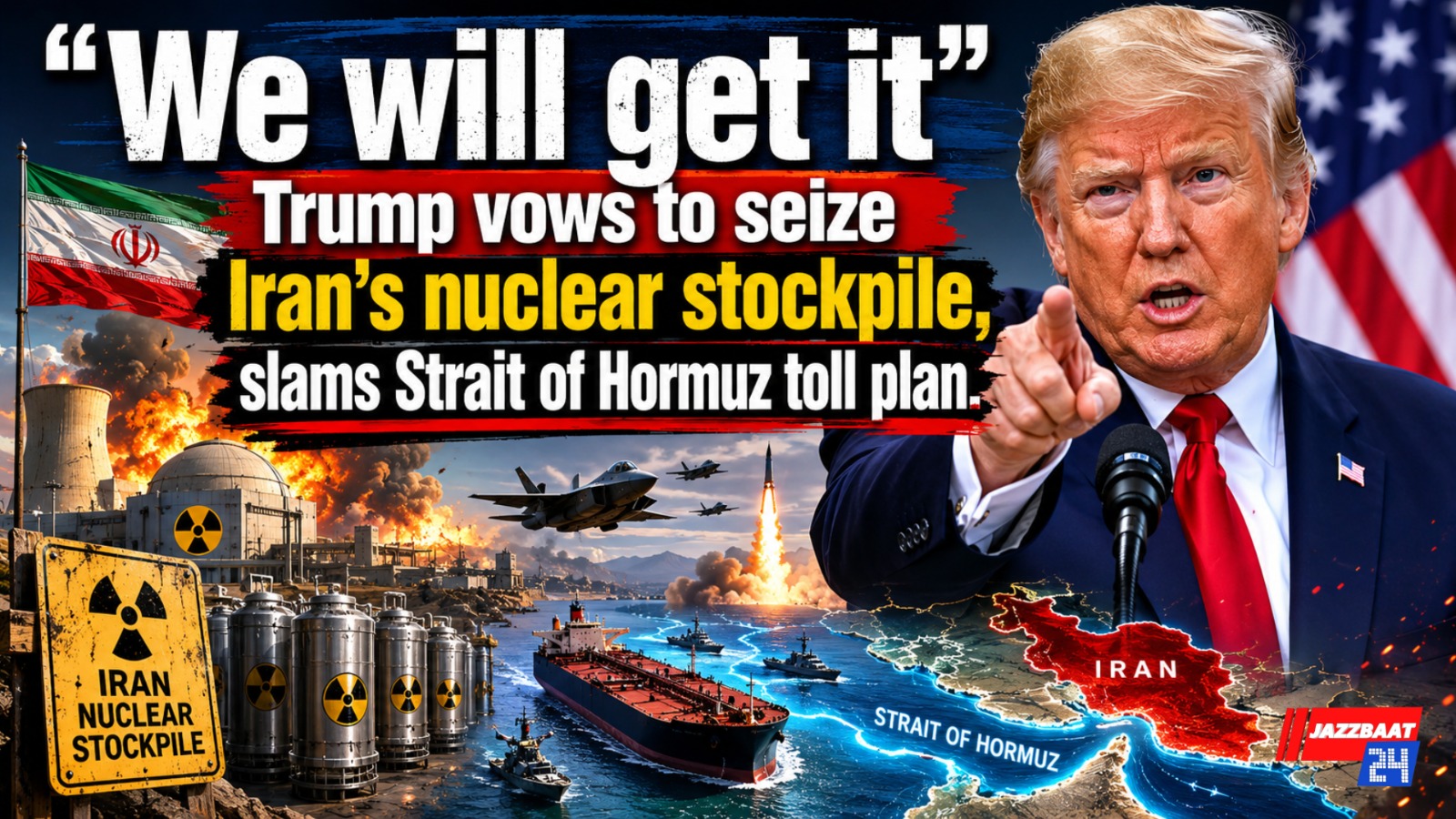
US President Donald Trump has said that the United States will “get” Iran’s highly enriched uranium stockpile, intensifying tensions with Tehran amid ongoing geopolitical friction over the Strait of Hormuz and Iran’s nuclear programme.
Speaking to reporters at the White House, Trump stated that Washington would not allow Iran to retain its nuclear material, which US officials believe is key to any potential weapons capability. “We will get it. We don’t need it, we don’t want it. We’ll probably destroy it after we get it, but we’re not going to let them have it,” he said.
Trump’s remarks come amid reports that Iran possesses a significant stockpile of highly enriched uranium, allegedly hidden underground following earlier military strikes. The US administration has maintained that preventing Iran from retaining or developing nuclear weapons remains a core objective of its regional policy.
Alongside the nuclear issue, Trump also strongly criticised Iran’s reported proposal to impose tolls on ships passing through the strategic Strait of Hormuz. Calling it an “international waterway,” he rejected any attempt by Tehran to regulate or charge transit fees for commercial shipping.
“We don’t want tolls. It’s an international waterway,” Trump said, warning that any disruption to global shipping routes through the strait would not be acceptable. The Strait of Hormuz is one of the world’s most important oil transit chokepoints, and any restrictions or additional charges have raised international concern over global energy security.
The US has also maintained a hard stance on maritime access in the region, with officials reiterating that freedom of navigation must be preserved. Trump’s comments further underline Washington’s opposition to any unilateral control or monetisation of the waterway by Iran.
Iran, meanwhile, has repeatedly rejected US demands regarding its uranium stockpile, insisting that the material will remain within its borders. The standoff continues to be a key obstacle in broader diplomatic efforts involving multiple mediators attempting to ease tensions.
The latest exchange highlights escalating rhetoric between Washington and Tehran, with nuclear security and control over critical maritime routes emerging as two central flashpoints in an already volatile relationship.