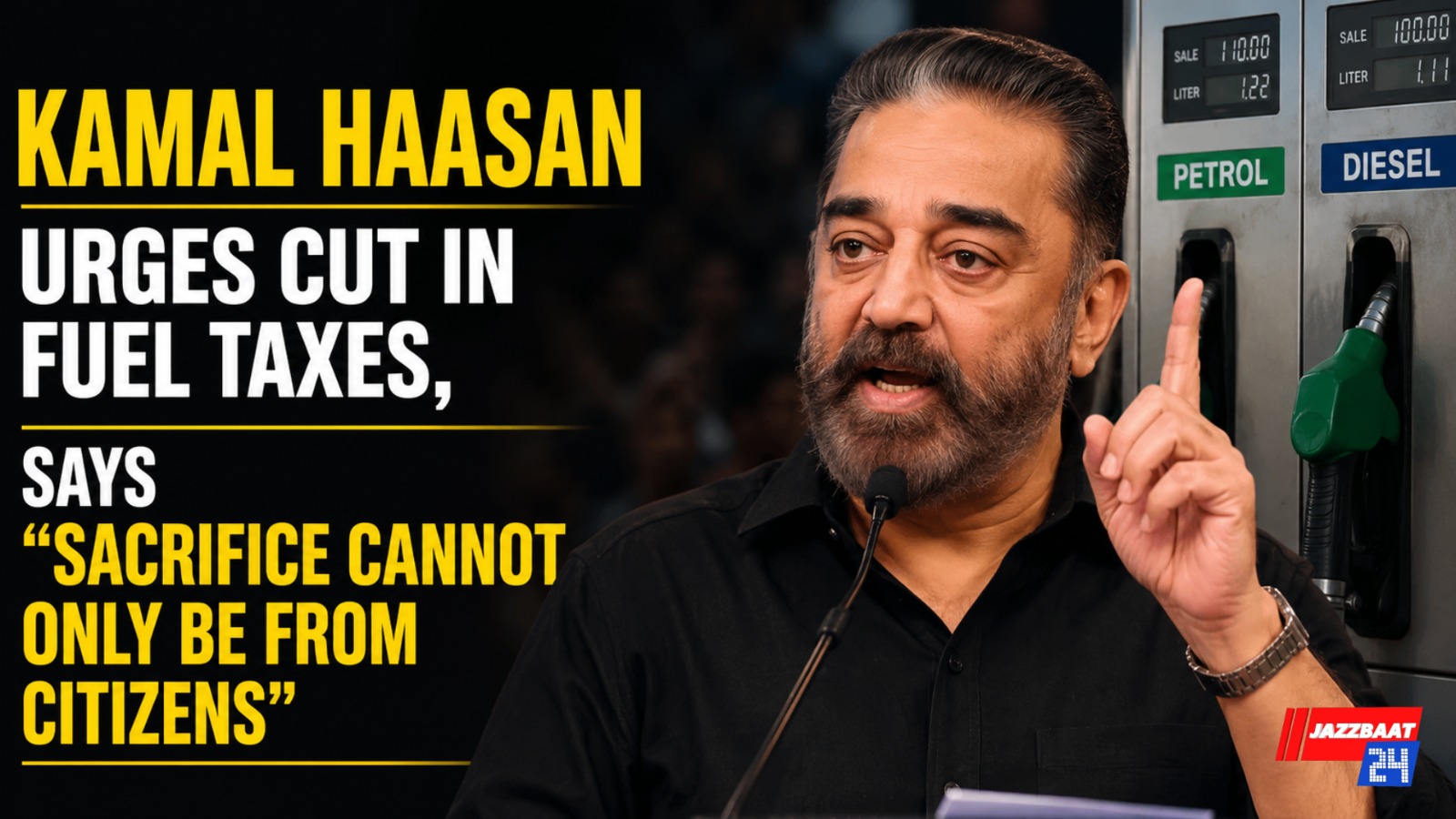
Actor-turned-politician Kamal Haasan has called for a reduction in Value Added Tax (VAT) on petrol and diesel, arguing that the financial burden of rising fuel prices should not fall solely on ordinary citizens. His remarks have reignited the debate over fuel taxation in India and the role of both central and state governments in managing retail prices.
Speaking during a public interaction in Chennai, Kamal Haasan said that citizens have already been making “continuous sacrifices” due to inflation and rising living costs, and it is now time for governments to take responsibility by easing fuel taxes. “Sacrifice cannot only be from citizens,” he said, urging policymakers to reconsider the current tax structure on petroleum products.
Haasan, who leads the political party Makkal Needhi Maiam, argued that high fuel prices have a cascading effect on the economy, increasing transport costs and ultimately pushing up prices of essential goods. He said that reducing VAT on petrol and diesel would provide immediate relief to households and small businesses struggling with inflationary pressure.
Fuel pricing in India remains a contentious issue, as petrol and diesel prices are influenced by a combination of central excise duty, state VAT, and dealer commissions. Several states have periodically adjusted VAT rates, but critics argue that taxation on fuel remains high compared to global standards, contributing to elevated retail prices.
Haasan also emphasised that economic reforms should be people-centric, especially at a time when many families are facing financial stress due to fluctuating prices of food, transportation, and utilities. He appealed to both state and central governments to adopt a more balanced approach to taxation, ensuring that revenue needs do not disproportionately impact citizens.
The remarks come amid ongoing political discussions around inflation and cost of living in several states, where opposition parties have repeatedly demanded cuts in fuel taxes to provide relief to the public. Government representatives, however, often argue that fuel taxes remain a major source of revenue used for welfare schemes and infrastructure development.
Haasan’s statement adds to the growing chorus of voices calling for rationalisation of fuel taxes, a debate that continues to remain politically sensitive given its direct impact on daily expenses and broader economic conditions.
With fuel prices remaining a key concern for households across India, the demand for tax reduction is likely to remain a central issue in both political discourse and policy discussions in the coming months.