
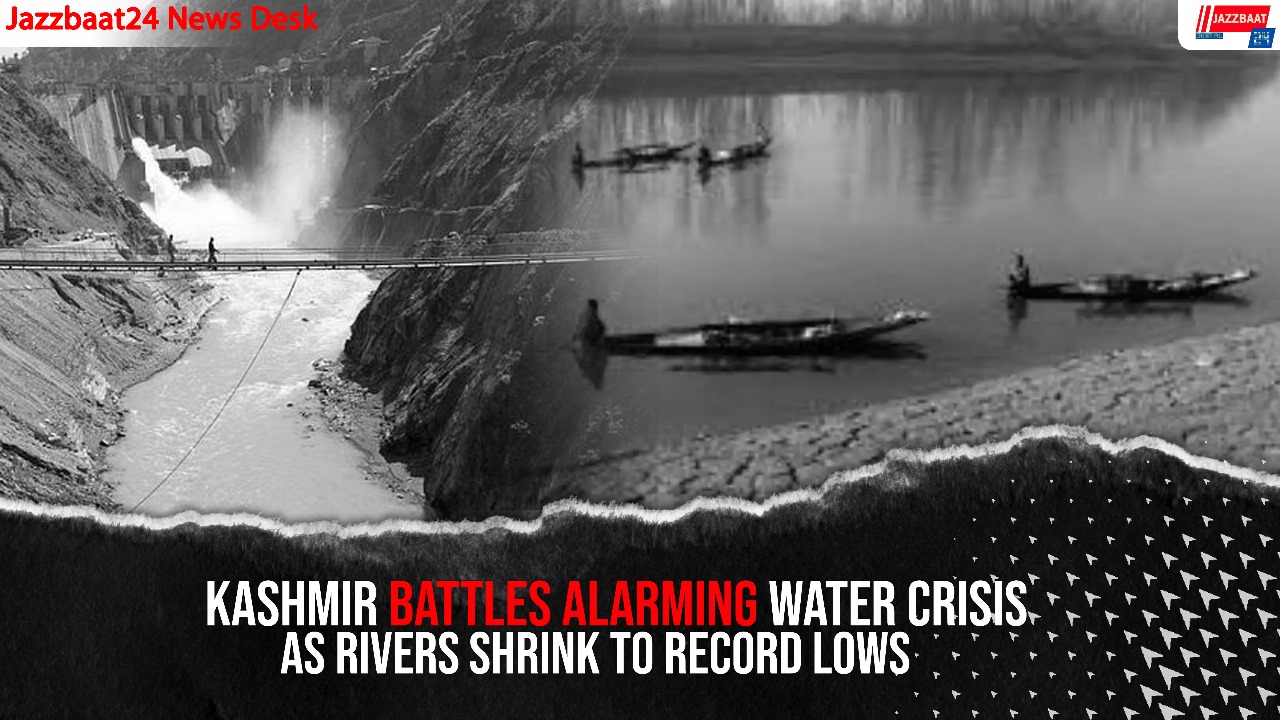
Kashmir is staring at one of its most severe water crises in recent years as the valley reels under drastically low rainfall and shrinking river systems. According to weather experts, Kashmir has recorded an 83% rainfall deficit, placing all 10 districts in the “very low” category. The lack of snowfall has further deepened the crisis, affecting drinking water, irrigation, and natural springs that sustain thousands of households.
The Jhelum river, considered the valley’s lifeline, has dropped to unprecedented levels. At the Sangam gauge station, the river has fallen to -0.53 feet. Other key locations are witnessing similar distress Ram Munshi Bagh has recorded nearly 3 feet, while Asham is down to just 1 foot. Several tributaries, including the Lidder, Rambiara, Ferozepora Nallah, and Pohru, are flowing far below normal, raising concerns of long-term ecological imbalance.
Independent weather analysts note that November should have seen an average 35.2 mm of rainfall. However, this year the valley received only 6.1 mm, signalling an alarming shift in weather patterns. Forecasts from the meteorological department predict dry conditions will continue for at least another 10 days, with only a possibility of light snowfall in higher regions.
The crisis is compounded by rapid glacier retreat in the Himalayas. Studies by ISRO and the Wadia Institute of Himalayan Geology suggest that over 18% of glaciers have shrunk in the past few decades. This has weakened the flow from catchment areas that feed major rivers and streams.
In Srinagar, the declining water level has already forced authorities to reduce municipal water supply. Environmental experts warn that without urgent measures such as groundwater recharge, rejuvenation of springs, and long-term water planning, the region could face a prolonged drought. A researcher at the University of Kashmir describes the situation as unprecedented, cautioning that another poor winter could push Kashmir into its worst hydrological stress in decades.