

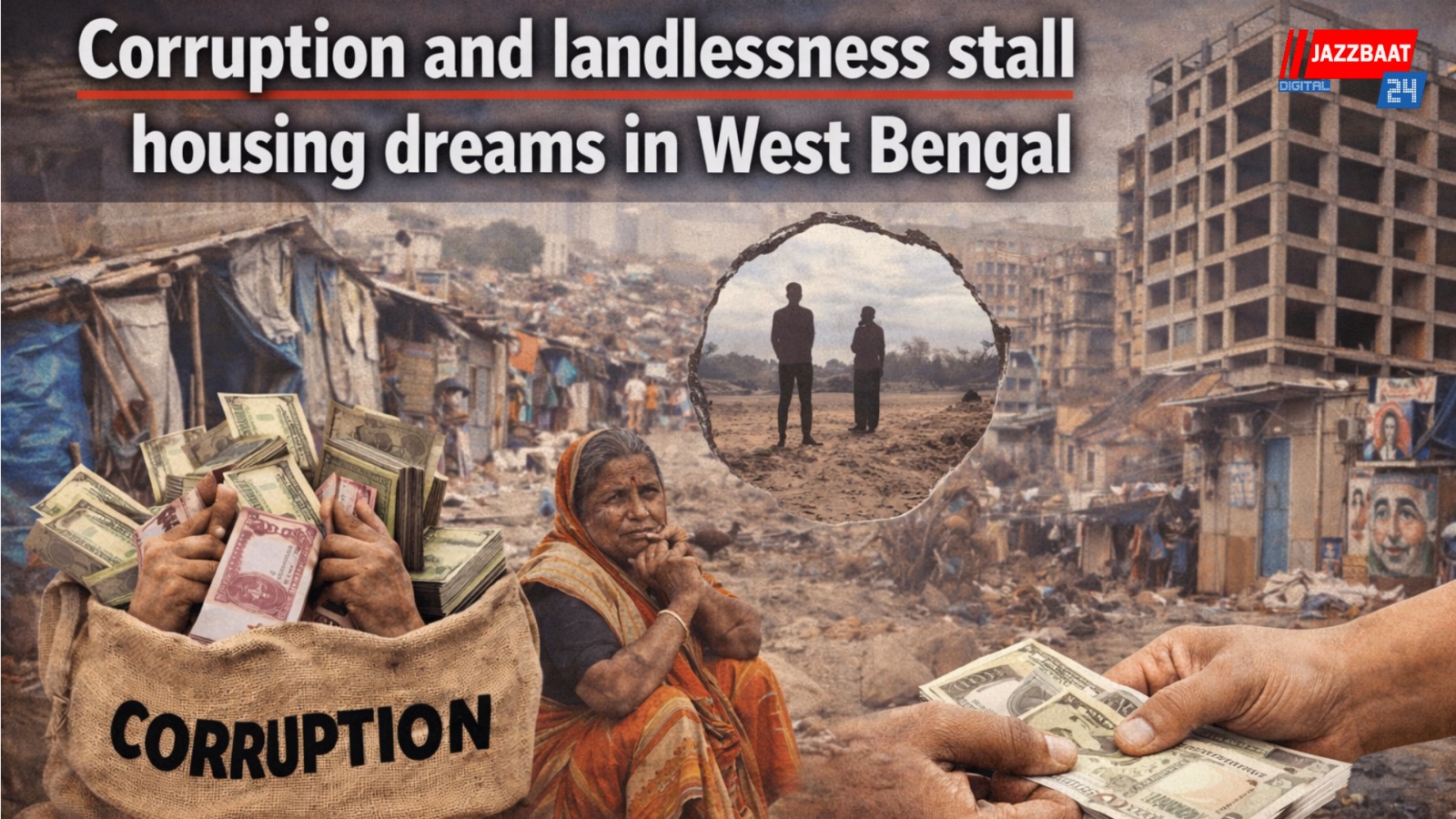
Despite various government housing schemes aimed at providing shelter for all, thousands of families across West Bengal continue to struggle with landlessness, alleged corruption, and bureaucratic delays that are stalling their dream of owning a permanent home.
Across several districts, particularly in rural and semi-urban areas, many low-income families say they remain excluded from housing benefits due to lack of proper land documents. Without legal land ownership or clear records, applicants often fail to qualify for housing assistance schemes, leaving them in a cycle of insecurity and temporary shelter.
Beneficiaries and local activists have also raised concerns about corruption at the ground level. Allegations include demands for unofficial payments, favoritism in beneficiary selection, and manipulation of housing lists by local intermediaries. In some cases, genuine applicants claim their names have been repeatedly left out despite meeting eligibility criteria.
“I have applied multiple times, but my name never appears in the final list. Others who are better connected somehow get the benefits,” said a resident from a rural block, reflecting a complaint echoed in several regions.
Landlessness remains another major obstacle. A significant number of rural poor in West Bengal do not possess registered land, often living on government land, riverbanks, or informal settlements. This makes it difficult for them to be included in formal housing schemes, which typically require proof of land ownership or allotment.
Social workers and housing rights activists argue that the issue is not just about policy but also implementation. They point out that while schemes are well-designed on paper, ground-level execution often suffers from inefficiency and lack of transparency. They have called for stronger monitoring systems, digital tracking of beneficiaries, and strict action against corruption.
Officials, however, maintain that efforts are being made to ensure fair distribution of housing benefits. They claim that verification processes are in place to prevent misuse and ensure that only eligible beneficiaries receive assistance. Authorities also highlight ongoing initiatives aimed at improving land records and expanding housing coverage.
Despite these efforts, the gap between policy and reality remains significant. For many families, the dream of a permanent concrete home continues to be delayed by administrative hurdles and structural inequalities.
Experts say that unless land reforms, transparency measures, and anti-corruption mechanisms are strengthened at the grassroots level, the goal of “Housing for All” will remain difficult to achieve in the state.