
Kolkata: As tributes pour in across India and beyond, legendary filmmaker Satyajit Ray is being remembered not just as a cinematic icon, but as a visionary who redefined the language of Indian cinema with realism, depth and global appeal.
On his 105th birth anniversary this year, film enthusiasts, political leaders and cultural institutions have come together to celebrate his enduring legacy. Special screenings, discussions and festivals are being organised in different parts of the subcontinent, reflecting the continued relevance of his work even decades after his passing.
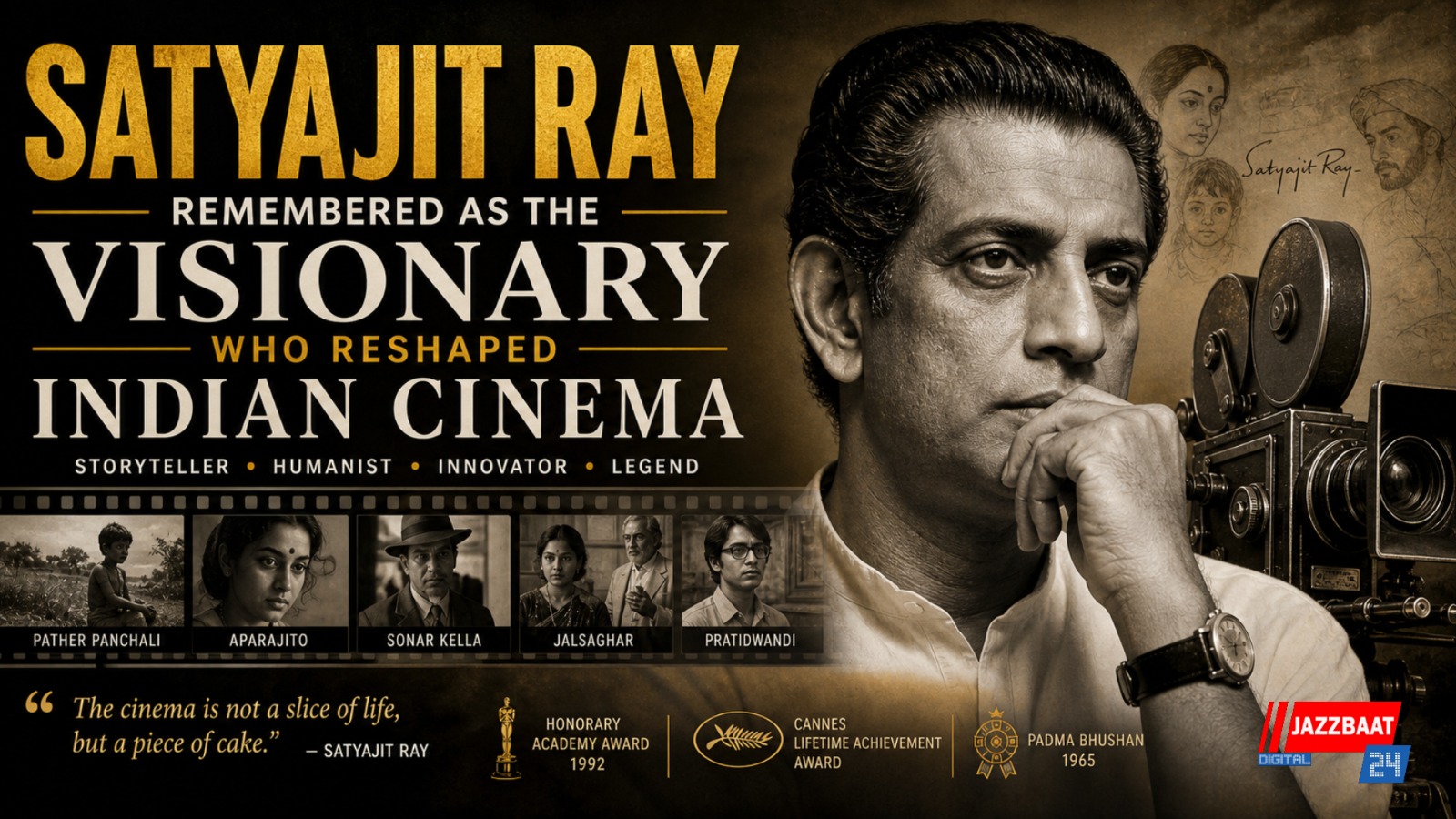
Born in Kolkata in 1921, Ray emerged as one of the greatest filmmakers in world cinema, blending storytelling with human emotion and social realism. His debut film Pather Panchali (1955) not only won international acclaim but also introduced Indian parallel cinema to the global stage. Over the years, he went on to create timeless classics such as Aparajito, Charulata, and Nayak, each exploring complex human relationships and societal changes with remarkable sensitivity.
Ray’s influence extended far beyond filmmaking. He was also a writer, illustrator, music composer and editor, creating beloved literary characters like Feluda and Professor Shonku that remain popular among readers of all ages. His multifaceted creativity made him a rare cultural figure whose work transcended mediums.
Globally, Ray received widespread recognition for his contributions. He won numerous international awards and honours, including an honorary Oscar for lifetime achievement in 1992 and India’s highest civilian award, the Bharat Ratna. His films were celebrated at prestigious festivals such as Cannes, Berlin and Venice, cementing his status as one of the greatest directors of all time.
Even today, efforts are ongoing to preserve and restore his vast body of work. Recently, restored versions of his films have been screened at international platforms and local venues, bringing his masterpieces to new generations of viewers.
Contemporary filmmakers across the world continue to cite Ray as a major influence, praising his ability to tell deeply personal stories that resonate universally. His emphasis on realism, minimalism and strong narratives has shaped modern cinema in profound ways.
As India marks another year remembering the maestro, Ray’s legacy remains alive, not just in archives or festivals, but in the very grammar of filmmaking he helped redefine. His work continues to inspire, reminding audiences that cinema, at its best, is a mirror to society and a window to the human soul.