
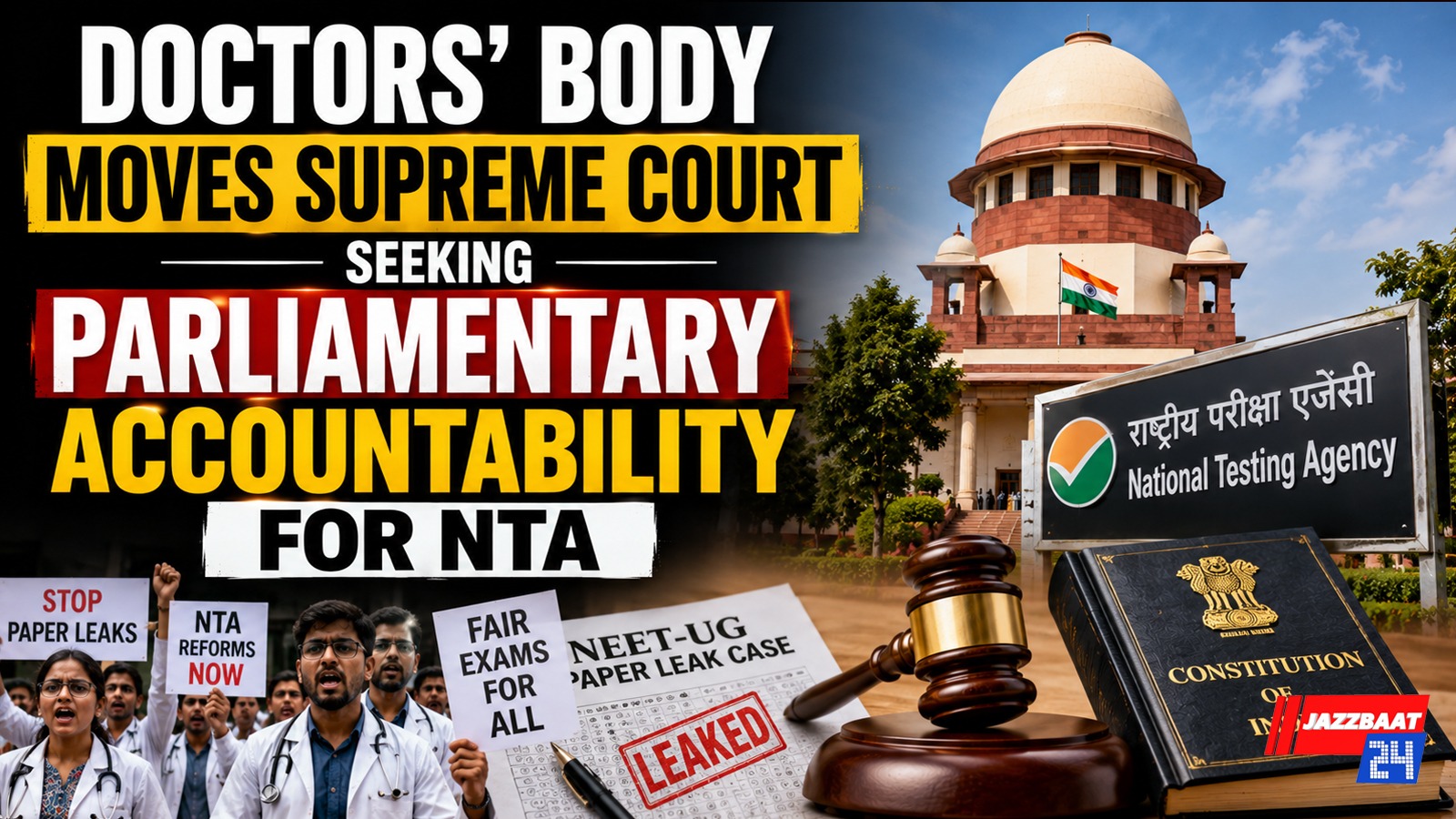
A national doctors’ organisation has approached the Supreme Court seeking major structural reforms in the functioning of the National Testing Agency amid the continuing controversy over the NEET-UG paper leak case.
The petition urges the apex court to direct the Centre to convert the National Testing Agency into a statutory body accountable to Parliament instead of functioning as an autonomous testing agency under the Union Education Ministry. The doctors’ body argued that repeated allegations of paper leaks and examination irregularities have exposed serious flaws in the current system governing national entrance examinations.
According to the plea, the absence of direct parliamentary oversight has weakened transparency and accountability in the conduct of highly competitive examinations such as NEET-UG. The petition reportedly states that millions of students are affected by the functioning of the agency every year and therefore stronger legal safeguards are necessary to protect the integrity of the examination process.
The doctors’ association also sought reforms including independent audit mechanisms, stricter cybersecurity systems, transparent question paper handling protocols and fixed accountability standards for officials responsible for examination management. The plea highlighted concerns that recurring examination controversies are damaging public trust in India’s education system.
The Supreme Court is already hearing multiple petitions related to alleged irregularities and paper leak claims linked to NEET-UG. The controversy triggered protests across several states earlier this year, with students, parents and opposition parties demanding cancellation of the examination and stronger action against those involved in the leak network.
The Centre and the National Testing Agency have defended the examination process while assuring courts that strict measures are being implemented to prevent future malpractice. Investigations by the Central Bureau of Investigation and other agencies are continuing in several states to identify individuals linked to organised paper leak rackets.
Legal experts say the latest petition could widen the judicial debate beyond the immediate leak allegations and bring attention to long-term institutional reforms in India’s national testing framework. Education policy analysts have also argued that the scale and importance of examinations like NEET require a more robust statutory structure with clearer public accountability.
The matter is expected to come up for hearing before the Supreme Court in the coming days as scrutiny over the examination system continues to intensify nationwide.