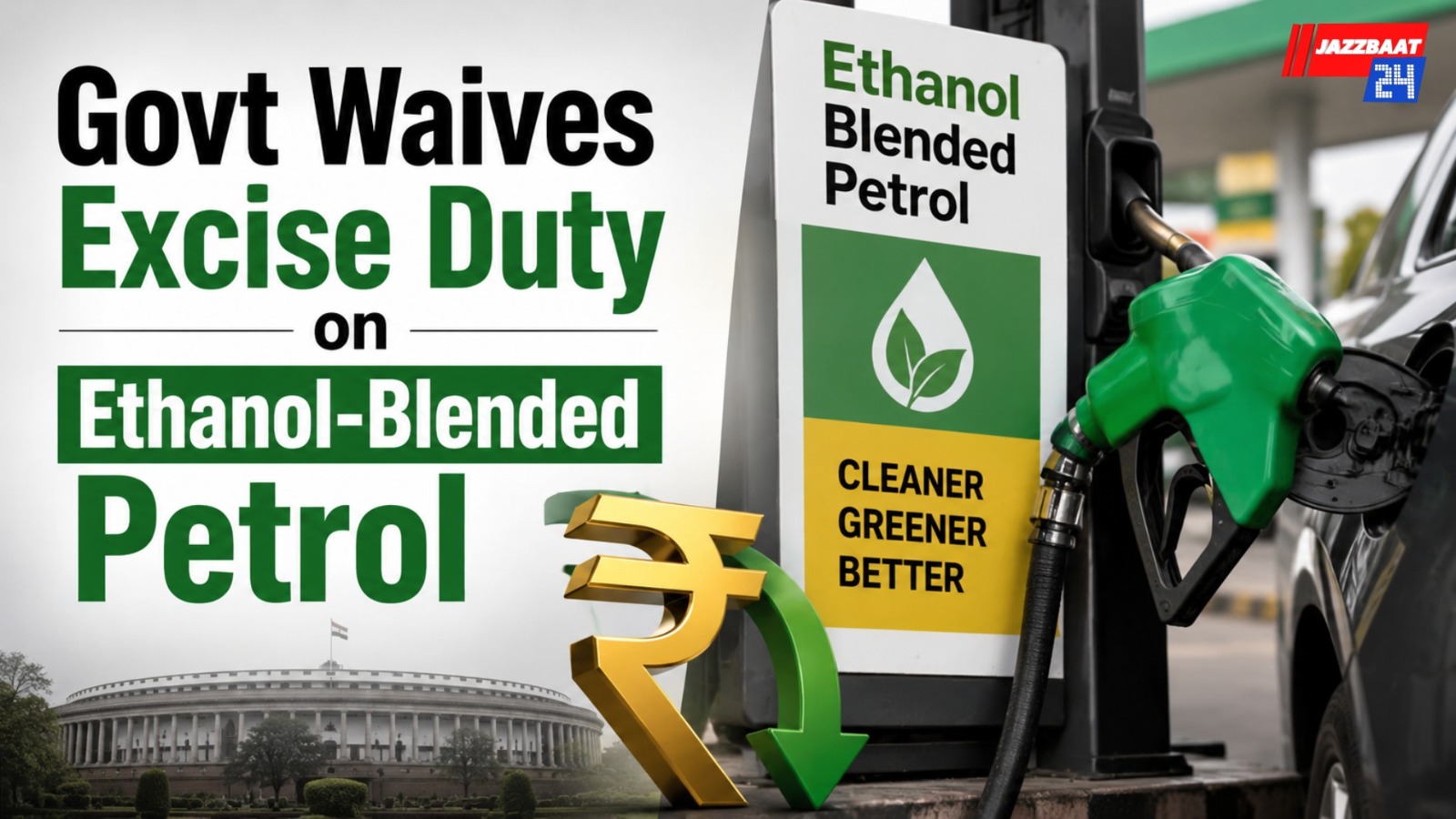
In a major push towards cleaner and more sustainable fuel, the Central Government has announced a complete waiver of excise duty on higher ethanol-blended petrol variants. The decision is aimed at encouraging the use of biofuels, reducing India's dependence on imported crude oil, and supporting the country's long-term energy security goals.
According to a notification issued by the Finance Ministry, petrol blended with 22% to 30% ethanol will now attract zero excise duty. The exemption covers fuel grades known as E22, E25, E27, and E30, representing petrol mixed with 22%, 25%, 27%, and 30% ethanol respectively. This marks a significant step beyond India's current E20 fuel standard and is expected to accelerate the transition toward cleaner transportation fuels.
The government has been aggressively promoting ethanol blending as part of its strategy to cut fuel imports and lower carbon emissions. India, the world's third-largest consumer of crude oil, imports a substantial portion of its energy requirements. Increasing the use of domestically produced ethanol can help reduce foreign exchange outflows while creating additional income opportunities for farmers through higher demand for sugarcane and other ethanol-producing crops.
While the duty waiver is expected to encourage fuel retailers and vehicle owners to adopt higher ethanol blends, experts note that consumers may not see an immediate reduction in petrol prices. Retail fuel prices continue to depend on several factors, including global crude oil prices, transportation costs, dealer commissions, and local taxes. As a result, petrol and diesel prices across major Indian cities have largely remained unchanged following the announcement.
The move has also generated positive sentiment in the stock market, particularly among sugar and ethanol-producing companies. Shares of several sugar manufacturers gained after investors viewed the policy as a strong signal of the government's commitment to expanding the ethanol blending programme. Higher demand for ethanol could create new revenue opportunities for companies involved in ethanol production and supply.
Industry observers see the excise duty waiver as an important milestone in India's biofuel journey. By incentivising higher ethanol blends, the government hopes to promote cleaner mobility, strengthen domestic energy production, and reduce the country's exposure to global oil price volatility. As India continues to expand its renewable energy initiatives, ethanol is expected to play an increasingly important role in the nation's transportation and energy landscape.