

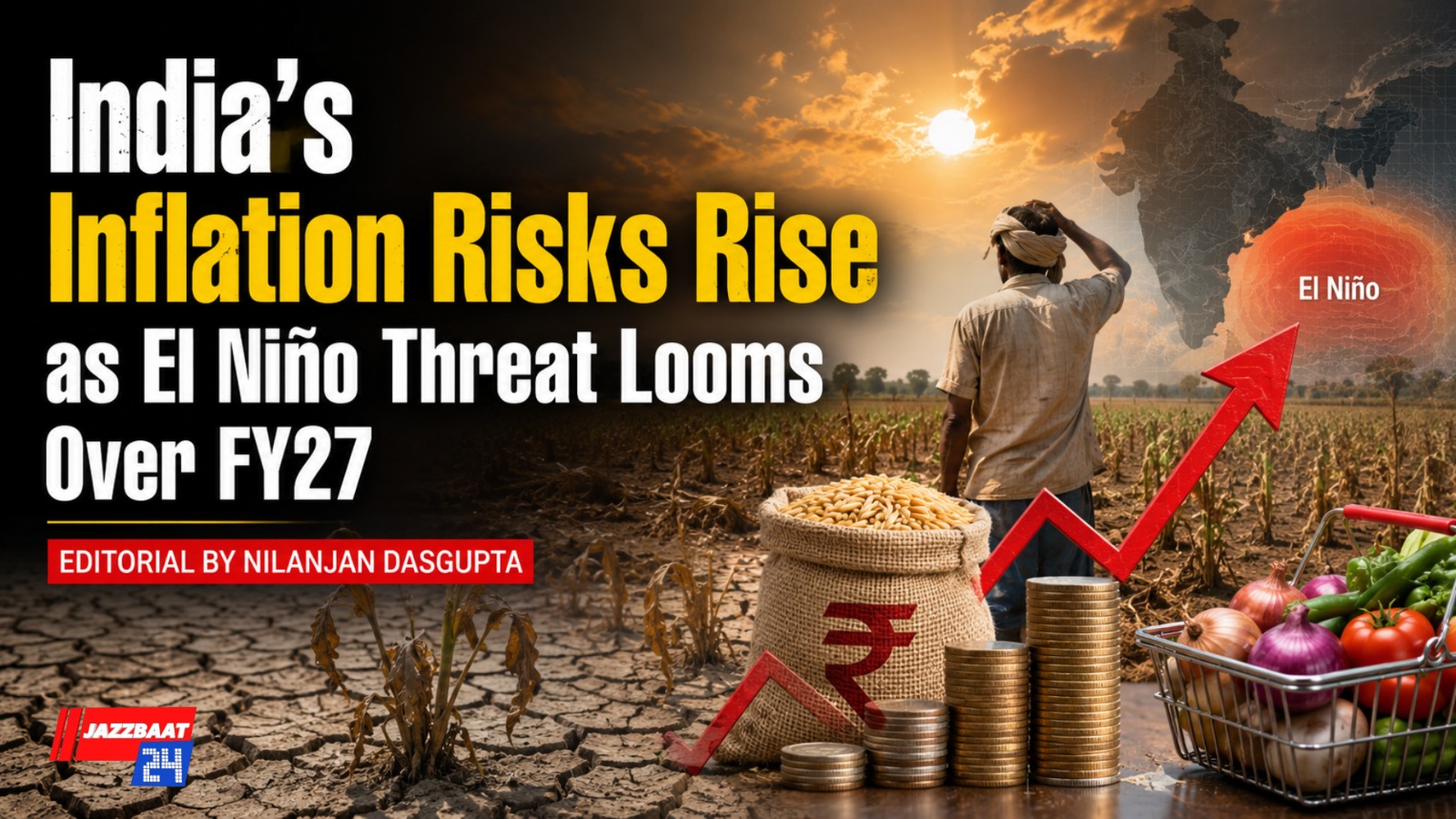
India may be heading into a more challenging inflation environment in FY27, with a combination of weather risks, rising global energy prices, and geopolitical uncertainty threatening to reverse the sharp moderation in prices witnessed over the past year. While inflation remains within the Reserve Bank of India’s tolerance band for now, several indicators suggest that the path ahead could become increasingly difficult.
The RBI has already revised its inflation outlook upward. In its latest policy review, the central bank raised its FY27 inflation forecast to 5.1% while simultaneously cutting its GDP growth projection to 6.6%, reflecting concerns over food prices, energy costs, and global uncertainty. The RBI maintained interest rates at 5.25% but adopted a cautious stance as inflation risks continue to build.
A major concern is the growing possibility of a strong El Niño event. Weather agencies have warned that India could experience its weakest monsoon in more than a decade, with rainfall projected at around 90% of the long-period average. Since nearly half of India's farmland still depends on rainfall rather than irrigation, a weak monsoon could significantly impact crop production, particularly rice, pulses, vegetables, and oilseeds.
Food inflation remains the biggest wildcard. Government data showed food inflation at 4.2% in April 2026, but analysts warn that prolonged dry weather could push prices much higher in the coming months. Economists estimate that inflation could climb beyond 5.5% if monsoon conditions deteriorate further and crop yields suffer.
External factors are adding to the pressure. The ongoing conflict in West Asia has lifted crude oil prices and increased shipping and supply-chain costs. A weaker rupee, which has already faced pressure from capital outflows and global uncertainty, could further raise the cost of imported fuel and commodities. Higher energy costs often feed into transportation, manufacturing, and food prices, creating broader inflationary effects across the economy.
Market participants are increasingly expecting the RBI to remain vigilant. Several economists believe that if inflation remains above 5% for a prolonged period, the central bank may be forced to consider rate hikes later in FY27.
For now, India’s inflation story remains manageable. But with a potentially weak monsoon, El Niño-driven weather disruptions, elevated oil prices, and geopolitical tensions converging at the same time, FY27 could become a year in which inflation once again emerges as one of the biggest challenges for policymakers and households alike.