
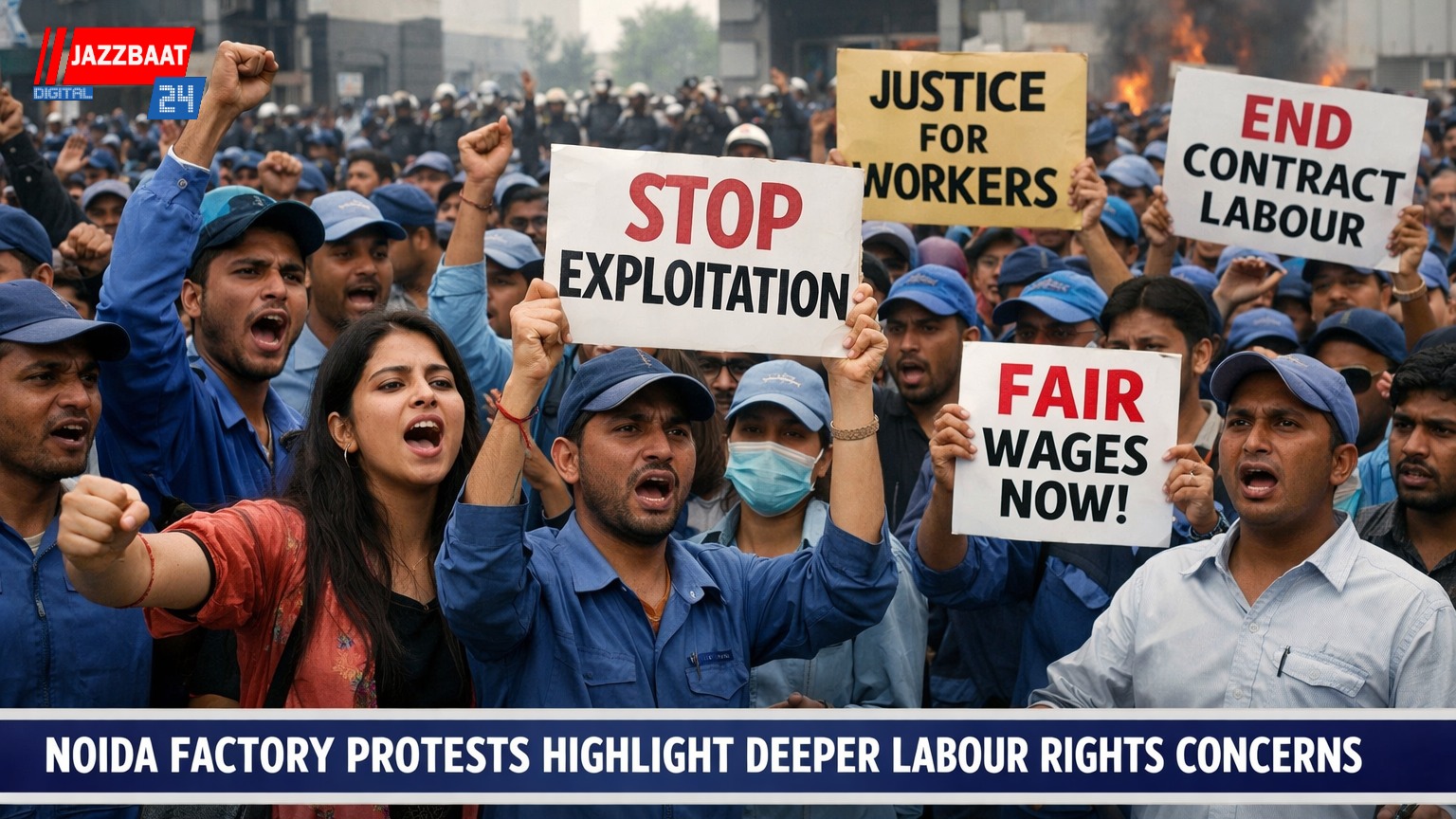
The recent wave of protests by factory workers in Noida has drawn attention not only for demands related to minimum wages but also for exposing broader issues of labour rights, job security, and working conditions in India’s industrial sector.
The unrest began earlier this week in industrial areas of Noida and Greater Noida, where hundreds of workers gathered outside manufacturing units demanding implementation of revised minimum wages as notified by the Uttar Pradesh government. Workers alleged that many factories were either delaying compliance or paying below the mandated rates, sparking immediate anger and demonstrations.
However, as protests intensified, it became clear that wage concerns were only one part of a larger problem. Workers raised allegations of long working hours without overtime pay, lack of formal contracts, and arbitrary dismissals. Many claimed they were hired through third-party contractors, leaving them without job security or access to benefits such as provident fund and health insurance.
Labour unions supporting the protests said the situation reflects systemic issues within the industrial ecosystem, where contract labour is widely used to cut costs. They argued that this practice often leads to exploitation, with workers having limited avenues to seek redress. Protesters also highlighted unsafe working conditions in several units, citing inadequate safety equipment and lack of proper facilities.
The protests saw sporadic clashes with police as authorities attempted to disperse gatherings and maintain order. Security was tightened across key industrial zones, and officials held meetings with factory management and labour representatives to de-escalate tensions. While some companies assured compliance with wage norms, negotiations are still ongoing in many areas.
Experts note that the Noida protests mirror a broader national trend, where rapid industrial growth has not always been matched by improvements in labour welfare. The situation has reignited debates over enforcement of labour laws, the role of state labour departments, and the effectiveness of grievance mechanisms available to workers.
Meanwhile, the Uttar Pradesh government has said it is monitoring the situation closely and has directed officials to ensure that notified wage rates are implemented. Authorities have also appealed to workers to maintain peace and engage in dialogue.
The developments have political implications as well, with opposition parties criticising the government for failing to protect workers’ rights, while ruling party leaders emphasise ongoing efforts to attract investment and create jobs.
As the protests continue, the Noida episode underscores a deeper structural issue—balancing economic growth with fair and humane working conditions. For many workers, the agitation is not just about wages, but about dignity, security, and basic rights in the workplace.